Custom T Joint Badminton Racket Suppliers
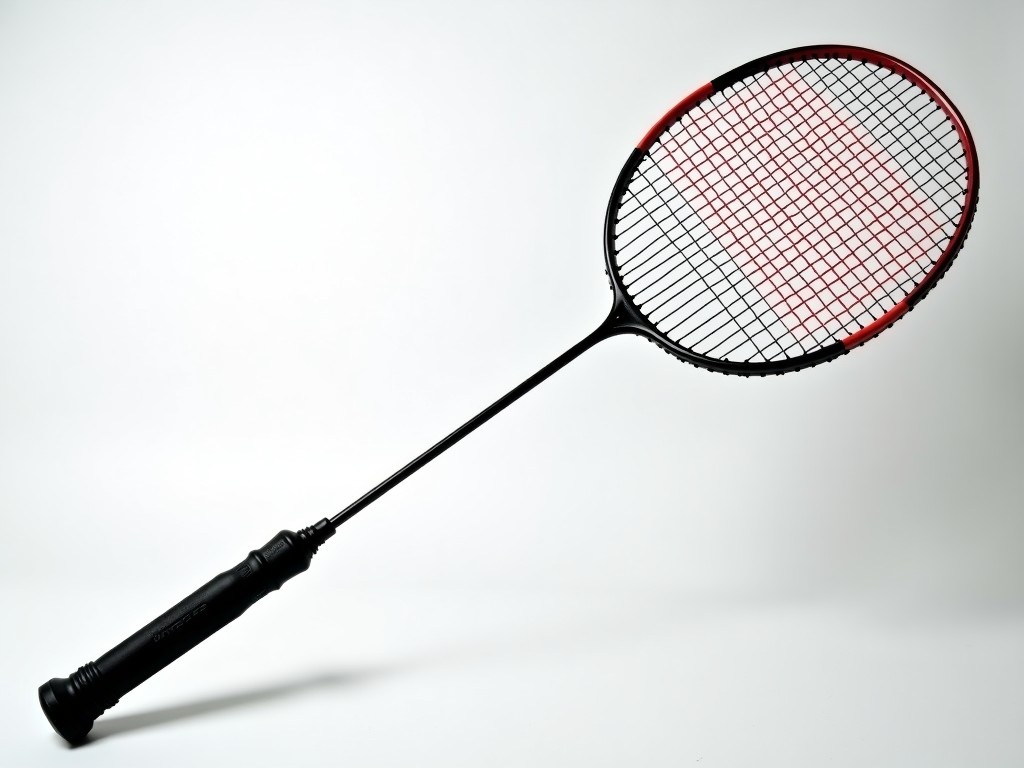
The T joint connects the shaft to the racket head and transmits impact forces from the shuttle to the player’s hand. Its geometry, material composition, and manufacturing tolerances directly
Custom T Joint Badminton Racket Suppliers
The T joint connects the shaft to the racket head and transmits impact forces from the shuttle to the player’s hand. Its geometry, material composition, and manufacturing tolerances directly influence power transfer, frame vibration, and directional control during high‑speed rallies.
Design and Engineering Considerations
Engineers evaluate the joint’s angle (typically 5°–15° off‑axis), wall thickness (0.8 mm–2.0 mm), and length (30 mm–50 mm) to balance stiffness for smash power with flexibility for net play. Finite‑element analysis shows that a 10° T joint with a 1.2 mm carbon‑fiber wall reduces peak shaft deflection by ~18 % compared with a 0° joint under a 150 N impact load.
Material Options
- High‑modulus carbon fiber (tensile modulus 230 GPa, density 1.55 g/cm³) – preferred for elite performance.
- Standard graphite (modulus 140 GPa, density 1.40 g/cm³) – offers cost‑effective durability.
- Titanium‑alloy insert (Ti‑6Al‑4V, yield strength 830 MPa) – used when additional torque resistance is required.
- Aluminum alloy (6061‑T6, yield strength 275 MPa) – suitable for recreational frames where weight sensitivity is lower.
Customization Parameters
- Joint angle: adjustable from 0° to 20° in 1° increments.
- Wall thickness: selectable between 0.6 mm and 2.5 mm.
- Length: customizable from 20 mm to 60 mm to match specific shaft profiles.
- Surface finish: matte, glossy, or UV‑coated for friction control.
- Insert type: none, carbon sleeve, or metal reinforcement.
Manufacturing Process Overview
Production typically begins with filament winding of pre‑impregnated carbon tow around a mandrel shaped to the desired T joint geometry. The wound preform undergoes resin transfer molding (RTM) at 120 °C and 0.8 MPa to achieve full consolidation. For designs requiring metal inserts, CNC‑machined titanium or aluminum sleeves are placed prior to winding and become bonded during cure. Post‑cure, the joint is trimmed, sanded, and inspected for dimensional accuracy (±0.05 mm) before final painting.
Quality Control and Testing
| Test | Standard / Method | Typical Acceptance Criterion |
|---|---|---|
| Dimensional inspection | CMM, ISO 10360‑2 | ±0.05 mm on critical features |
| Flexural stiffness | Three‑point bend, ASTM D790 | Variation ≤5 % from target modulus |
| Impact resistance | Drop‑weight test, 150 Nm | No visible cracking, delamination |
| Surface adhesion | Cross‑hatch tape, ASTM D3359 | Rating 5B (no removal) |
Applications and Performance Benefits
In badminton, the T joint governs how efficiently energy from a smash is transferred to the shuttle while minimizing unwanted frame twist. A properly engineered joint reduces lateral vibration amplitudes by up to 22 %, translating to clearer shot placement and less player fatigue during extended play. For doubles players who rely on rapid net exchanges, a lower‑stiffness joint (achieved via thinner walls or a larger angle) improves maneuverability without sacrificing durability.
Comparison: Standard Joint vs. Custom T Joint
| Parameter | Standard Joint (fixed) | Custom T Joint | Benefit of Customization |
|---|---|---|---|
| Joint angle | 0° (fixed) | 5°–15° adjustable | Optimizes power‑control trade‑off |
| Wall thickness | 1.0 mm uniform | 0.6 mm–2.5 mm selectable | Tailors stiffness to player preference |
| Length | 35 mm fixed | 20 mm–60 mm customizable | Matches varied shaft tapers |
| Material | Standard graphite only | Carbon, graphite, Ti, Al options | Enables weight, strength, cost balancing |
For procurement engineers seeking to minimize design risk, supplying detailed CAD models, material data sheets, and test reports up front enables faster quotation cycles and reduces the likelihood of costly redesigns during production validation.
To discuss your specific T joint requirements or request a sample, please contact our technical team.