Wholesale Personalized Tennis Balls Factory
The core of a regulation tennis ball is a hollow rubber sphere pressurized to approximately 12 psi (±0.5 psi) to achieve the specified bounce characteristics. This internal pressure, combined with a
Wholesale Personalized Tennis Balls Factory
The core of a regulation tennis ball is a hollow rubber sphere pressurized to approximately 12 psi (±0.5 psi) to achieve the specified bounce characteristics. This internal pressure, combined with a precise weight range of 56.0 g to 59.4 g and a diameter between 6.54 cm and 6.86 cm, determines how the ball reacts on different court surfaces.
Technical Specifications
The outer covering consists of a woven felt made from a nylon‑wool blend, typically 80 % nylon and 20 % wool, which provides durability and the characteristic fuzzy texture. The felt is adhered to the rubber core using a vulcanized rubber cement that withstands repeated impact without delamination.
When dropped from a height of 100 inches onto a concrete surface, a compliant ball rebounds to a height between 135 cm and 147 cm, meeting ITF Appendix B standards for Type 2 balls used on medium‑speed courts.
Customization Options
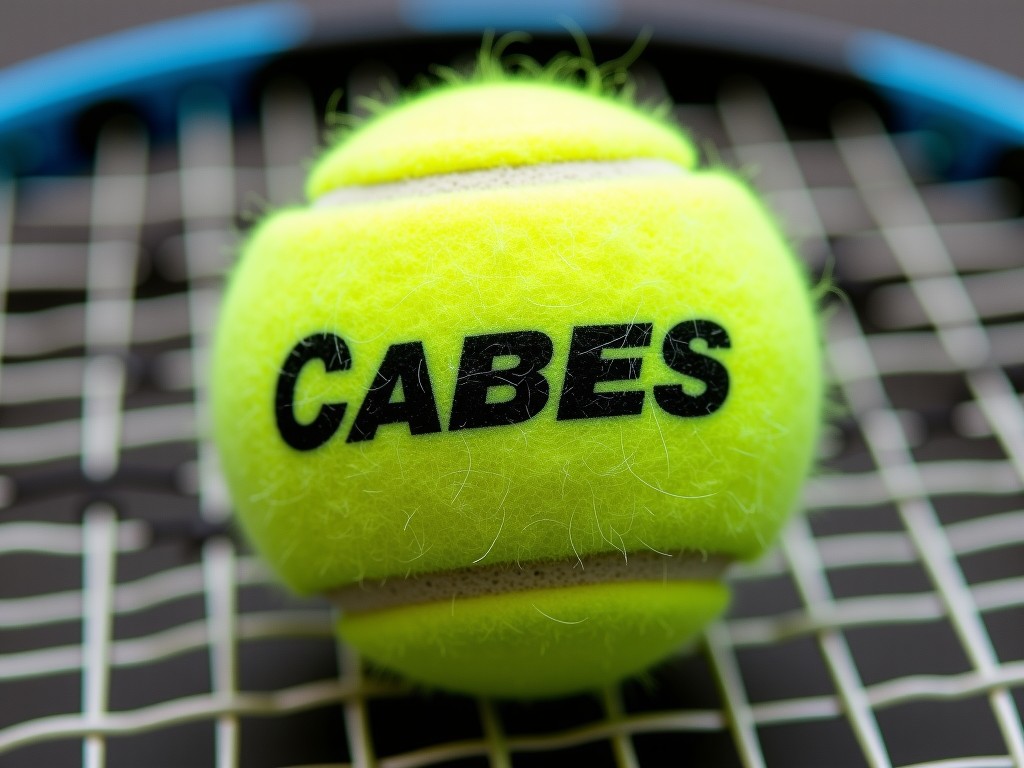
- Logo or text applied via pad printing, allowing registration tolerances of ±0.2 mm for multi‑color designs.
- Full‑color heat transfer for photographic images, with a maximum printable area of 40 mm × 40 mm on the felt surface.
- Pantone‑matched felt dyeing for custom background colors, achievable in batches of 500 units or more.
- Custom packaging inserts, such as branded cardboard sleeves or polybag labels, designed to fit standard 3‑ball cans.
Manufacturing Process
Raw rubber compound is injection‑molded into half‑shells, which are then joined and pressurized with nitrogen to the target 12 psi. After curing, the shells are sanded to ensure uniform thickness before the felt is wrapped and bonded.
Printing occurs post‑curing, using UV‑curable inks that adhere to the felt without affecting its flexibility. Each batch undergoes a pressure check and weight verification before moving to packaging.
Quality Control Philosophy
Every lot is sampled for internal pressure using a calibrated gauge, with acceptance limits of 11.5 psi to 12.5 psi. Weight is measured to the nearest 0.1 g, and diameter is checked with a micrometer across three orthogonal axes.
Bounce testing is performed on a standardized steel surface; any ball deviating outside the 135 cm‑147 cm range triggers a full lot inspection. Visual inspection confirms print registration, felt adhesion, and absence of surface defects.
Applications
Sports clubs and academies order personalized balls for member tournaments, where the logo reinforces brand identity on court and in promotional materials. Schools use customized balls in physical education programs to encourage student engagement while maintaining compliance with official dimensions.
Corporate clients select custom‑colored felt and printed logos for employee wellness events, ensuring the equipment aligns with corporate visual standards. Retail distributors leverage the ability to vary packaging inserts to support point‑of‑sale displays without altering the ball’s performance characteristics.
Specification Table
| Parameter | Standard Value | Customizable Range |
|---|---|---|
| Core Pressure | 12 psi (±0.5 psi) | 10 psi‑14 psi (upon request) |
| Weight | 56.0‑59.4 g | 55.0‑61.0 g (low‑pressure training balls) |
| Diameter | 6.54‑6.86 cm | 6.30‑7.00 cm (junior or specialty variants) |
| Rebound Height (100‑in drop) | 135‑147 cm | 120‑160 cm (adjustable via core pressure) |
| Felt Composition | 80 % nylon / 20 % wool | 100 % nylon, 70 % nylon/30 % wool, or custom blends |
Frequently Asked Questions
Can dimensions be adjusted for junior programs? Yes, the core pressure and rubber thickness can be tuned to produce balls with reduced bounce and lighter weight, suitable for age‑specific training while retaining ITF‑compliant feel.
What information is required before quotation? We need the desired logo artwork (vector or high‑resolution raster), preferred felt color (Pantone or CMYK), order quantity, and any special packaging requirements.
How is print durability verified? Printed samples undergo 500 impact cycles on a standard court surface; adhesion is considered acceptable if no cracking or delamination exceeds 5 % of the printed area.
What is the typical production lead time? For orders up to 50 000 balls with standard customization, lead time is 3‑4 weeks after artwork approval; larger volumes or special felt dyes may extend to 5‑6 weeks.
Are export shipments protected against pressure loss? Each ball is sealed in a moisture‑barrier polybag before carton packing, and cartons are strapped to pallets with corner boards to minimize deformation during transit.
Get a Quote
To receive a detailed technical quotation, please share your specifications via the inquiry form. Our engineering team will review the requirements, confirm feasibility, and return a itemized cost breakdown within one business day.
Request Quote



