Wholesale Best Tennis Balls For Beginners Top Supplier
Beginner players benefit from tennis balls that exhibit lower internal pressure and a softer felt cover, which reduces ball speed and increases reaction time. These characteristics allow new athletes
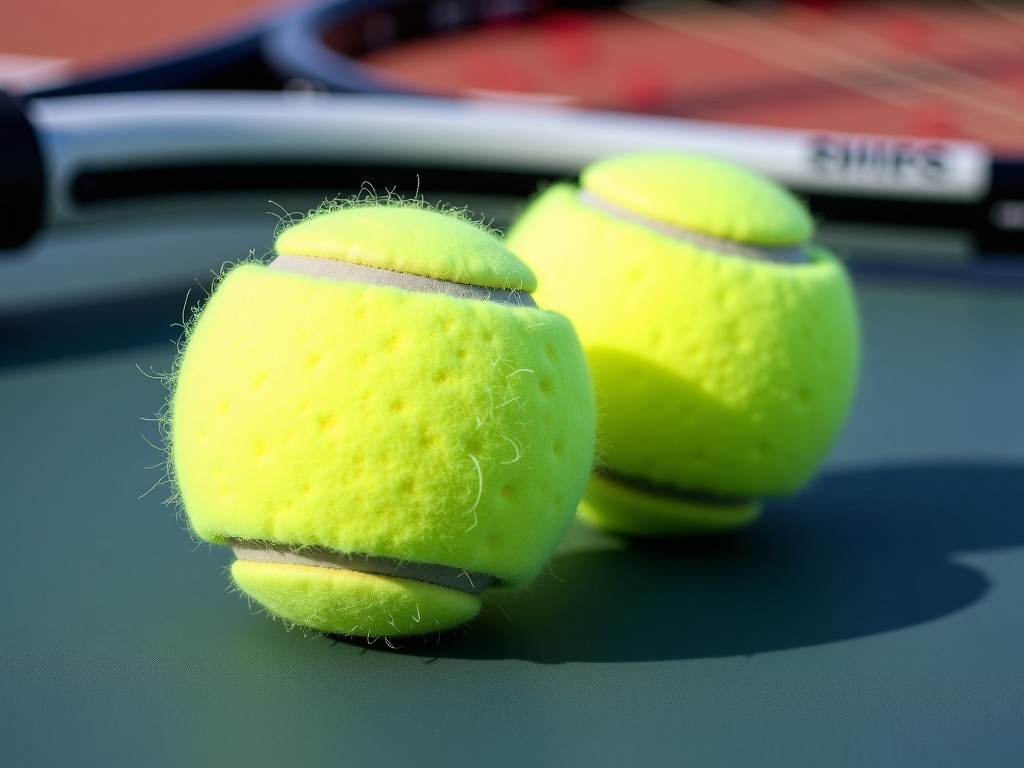
Wholesale Best Tennis Balls for Beginners – Top Supplier
Beginner players benefit from tennis balls that exhibit lower internal pressure and a softer felt cover, which reduces ball speed and increases reaction time.
These characteristics allow new athletes to develop consistent stroke mechanics without excessive fatigue while maintaining adequate durability for repeated use.
Material Composition
The core consists of natural rubber compounded with sulfur and accelerators to achieve a tensile strength of approximately 12 MPa and an elongation at break of 450 %.
Zinc oxide at 2 wt % is added to improve oxidation resistance during extended storage periods.
The outer felt is a blend of 68 % wool and 32 % nylon fibers, woven to a uniform thickness of 2.0 mm before latex impregnation for optimal adhesion to the rubber core.
Dimensional and Performance Specifications
| Parameter | Typical Value | Unit | Test Method |
|---|---|---|---|
| Diameter | 6.54–6.86 | cm | ASTM F188 |
| Weight | 56.0–59.4 | g | ASTM F188 |
| Internal Pressure | 12–14 | psi | ASTM F188 |
| Forward Deformation | 0.5–0.6 | mm | ASTM F188 |
| Return Bounce (100‑in drop) | 53–58 | inches | ASTM F188 |
| Durability (impacts before 0.2 psi loss) | 300–500 | hits | Internal cycling test |
Manufacturing Considerations
Rubber cores are injection‑molded at 165 °C under 120 bar pressure to ensure uniform wall thickness and eliminate voids.
After molding, cores undergo a 24‑hour cure at 80 °C to stabilize internal pressure within the target range.
Felt sheets are cut to size, wrapped around the cured core, and bonded using a water‑based latex adhesive that cures at 60 °C for 30 minutes.
Typical Applications
- Entry‑level coaching programs where reduced ball speed aids skill acquisition.
- School physical‑education curricula requiring durable, low‑maintenance equipment.
- Recreational clubs offering beginner‑friendly court sessions.
- Training drills that focus on consistency rather than power.
Customization Options
- Alternative felt colors (high‑visibility yellow, orange, or white) for specific lighting conditions.
- Custom logo printing using water‑based inks that comply with ISO 12647‑2.
- Adjustable internal pressure ranging from 10 psi to 16 psi to tailor bounce characteristics.
- Packaging variations: mesh bags, cardboard cartons, or reusable plastic totes.
Quality Assurance Procedures
Incoming rubber compound is tested for specific gravity (1.18 ± 0.02) and tensile strength before release to the molding line.
Each core is weighed post‑molding; acceptable weight variance is ±0.5 g to ensure consistent pressure.
Finished balls undergo a bounce‑height test (drop from 100 inches) and a visual inspection for felt uniformity and surface defects.
Packaging and Logistics
Bulk units are packed in corrugated cartons with an internal polyethylene liner that limits moisture ingress to less than 0.2 % weight gain over 30 days.
Cartons are stacked on pallets, stretch‑wrapped, and labeled with GS1‑128 barcodes; a standard pallet holds 1,200 balls for efficient handling.
Frequently Asked Questions
Can the internal pressure be adjusted for different training levels?
Yes, pressure can be set between 10 psi and 16 psi during manufacturing to produce slower or faster balls as required.
What information is needed to obtain a quotation?
Quantity, desired pressure range, felt color, logo artwork files, and preferred packaging style are sufficient for a preliminary quote.
How are export shipments protected against humidity?
Each carton includes a moisture‑barrier liner and silica‑gel desiccant packs to maintain internal relative humidity below 50 % during transit.




