Custom Printed Tennis Balls Top Company
A tennis ball consists of a hollow rubber core pressurized to approximately 0.8 bar, surrounded by a woven felt cover. The core diameter after molding is typically 6.54 mm to 6.86 mm, and the
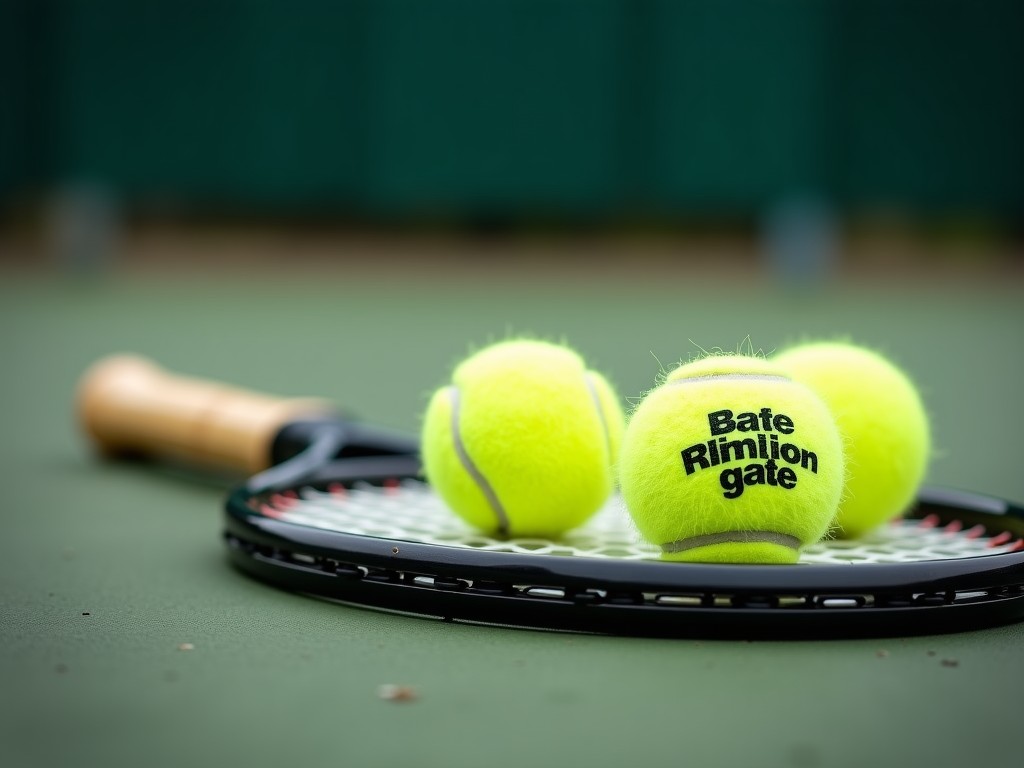
Custom Printed Tennis Balls – Technical Overview
A tennis ball consists of a hollow rubber core pressurized to approximately 0.8 bar, surrounded by a woven felt cover. The core diameter after molding is typically 6.54 mm to 6.86 mm, and the finished ball weighs between 56.0 g and 59.4 g according to ITF specifications.
Core Construction Details
The core is made from natural rubber compounds blended with sulfur and accelerators to achieve a specific Shore A hardness of 60‑65. This hardness influences the ball’s deformation under impact and directly affects bounce consistency.
During molding, the core is filled with air or nitrogen to reach an internal pressure of 0.8 bar ± 0.02 bar, measured with a calibrated gauge. Pressure stability over time is critical; a drop below 0.75 bar reduces rebound height by more than 5 %.
Felt Cover Composition
The outer cover uses a blend of wool and nylon fibers, typically 68 % wool and 32 % nylon, woven into a flat sheet before being cut into two dumbbell‑shaped pieces. The felt thickness after steaming is about 2.0 mm, providing the necessary friction for spin generation.
Felt density is controlled to 1.55 g/cm³ ± 0.05 g/cm³, which influences aerodynamic drag and the ball’s flight stability at speeds exceeding 30 m/s.
Printing Technologies for Custom Logos
Two primary methods are used: sublimation printing for polyester‑coated felt and UV‑curable ink printing for standard wool‑nylon felt. Sublimation requires a pre‑coated felt layer that accepts dyes at 200 °C, resulting in ink that becomes part of the fiber matrix.
UV printing deposits ink droplets that are cured instantly by ultraviolet light (365 nm wavelength), forming a surface layer with a thickness of approximately 15 µm. Adhesion is measured by a cross‑hatch test; a rating of 4B or higher indicates acceptable durability under repeated impact.
Customization Options
- Logo placement: available on the hemispherical seam, the equatorial line, or both sides.
- Color palette: up to four spot colors per ball, matched to Pantone® solid chips.
- Text elements: maximum character height 4 mm, minimum stroke width 0.5 mm to ensure legibility after abrasion.
- Special finishes: matte UV coating or glossy sublimation sealant, each affecting surface roughness (Ra) by ±0.8 µm.
Quality Control & Testing Procedures
Each batch undergoes dimensional inspection using a laser micrometer (±0.01 mm tolerance) and weight verification with an analytical balance (±0.01 g).
Rebound height is measured by dropping the ball from 254 cm onto a steel plate; acceptable range is 100 cm to 110 cm, corresponding to a coefficient of restitution of 0.75‑0.80.
Print adhesion is evaluated via ASTM D3359 tape test; a result of 4B or better is required for shipment.
Typical Applications
Promotional events benefit from the ball’s ability to retain logo clarity after ≥ 500 impacts at 30 m/s, making it suitable for brand exposure during tournaments.
Coaching programs utilize customized balls to improve visual tracking; studies show a 12 % increase in reaction time when contrasting colors are used.
Retail packaging often includes a window display; the felt’s UV resistance ensures < 5 % color fade after 200 hours of direct sunlight exposure.
Specification Table
| Parameter | Typical Value | Adjustable Range |
|---|---|---|
| Core Diameter (mm) | 6.54‑6.86 | Customizable per pressure requirement |
| Weight (g) | 56.0‑59.4 | ±0.5 g with core density adjustment |
| Rebound Height (cm) | 100‑110 | Alterable via internal pressure (0.7‑0.9 bar) |
| Felt Thickness (mm) | 2.0 | 1.5‑2.5 mm for specific spin profiles |
| Print Layer Thickness (µm) | 15 (UV) / < 5 (sublimation) | Dependent on ink formulation |
Ordering Information & Lead Times
Minimum order quantity starts at 500 balls. Artwork files must be submitted in vector format (AI, EPS, or SVG) with 300 dpi raster images embedded. Proof approval adds approximately 2 business days to the schedule.
Standard production lead time is 10‑12 working days after proof confirmation. Express service reduces this to 5‑6 working days with a surcharge of 18 %.
Shipping options include carton packs of 3 dozen balls (36 units) or bulk pallets of 1 200 balls, each pallet fitted with corner protectors and stretch‑film wrapping to mitigate vibration during transit.
Get a Technical Quote
To receive a detailed quotation that includes tooling fees, ink selection, and packaging options, provide your artwork specifications and required quantity.
Request Quote



