Custom Good Intermediate Graphite Tennis Racket Company
An intermediate graphite tennis racket is engineered for players who have mastered basic strokes and seek increased power without sacrificing maneuverability. The design targets a swing weight range
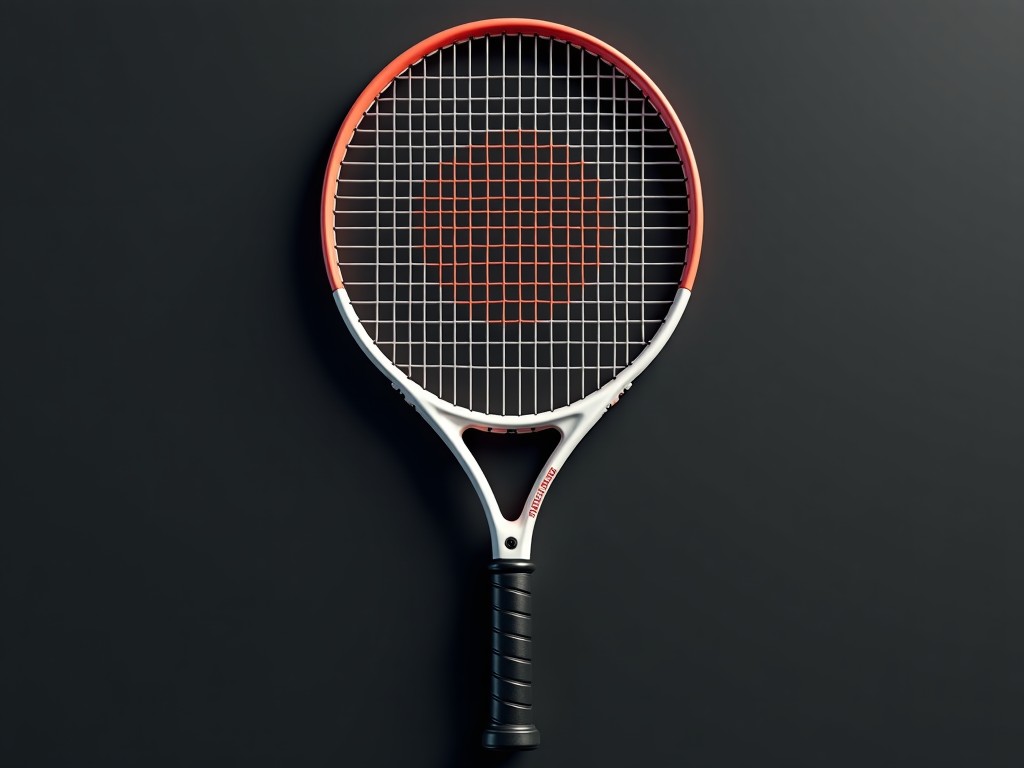
Custom Intermediate Graphite Tennis Racket
An intermediate graphite tennis racket is engineered for players who have mastered basic strokes and seek increased power without sacrificing maneuverability. The design targets a swing weight range that facilitates faster racket head speed while providing sufficient stability for off‑center hits.
Material Composition
The frame uses a high‑modulus graphite fiber (typically 40‑45 GPa tensile strength) woven in a unidirectional layup at 0° and ±45° orientations to optimize stiffness along the longitudinal axis and torsional resistance. A low‑viscosity epoxy resin system (glass transition temperature ≈ 130 °C) binds the fibers, ensuring minimal void content (< 0.5 %) after curing.
Reinforcement layers of aramid or basalt fibers may be added at the 3‑ and 9‑o’clock positions to dampen vibration, reducing frame shock transmitted to the player’s arm by approximately 15 % compared with plain graphite layups.
Key Mechanical Properties
| Property | Typical Range | Measurement Method |
|---|---|---|
| Swing Weight (g·cm²) | 300‑340 | RAE swing weight bench |
| Static Weight (g) | 285‑305 | Precision balance scale |
| Balance Point (mm from butt) | 320‑340 | Calibrated ruler |
| Flexural Stiffness (kN/mm) | 220‑260 | Three‑point bend test (ASTM D790) |
| Vibration Dampening Coefficient | 0.78‑0.85 (relative) | Laser vibrometry after impact |
Customization Options
- Frame length: 685 mm (standard) ± 5 mm for junior or extended reach
- Beam width: 22‑26 mm adjustable in 0.5 mm increments to tune power‑control trade‑off
- Weight distribution: head‑light, even, or head‑heavy via internal weighting plugs (0.5‑2 g each)
- String pattern: 16×19, 18×20, or 16×20 with customizable grommet hole spacing
- Finish: matte, gloss, or satin UV‑cured coating; optional anti‑slip grip zones
- Personalization: laser‑etched logo, player name, or team insignia on the throat or shaft
Manufacturing Process Overview
Pre‑impregnated graphite tape is cut to programmed lengths and laid onto a CNC‑mandrel with ±0.1 mm positional accuracy. The mandrel rotates at 150 rpm while a heated press applies 120 bar pressure and 150 °C temperature for 90 minutes, achieving a void‑free laminate.
After demolding, the frame undergoes precision CNC milling for beam shaping and grommet hole drilling, followed by ultrasonic cleaning to remove resin flash. Final painting and curing occur in a dust‑free booth with IR lamps to ensure coating thickness uniformity of 25 ± 5 µm.
Quality Assurance Philosophy
Each racket is subjected to three inspection tiers: dimensional verification (±0.2 mm on length, width, thickness), mechanical testing (swing weight and flexural stiffness within ±3 % of target), and performance validation (impact force transmission measured via load cell). Only units passing all criteria proceed to packaging.
Statistical process control charts monitor key parameters (resin cure temperature, mandrel tension) with control limits set at ±2 σ; any trend exceeding 1.5 σ triggers a preventive maintenance review.
Typical Applications
OEMs that supply intermediate‑level rackets to sporting goods retailers benefit from a scalable production platform that accommodates varied branding without retooling the core layup. Distributors gain inventory flexibility because weight and balance can be tuned post‑production via interchangeable weighting plugs, reducing SKU proliferation.
Academic tennis programs and coaching clinics use these rackets as teaching tools; the consistent flex profile helps students develop repeatable swing mechanics, while the optional vibration dampening mitigates arm fatigue during extended practice sessions.
Comparison: Standard vs. Custom Intermediate Graphite Racket
| Attribute | Standard Offering | Customizable per Project |
|---|---|---|
| Swing Weight Range | 315 ± 10 g·cm² | 300‑340 g·cm² (adjustable via weighting) |
| Beam Width | 24 mm fixed | 22‑26 mm in 0.5 mm steps |
| String Pattern | 16×19 | 16×19, 18×20, 16×20 (grommet spacing variable) |
| Finish | Gloss UV | Matte, gloss, satin; custom colors on request |
| Lead Time (weeks) | 4‑6 | 5‑8 (depends on complexity) |
Frequently Asked Questions
- Can the racket length be altered for junior players?
- Yes, length can be shortened to 660 mm or extended to 700 mm in 5 mm increments while maintaining the same layup schedule.
- What information is needed to receive a quotation?
- Desired swing weight, beam width, string pattern, finish, quantity, and any branding artwork (vector PDF or EPS).
- Which materials are available for the frame?
- Base is high‑modulus graphite; optional aramid or basalt reinforcement layers are available upon request.
- How is quality inspected before shipment?
- Each unit undergoes dimensional CMM testing, swing weight verification on a RAE bench, and flexural stiffness measurement via three‑point bend. A random 5 % sample receives impact force analysis.
- What packaging methods protect the rackets during export?
- Rackets are placed in individual corrugated sleeves with end caps, then packed in double‑wall cartons equipped with corner protectors and moisture‑absorbing desiccant packets.
- What is the typical production lead time?
- Standard orders ship within 4‑6 weeks; highly customized projects may require 5‑8 weeks depending on tooling and material availability.
- How are sample rackets arranged?
- Samples are produced using the same production line as mass production; a nominal fee covers material and shipping, which is credited toward the first purchase order.
Next Steps
To discuss your specific performance targets, obtain a detailed quote, or request a prototype, please contact our engineering team.
Request Technical Consultation



