China Non Pressurized Orange Dot Tennis Balls Company
Non‑pressurized orange dot tennis balls are designed for training and practice environments where consistent performance over extended use is required. Unlike pressurized balls that rely on internal
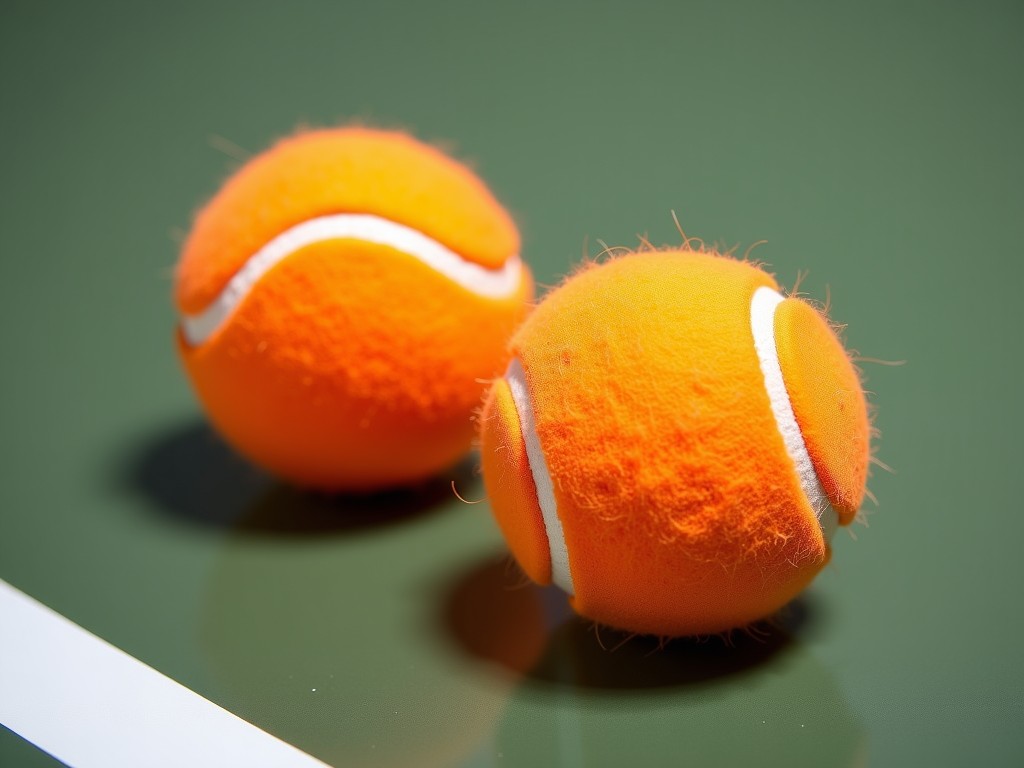
China Non-Pressurized Orange Dot Tennis Balls
Overview
Non‑pressurized orange dot tennis balls are designed for training and practice environments where consistent performance over extended use is required. Unlike pressurized balls that rely on internal gas pressure for bounce, these balls employ a solid rubber core that delivers a predictable rebound without pressure loss. The orange dot marking indicates a reduced speed specification (approximately 50 % slower than a standard yellow ball) suited for intermediate players and smaller court dimensions.
Technical Specifications
| Parameter | Non‑Pressurized Orange Dot Ball | Standard Pressurized Yellow Ball |
|---|---|---|
| Diameter | 6.54 – 6.86 mm | 6.54 – 6.86 mm |
| Weight | 56.0 – 59.4 g | 56.0 – 59.4 g |
| Rebound Height (drop from 254 cm onto concrete) | 100 – 115 cm | 135 – 147 cm |
| Internal Pressure | ≈ 0 psi (solid core) | ≈ 12 psi (gas filled) |
| Typical Play Life (hours of continuous impact) | 15 – 20 h | 2 – 4 h |
| Felt Type | Woven nylon‑wool blend, 60 % nylon / 40 % wool | Woven nylon‑wool blend, 60 % nylon / 40 % wool |
Applications
Because the bounce remains stable over many hours of use, these balls are ideal for ball‑machine drills, repetitive stroke practice, and extended coaching sessions where frequent ball replacement would interrupt flow. The reduced speed of the orange dot variant allows players to develop timing and control on a 60‑foot court, matching the specifications used in beginner‑to‑intermediate tennis development programs.
Facilities located at high altitude or with temperature fluctuations benefit from the pressure‑independent design, as bounce variation due to atmospheric changes is minimized. Additionally, the durability reduces the volume of waste generated from worn‑out balls, supporting sustainability goals for tennis clubs and academies.
Quality Control
Each production lot undergoes dimensional verification using laser gauges to ensure diameter stays within the 6.54‑6.86 mm tolerance. Weight is checked with analytical balances calibrated to 0.01 g resolution. Rebound performance is measured by dropping balls from a fixed height onto a calibrated concrete slab and recording the first bounce height; only balls falling inside the 100‑115 cm range proceed to packaging.
Felt adhesion is evaluated by a peel test that measures the force required to separate the felt from the rubber core; values must exceed 2.5 N/cm to pass. Finally, a subset of balls is subjected to an accelerated wear test simulating 30 minutes of continuous impact, after which rebound and visual inspection confirm no felt degradation or core cracking.
Customization Options
- Felt color: standard orange dot, white, or custom Pantone match
- Core hardness: selectable Shore A rating between 45 and 55 to fine‑tune bounce feel
- Logo printing: single‑color or multi‑color pad printing on the felt surface
- Packaging: bulk bags of 48 balls, retail tubes of 3, or custom cartons with dividers
Frequently Asked Questions
- Can the diameter or weight be adjusted for specific training needs? Yes, core formulation and felt thickness can be modified within ITF‑approved limits; please provide target values when requesting a quote.
- What information is required before receiving a quotation? Required details include order quantity, desired felt color, any logo artwork, packaging preference, and delivery destination.
- How is quality consistency verified for large orders? In‑process checks are performed every 2 hours, and a final random sample of 1 % is tested for diameter, weight, rebound, and felt adhesion before shipment.
- What export packaging protects the balls during transit? Balls are placed in polyethylene inner bags, then packed in corrugated cartons with edge protectors; palletized shipments use stretch film and corner braces.
- What is the typical lead time for a standard order of 5 000 balls? Production lead time is approximately 10‑12 working days after artwork approval, subject to current capacity.
Contact for Inquiry
To discuss technical requirements, request a sample, or obtain a detailed quotation, please reach out via the contact form. Our engineering team will respond with specifications, lead times, and pricing based on your project parameters.
Submit Inquiry



