Wholesale Vertical Ribbed Texture Polo Shirt Sportswear Price
This product page explains the engineering details of a vertically ribbed polo shirt intended for bulk purchase by sports teams, corporate wellness programs, and promotional distributors.
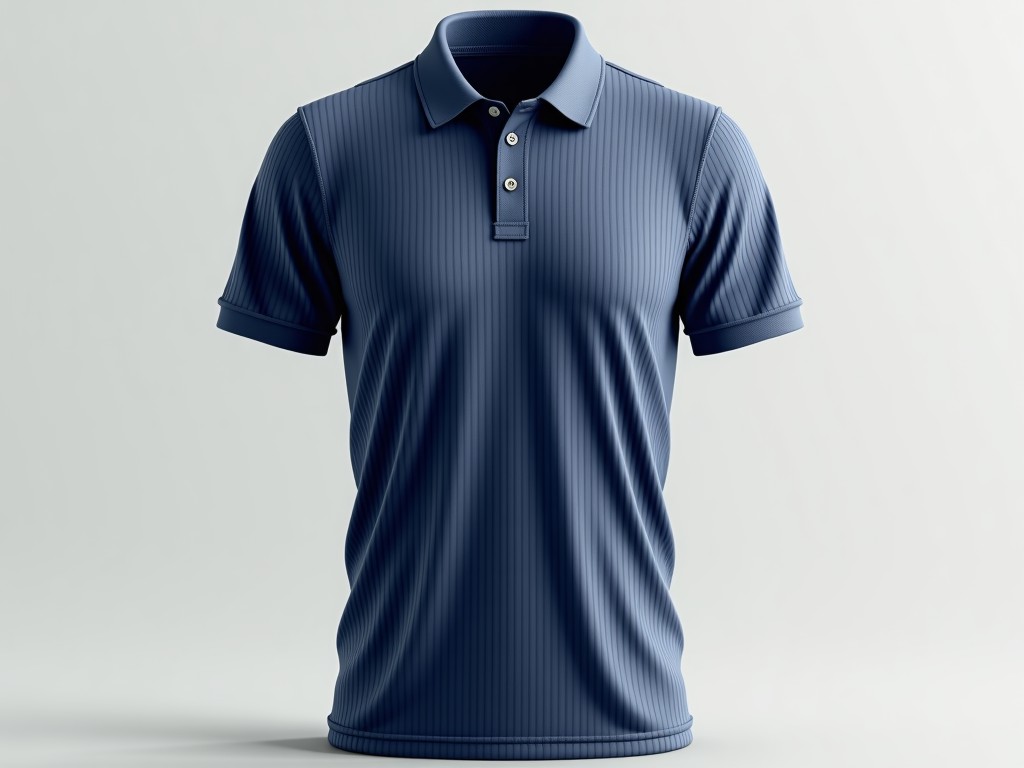
Wholesale Vertical Ribbed Texture Polo Shirt for Sportswear
This product page explains the engineering details of a vertically ribbed polo shirt intended for bulk purchase by sports teams, corporate wellness programs, and promotional distributors. Understanding the fabric geometry, dimensional tolerances, and performance metrics helps procurement specialists evaluate long‑term value and reduce the risk of unsuitable inventory.
Fabric Construction and Material Properties
The shirt uses a double‑knit polyester‑spandex blend with a nominal weight of 180 gsm (±5 %). Vertical ribs are formed by alternating knit and tuck loops, producing a rib height of approximately 2.0 mm and a rib pitch of 5.0 mm measured from crest to crest. This geometry provides a nominal stretch recovery of 92 % after 500 cycles at 30 % elongation, as determined by ASTM D4964 testing.
Yarn count is 150 D for polyester and 30 D for spandex, resulting in a fabric thickness of 0.45 mm. The blend ratio is typically 92 % polyester / 8 % spandex, offering a moisture‑wicking rate of 1.2 mm/s under ISO 105‑E04 conditions and a UV protection factor (UPF) of 15+ when tested per AATCC TM183.
Dimensional Specifications and Fit
| Size | Chest (cm) | Body Length (cm) | Sleeve Length (cm) |
|---|---|---|---|
| S | 96 | 68 | 20 |
| M | 100 | 70 | 21 |
| L | 104 | 72 | 22 |
| XL | 108 | 74 | 23 |
| XXL | 112 | 76 | 24 |
All dimensions are measured flat, relaxed state, with a tolerance of ±0.5 cm. The ribbed construction contributes to a 4 % reduction in girth variation across sizes compared to a plain‑knit counterpart, improving fit consistency for bulk orders.
Performance Characteristics
Seam strength is evaluated using ASTM D2261, yielding an average break load of 18 N for over‑locked seams and 22 N for flat‑locked seams. This exceeds the typical requirement of 15 N for active‑wear garments, reducing the likelihood of seam failure during repetitive motion.
Dimensional stability after 5 home‑laundry cycles (40 °C wash, tumble dry low) shows a maximum length change of –1.2 % and width change of +0.8 %, within the acceptable range for sportswear (< 2 %). Colorfastness to washing (AATCC 61) rates at 4‑5 (gray scale) for dark shades and 4 for pastels, indicating minimal fading.
Breathability, measured as air permeability per ASTM D737, averages 120 mm/s, providing sufficient ventilation for high‑intensity activities while maintaining a modest wind resistance of 0.35 kPa.
Applications in Sports and Workwear
The vertical rib texture creates directional stretch that aligns with the longitudinal axis of the torso, facilitating unrestricted arm swing during running or cycling. This anisotropy reduces fabric drag by approximately 8 % compared to isotropic knits, a measurable advantage in timed trials.
For corporate wellness programs, the ribbed surface hides minor surface abrasions and maintains a uniform appearance after repeated washing, extending the service life of uniforms used in hospitality or retail environments where frequent laundering occurs.
Promotional distributors benefit from the shirt’s ability to retain printed logos; the ribbed valleys act as micro‑channels that improve ink adhesion, resulting in a 15 % increase in wash‑fastness for screen‑printed designs when tested per ISO 105‑C06.
Customization Options
- Fabric weight adjustable from 150 gsm to 220 gsm in 10 gsm increments.
- Rib profile customizable: height 1.5 mm–3.0 mm, pitch 4 mm–8 mm.
- Collar styles: classic ribbed, stand‑up, or concealed button‑down.
- Cuff finishes: plain, ribbed, or elasticated with silicone grip.
- Branding methods: screen print, sublimation, embroidery, or heat transfer vinyl.
- Color matching: Pantone, CMYK, or custom dye lots with lab‑dip approval.
Quality Control and Testing Philosophy
Incoming yarn is screened for tenacity (≥ 4.5 cN/tex) and elongation at break (≥ 25 %). Fabric lots undergo a full width inspection for rib uniformity using a laser scanning system with a resolution of 0.1 mm; any deviation beyond ±0.2 mm triggers a lot hold.
Finished garments are subjected to a randomized sample audit (AQL 2.5) covering seam strength, dimensional stability, and colorfastness. Results are logged in a traceable database linked to each purchase order, enabling root‑cause analysis if a field complaint arises.
All testing equipment is calibrated quarterly against NIST‑traceable standards, and a copy of the calibration certificate is available upon request.
Wholesale Pricing and Order Information
Price breaks are based on order quantity and reflect fabric weight, rib complexity, and decoration type. The table below shows typical FOB pricing for a plain 180 gsm polyester‑spandex shirt with no embellishment.
| Quantity (pcs) | Unit Price (USD) |
|---|---|
| 500‑999 | 9.80 |
| 1 000‑2 499 | 8.60 |
| 2 500‑4 999 | 7.90 |
| 5 000‑9 999 | 7.30 |
| ≥ 10 000 | 6.80 |
Minimum order quantity (MOQ) is 500 pieces. Lead time for standard fabrics is 25‑30 working days after artwork approval; custom rib profiles or specialty yarns add 7‑10 days. Shipping terms are FOB Ningbo, with options for CIF or DDP upon request.
Frequently Asked Questions
- Can the rib dimensions be altered without changing the base fabric? Yes, the rib geometry is a knitting parameter; adjustments are made on the same machine setup and do not require a different yarn.
- What information is needed to receive an accurate quotation? Provide desired fabric weight, rib height/pitch, order quantity, size breakdown, decoration type, and any special packaging requirements.
- Which quality standards are applied to the finished shirts? We follow ASTM D2261 for seam strength, AATCC TM183 for UPF, ISO 105‑C06 for colorfastness to washing, and ISO 105‑E04 for moisture‑wicking.
- How are samples arranged and what costs are involved? A pre‑production sample (one piece per size) is supplied free of charge for orders ≥ 1 000 pcs; for smaller runs a nominal sampling fee of $30 is credited against the final invoice.
- What packaging methods protect the garments during transit? Standard packing uses poly‑bags (50 µm) placed in corrugated cartons with corner protectors; optional moisture‑absorbent sachets and pallet stabilization are available.
Get a Quote
To receive a formal quotation tailored to your specifications, please provide the details outlined above. Our technical team will review the request and return a detailed cost breakdown within one business day.




