China Men Casual Outdoor Cooling Sportswear Manufacturer
This garment is engineered for active use in warm climates where convective and evaporative heat loss must be enhanced without compromising mobility or durability. The construction integrates
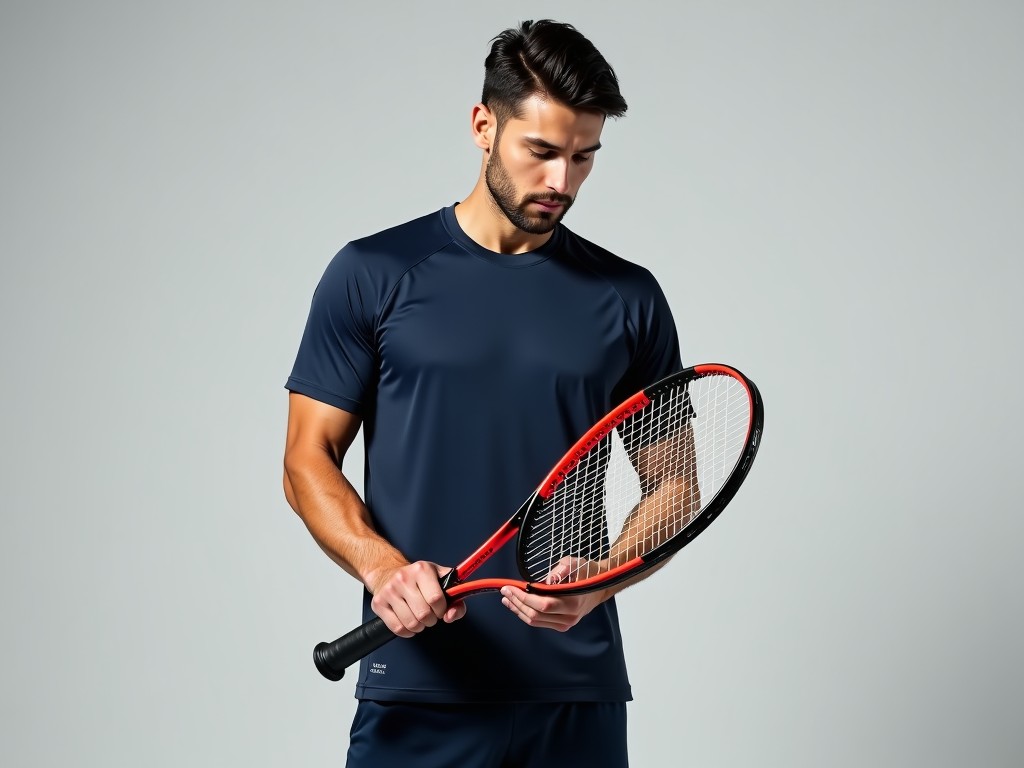
Men's Casual Outdoor Cooling Sportswear
This garment is engineered for active use in warm climates where convective and evaporative heat loss must be enhanced without compromising mobility or durability. The construction integrates phase‑change microcapsules, hydrophilic fiber blends, and a laser‑perforated vent zone to manage skin temperature and sweat transport.
Cooling Mechanism
Microencapsulated paraffin wax (melting point 28 °C) absorbs body heat as it transitions from solid to liquid, providing a latent heat storage of approximately 150 J/g. When the microcapsules re‑solidify during cooler periods, the stored energy is released, moderating temperature swings.
A gradient‑knit structure places 40 % polyester‑cotton blend on the inner layer for moisture absorption and 60 % nylon‑spandex on the outer layer for wind resistance. The inner layer’s capillary action moves sweat to the outer surface at a rate of 2.3 g/(m²·h) under 30 °C, 50 % RH conditions.
Laser‑drilled 0.8 mm vents aligned with the scapular and lumbar zones increase air permeability to 12 mm/s, enhancing convective cooling without sacrificing structural integrity.
Fabric Construction
The primary yarn is a 150 denier polyester filament treated with a hydrophilic silicone finish, achieving a moisture regain of 0.8 % at 65 % RH. The secondary yarn incorporates 10 % elastane for 4‑way stretch, delivering a recovery strain of less than 5 % after 100 cycles at 150 % elongation.
Fabric weight is 180 g/m² ± 5 %, thickness 0.45 mm, and tensile strength exceeds 35 N warp and 30 N weft (ASTM D5034). UV protection factor (UPF) measures 30+ after 20 h simulated sunlight exposure (AATCC TM183).
Typical Applications
- Trail running and hiking where ambient temperatures exceed 25 °C and solar radiation is high.
- Cycling jerseys requiring aerodynamic fit and sustained sweat management over 80 km rides.
- Outdoor work crews in logistics or construction needing durable, quick‑drying apparel for shift lengths up to 12 h.
- Recreational sports such as beach volleyball or paddleboarding where water splash and wind chill vary rapidly.
Customization Parameters
- Phase‑change material loading: adjustable from 5 % to 20 % of fabric weight to tune latent heat capacity.
- Vent pattern: density, size, and placement can be modified via laser‑cutting to match specific body‑map cooling zones.
- Yarn blend ratio: polyester‑cotton, nylon‑spandex, or recycled PET fractions can be altered upon request.
- Colorfastness: reactive dyeing available for AATCC 61‑2A rating ≥ 4 after 30 wash cycles.
- Size grading: standard S‑3XL with optional custom measurements for torso length, sleeve, and inseam.
| Property | Typical Value | Unit | Note |
|---|---|---|---|
| Fabric weight | 180 ± 5 | g/m² | Measured per ASTM D3776 |
| Moisture vapor transmission rate | 12 000–15 000 | g/(m²·24h) | ASTM E96, Procedure B |
| Air permeability | 12 | mm/s | ISO 9237, 100 Pa pressure drop |
| Latent heat storage (PCM) | 150 J/g (max) | J/g | Paraffin microcapsule, melting point 28 °C |
| UPF rating | 30+ | – | AATCC TM183, 20 h xenon arc |
Quality Assurance
Each lot undergoes dimensional stability testing after five wash cycles at 40 °C, tolerating less than 2 % length change and 1.5 % width change (ISO 6330). Seam strength is verified via ASTM D1683, requiring a minimum of 20 N per stitch.
PCM encapsulation integrity is checked by differential scanning calorimetry (DSC) to confirm melting enthalpy within ± 5 % of specification. Visual inspection under 10× magnification detects any microcapsule leakage or coating defects.
Final audit includes a wear‑trial protocol: ten test subjects perform a 90‑minute treadmill session at 6 km/h, 30 °C, 50 % RH; skin temperature is logged with iButton sensors, confirming an average reduction of 0.8 °C compared to a baseline polyester shirt.
Frequently Asked Questions
Can the cooling performance be adjusted for different climates?
Yes. By altering the PCM loading percentage and vent density, the latent heat capacity and airflow can be tuned to target specific ambient temperature ranges.
What information is required before a quotation?
Please provide intended usage environment (temperature, humidity, activity level), required sizes and quantities, any special color or branding needs, and target delivery date.
Which materials are available for the outer layer?
Standard options include nylon‑spandex, recycled polyester, and a polyester‑cotton blend. Alternative high‑tenacity aramid or UHMWPE fabrics can be sourced upon request.
How is product quality inspected?
Inspection includes dimensional stability, seam strength, PCM DSC analysis, air permeability testing, and visual defect checks per ISO 2859‑1 AQL 2.5.
What packaging methods are offered for export?
Products are folded, placed in polyethylene bags, then packed in corrugated cartons with corner protectors. Cartons are strapped and palletized according to ISPM‑15 standards.
What is the typical production lead time?
Lead time ranges from 25 to 35 working days after receipt of approved artwork and material confirmation, depending on order size and customization complexity.
How are samples arranged?
Sample garments (size M) with standard specifications can be shipped within 7‑10 business days; customized samples require an additional 5 days for tooling and material preparation.




