Wholesale Winter Pickleball Balls Manufacturer
The following details outline the engineering considerations for producing pickleball balls optimized for cold‑weather play, focusing on measurable properties that affect performance and longevity.
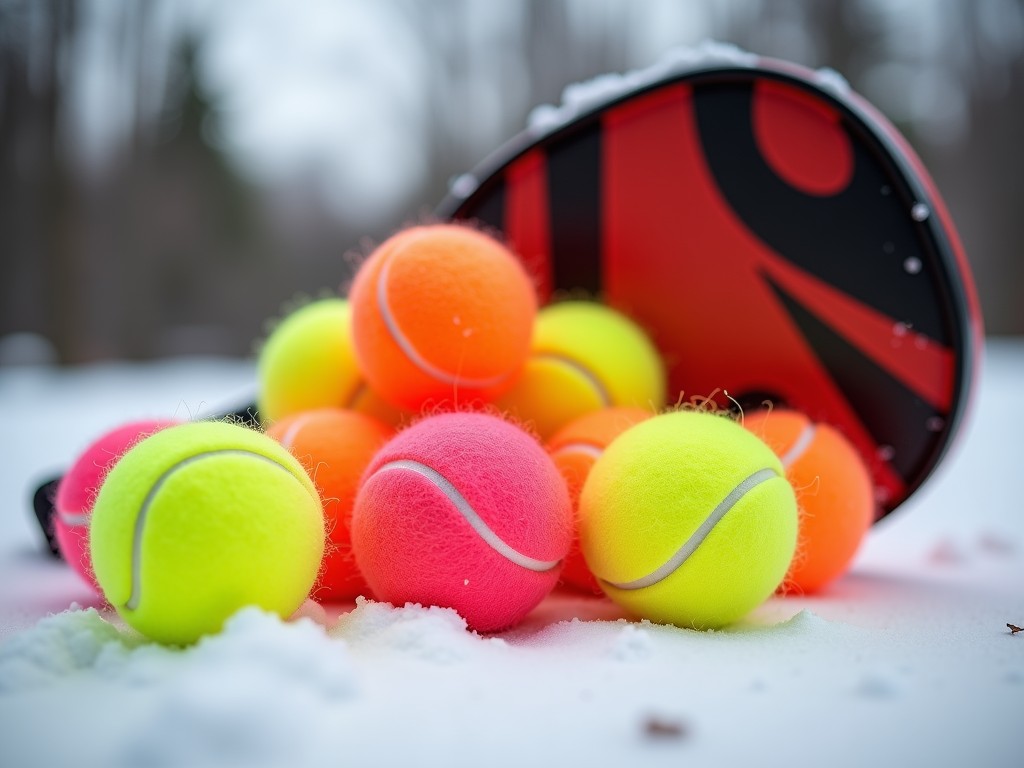
Wholesale Winter Pickleball Balls Manufacturer
The following details outline the engineering considerations for producing pickleball balls optimized for cold‑weather play, focusing on measurable properties that affect performance and longevity.
Overview
Winter pickleball balls must retain elasticity and bounce consistency when ambient temperatures drop below 0 °C. This is achieved by selecting polymer blends with low glass‑transition temperatures and reinforcing the core structure to resist cracking under repeated impact.
Technical Specifications
| Parameter | Typical Value | Units |
|---|---|---|
| Diameter | 74 | mm |
| Weight | 22 | g |
| Coefficient of Restitution (0 °C) | 0.78 | – |
| Hardness (Shore A) | 55 | – |
| UV Stabilizer Content | 0.5 | wt % |
Material Composition
The balls are constructed from a thermoplastic elastomer (TPE) base blended with ethylene‑vinyl acetate (EVA) to lower the glass‑transition temperature to approximately –20 °C. A proprietary additive package includes antioxidant and UV stabilizers that extend outdoor service life by reducing oxidative degradation.
Fillers such as silica are limited to under 2 wt % to maintain uniform impact response while providing abrasion resistance on rough court surfaces.
Performance Characteristics
- Consistent bounce height variation less than ±3 % across –10 °C to +30 °C range.
- Abrasion loss measured at 0.12 mg per 1000 impacts on standard asphalt.
- Water absorption below 0.02 % after 24 h immersion, ensuring no weight gain in humid conditions.
Manufacturing Process
Injection molding is performed on multi‑cavity tools with precise temperature control (±1 °C) to ensure uniform wall thickness. Post‑molding, balls undergo a controlled annealing cycle at 60 °C for 30 minutes to relieve internal stresses that could cause premature cracking in low‑temperature environments.
Each batch is subjected to a dimensional inspection using laser scanning, with a tolerance of ±0.2 mm on diameter and ±0.1 g on weight.
Applications
Facilities located in northern climates or indoor venues with low heating specifications benefit from balls that maintain playability without frequent replacement. The reduced temperature sensitivity also makes these balls suitable for early‑morning or late‑evening sessions when court surfaces are cooler.
Tournament organizers seeking consistent ball behavior across varying indoor heating zones can standardize on this product to minimize equipment‑related variables.
Quality Assurance
Quality control follows a three‑stage protocol: raw material verification, in‑process monitoring, and final product testing. Each lot is evaluated for bounce consistency using a standardized drop‑test rig at –5 °C, +5 °C, and +25 °C.
Statistical process control charts track key dimensions; any deviation beyond 2σ triggers a machine setup review.
Customization Options
Clients may request adjustments to hardness (±5 Shore A) by altering the TPE/EVA ratio, or specify alternative color pigments that meet indoor facility branding requirements. Logo embossing is available via pad printing with solvent‑based inks that retain adhesion after low‑temperature cycling.
Packaging quantities can be tailored from bulk cartons of 500 units to retail‑ready packs of 3, with corresponding label designs.
Packaging & Logistics
Balls are packed in low‑density polyethylene (LDPE) bags with desiccant packs to control moisture, then placed in corrugated cartons rated for 30 kg stacking strength. Cartons are labeled with handling icons indicating “Keep Dry” and “Temperature Range –20 °C to +40 °C”.
For export shipments, pallets are stretch‑wrapped and fitted with corner protectors to prevent deformation during transit. Standard lead time is 3–4 weeks after receipt of approved artwork, depending on order volume.
FAQ
Can the ball diameter be customized?
Diameter adjustments are possible within ±2 mm of the standard 74 mm, subject to mold availability and corresponding impact on bounce characteristics.
What information is required before quotation?
Required details include requested quantity, any custom hardness or color specifications, packaging preference, and desired delivery timeline.
How is quality inspected for low‑temperature performance?
Each lot undergoes a bounce test at –5 °C, +5 °C, and +25 °C using a calibrated drop‑height apparatus; results must fall within the defined tolerance band.
Contact Us
For technical inquiries or to request a formal quotation, please reach out through the form below.
Request Quote



