Wholesale Monarch Paddle Ball Rackets Sets Manufacturer
Paddle ball rackets are used in recreational and institutional settings where consistent play performance and durability are required. Understanding the relationship between frame geometry, material
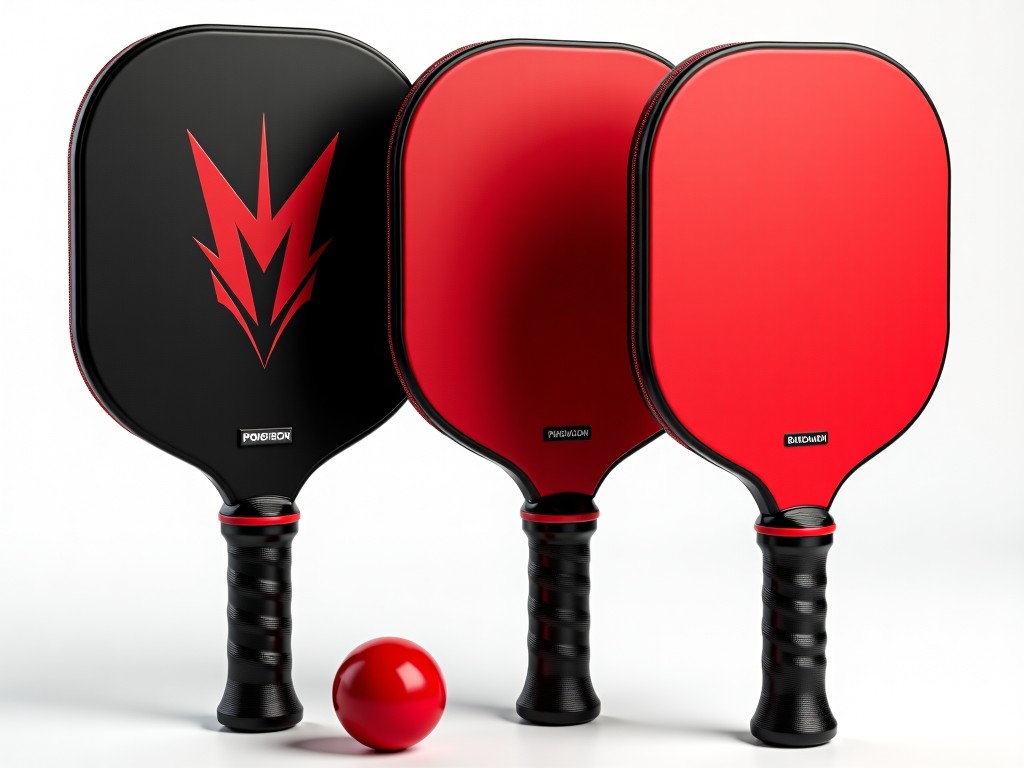
Wholesale Monarch Paddle Ball Racket Sets – Manufacturer Overview
Paddle ball rackets are used in recreational and institutional settings where consistent play performance and durability are required. Understanding the relationship between frame geometry, material composition, and mass distribution helps buyers select equipment that meets specific usage patterns and reduces replacement frequency.
Design and Construction
The racket consists of a handle, shaft, and head. The handle length typically ranges from 100 mm to 120 mm, providing a grip circumference of 100 mm to 110 mm for adult hands. The shaft is usually a cylindrical or tapered tube with a wall thickness of 1.2 mm to 1.8 mm, influencing torsional stiffness. The head shape is either oval or teardrop, affecting the sweet spot location and aerodynamic drag.
String bed tension is set between 20 lb and 30 lb (9 kg to 14 kg) depending on player preference and intended ball speed. The string pattern commonly uses 16 main strings and 19 cross strings, yielding a string density of approximately 28 strings per square inch. These parameters are adjustable during manufacturing to match specific performance targets.
Materials Options
- Frame: aerospace‑grade aluminum alloy (6061‑T6) with tensile strength ≥ 310 MPa, or carbon‑fiber reinforced polymer with modulus 70 GPa.
- Handle: polyurethane foam core wrapped in synthetic leather or thermoplastic elastomer, providing shock absorption and grip durability.
- Strings: nylon multifilament with diameter 1.25 mm to 1.35 mm, or polyester monofilament for enhanced spin potential.
Dimensional and Performance Characteristics
| Parameter | Typical Value | Adjustable Range |
|---|---|---|
| Overall Length | 680 mm | 660 mm – 700 mm |
| Head Width | 230 mm | 210 mm – 250 mm |
| Weight (unstrung) | 165 g | 150 g – 185 g |
| Balance Point (from butt) | 300 mm | 280 mm – 320 mm |
| Swing Weight | 210 kg·cm² | 190 – 230 kg·cm² |
Applications in Institutional and Recreational Settings
- School physical education programs benefit from rackets with a larger sweet spot and moderate weight, reducing forearm strain during extended use.
- Community centers require sets that withstand frequent impact; aluminum frames with reinforced grommets offer extended service life.
- Corporate wellness facilities prefer lightweight carbon‑fiber models for quick maneuverability in indoor courts.
Customization Capabilities
- Handle length and grip circumference can be altered in 5 mm increments to match user anthropometry.
- Frame material selection influences weight distribution; customers may specify a target balance point within ± 10 mm.
- String pattern and tension are configurable; alternative patterns such as 14×18 are available upon request.
- Cosmetic options include matte or gloss finishes, color‑coded shaft bands, and laser‑etched logos.
Quality Control Process
Each racket undergoes dimensional verification using calibrated calipers (± 0.05 mm) and weight measurement on a precision scale (± 0.5 g). Frame integrity is checked by applying a 50 N lateral load at the head and measuring deflection; acceptable deflection is less than 2 mm. String bed tension is validated with a digital tension meter before packaging. Visual inspection checks for surface defects, coating uniformity, and logo alignment. Only units meeting all criteria are cleared for shipment.
Packaging and Logistics
- Rackets are packed in corrugated cardboard boxes with internal foam inserts; each box holds six units to minimize movement.
- Box dimensions are 380 mm × 260 mm × 100 mm, gross weight approximately 1.2 kg per box.
- For export, boxes are placed on standard pallets (1200 mm × 1000 mm) with stretch film and corner protectors to resist shifting during transit.
- Palletized loads are labeled with handling instructions and country‑of‑origin marks as required by destination regulations.
Frequently Asked Questions
- Can dimensions be customized? Yes, handle length, head width, and weight can be adjusted within the ranges specified in the performance table.
- What information is required before quotation? Desired quantity, material preference (aluminum or carbon‑fiber), grip size, string tension, and any branding or packaging requirements.
- What materials are available? Frame: 6061‑T6 aluminum alloy or carbon‑fiber reinforced polymer; Handle: PU foam with synthetic leather or TPE cover; Strings: nylon multifilament or polyester monofilament.
- How is quality inspected? Dimensional check, weight verification, load‑deflection test, tension validation, and visual inspection as described in the quality control section.
- What packaging methods are available? Standard six‑unit boxes with foam inserts; palletizing for bulk shipments; custom packaging upon request.
- How are export shipments protected? Boxes are stacked on pallets, secured with stretch film, and corner protectors are applied to prevent impact damage.
- What is the typical production lead time? Lead time depends on order size and material availability; typically 3‑4 weeks for standard configurations, 5‑6 weeks for customized orders.
- How are samples arranged? Sample units can be produced after confirming specifications; shipping costs are borne by the requester.
Contact for Quotation
To discuss technical requirements, request a formal quotation, or arrange sample evaluation, please reach out to our sales engineering team.
Request Quotation



