Oem Professional Graphite Lightweight Pickleball Paddles Factory
The paddle combines a high-modulus graphite face with a honeycomb polypropylene core to achieve a low mass while maintaining stiffness required for competitive play. This construction yields a
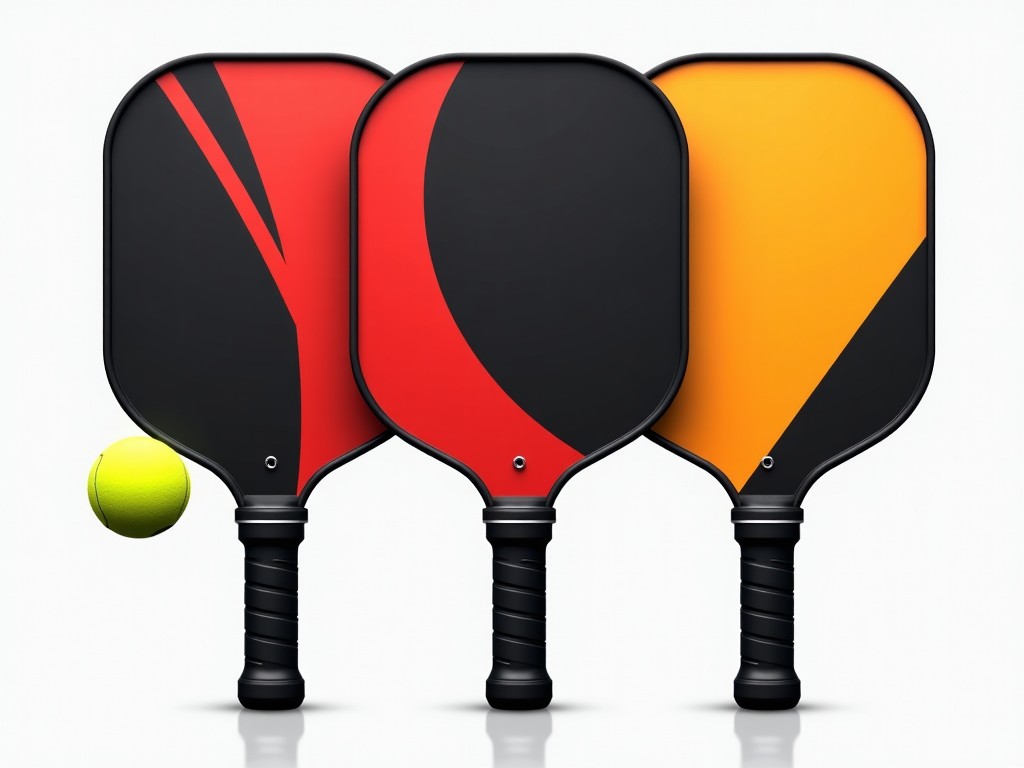
OEM Professional Graphite Lightweight Pickleball Paddles – Factory Overview
The paddle combines a high-modulus graphite face with a honeycomb polypropylene core to achieve a low mass while maintaining stiffness required for competitive play. This construction yields a typical weight range of 7.2–7.8 oz (204–221 g) and a thickness of 12.5–13.5 mm measured at the rim. Engineers select these dimensions to reduce player fatigue during extended rallies without compromising power transfer.
Material Composition and Construction
The outer laminate consists of two layers of unidirectional graphite fabric impregnated with epoxy resin, providing a tensile strength exceeding 400 MPa in the longitudinal direction. The core is a 6 mm hexagonal honeycomb made from polypropylene, which contributes a compressive modulus of approximately 1.2 GPa and contributes to vibration damping. These material choices result in a flexural rigidity of roughly 130 N·mm² across the paddle width.
Edge protection is achieved by wrapping a 2 mm thick polyurethane bumper around the perimeter, which absorbs impact energy and prevents delamination. The grip surface utilizes a perforated silicone overlay with a roughness average (Ra) of 8 µm, offering consistent traction under sweaty conditions. All layers are bonded under vacuum pressure at 120 °C for 20 minutes to ensure uniform cure and minimize void content.
Performance Characteristics
Swing weight, measured 10 cm from the butt cap, typically falls between 115 and 125 kg·cm², positioning the paddle in the mid‑range for maneuverability and power. The balance point lies 190–200 mm from the handle end, giving a slightly head‑heavy feel favored by players who prioritize drive shots. Natural frequency analysis shows a first bending mode around 420 Hz, indicating effective vibration attenuation.
Surface hardness, assessed via Shore D scale, reads 78 ± 2, resisting wear from repeated ball impact. Coefficient of restitution (COR) measured at a normal impact speed of 30 m/s averages 0.82, reflecting efficient energy return. These values are derived from standardized ASTM F1895 testing protocols adapted for paddle geometry.
OEM Customization Options
Manufacturers can adjust paddle geometry, grip dimensions, and surface finish to meet specific brand requirements or player preferences. The following list outlines common variable parameters that are available for tooling adjustment without altering the core manufacturing process.
- Overall length: 380–410 mm (adjustable in 5 mm increments)
- Width at throat: 190–210 mm
- Grip circumference: 100–115 mm (offered in 2 mm steps)
- Surface texture: matte, satin, or gloss finish (specified by roughness Ra)
- Edge guard color: black, white, or custom Pantone match
- Face graphic: silk‑screened or sublimated logo with ≤15 µm thickness
Quality Control and Inspection
Each batch undergoes dimensional verification using coordinate measuring machines with a tolerance of ±0.2 mm on length and width. Weight is checked on analytical balances calibrated to 0.01 g, ensuring every paddle stays within the declared range. Flexural stiffness is sampled via three‑point bend testing at a span of 250 mm, with acceptance criteria set at 120–150 N·mm².
Impact resistance is evaluated by dropping a 0.5 kg steel sphere from a height of 1 m onto the paddle face; acceptable units show no visible cracking and a residual deflection below 0.3 mm. Surface finish is inspected under 10× magnification for uniformity of coating thickness, targeting a variance of less than 5 µm across the hitting area. All inspection results are recorded in a traceable lot record linked to the production order.
Applications in Professional and Recreational Settings
The low mass and balanced swing weight reduce forearm strain during lengthy training sessions, making the paddle suitable for academy programs where athletes execute hundreds of strokes daily. Clubs that host tournament play benefit from the consistent COR, which provides predictable ball response across varying court temperatures. Recreational players appreciate the vibration damping, which lowers the risk of elbow discomfort during casual matches.
Because the paddle’s core material is resistant to moisture absorption, it maintains performance properties in humid environments, a key consideration for outdoor venues in coastal regions. The durable edge guard prolongs service life when paddles are frequently placed on hard surfaces, decreasing replacement frequency for facilities managing large inventories.
Technical Specifications (Typical Values)
| Parameter | Typical Range | Unit | Notes / Test Method |
|---|---|---|---|
| Weight | 7.2 – 7.8 | oz | Analytical balance, ±0.01 g |
| Thickness (rim) | 12.5 – 13.5 | mm | Caliper measurement |
| Swing Weight | 115 – 125 | kg·cm² | Measured 10 cm from butt cap |
| Balance Point | 190 – 200 | mm from handle end | Calculated from weight distribution |
| Flexural Rigidity | 120 – 150 | N·mm² | Three‑point bend, span 250 mm |
| Surface Roughness (Ra) | 7 – 9 | µm | Perforated silicone grip |
| Coefficient of Restitution | 0.80 – 0.84 | – | Impact speed 30 m/s, ASTM F1895 |
Frequently Asked Questions
Below are common inquiries from OEM buyers and procurement engineers. Answers are based on standard capabilities; specific project requirements may alter details.
- Can dimensions be customized? Yes, length, width, and grip circumference can be adjusted in the increments listed in the customization section.
- What information is required before quotation? Required details include target weight range, desired grip size, any logo or graphic files, and expected order volume.
- What materials are available for the face? Standard offering is high‑modulus graphite; alternative aramid or hybrid fabrics are available upon request.
- How is quality inspected? Each lot undergoes dimensional, weight, flexural, impact, and surface finish checks as described in the quality control section.
- What packaging methods are available? Paddles are packed in individual polyethylene bags, then placed in corrugated cartons with foam corner protectors; palletization is standard for export.
- How are export shipments protected? Cartons are strapped and stretch‑wrapped; optional heat‑sealed barrier bags are offered for moisture‑sensitive destinations.
- What is the typical production lead time? Lead time ranges from 20 to 35 working days after final artwork approval, depending on order size and current plant load.
- How are samples arranged? Sample units can be produced within 7 working days; shipping costs are borne by the requester unless otherwise negotiated.
For further technical discussion or to request a formal quotation, please use the contact form below. Our engineering team will review your specifications and provide a detailed feasibility assessment within two business days.
Request Quotation / Contact Engineering



