OEM high performance carbon fiber pickleball paddle Company: Tolerances, Grades and Supply
Interface geometry determines the energy transfer efficiency between the carbon fiber face and the polymer core. Manufacturing processes focus on maintaining a consistent ±0.5mm tolerance across the face surface to ensure uniform aerodynamic response across production batches. By controlling the resin pressure during the curing cycle, we minimize internal voids that cause structural fatigue in lower-grade composite assemblies.
Scope of Supply and Physical Form
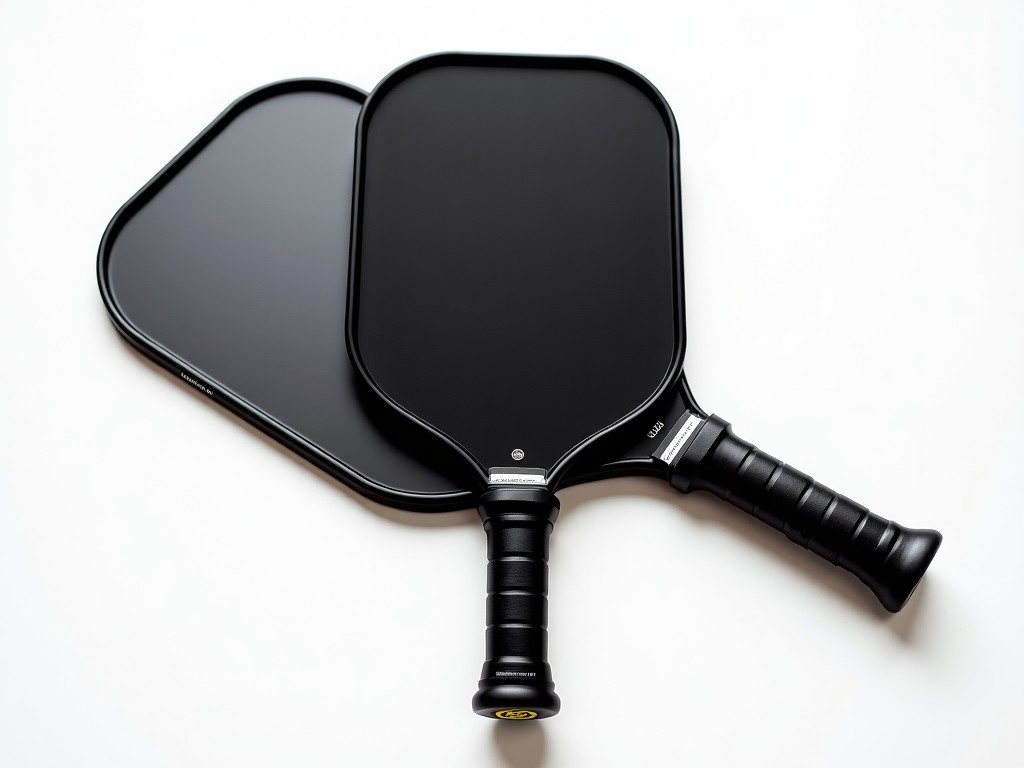
Load path analysis shows that the perimeter guard bears the highest stress concentrations during lateral-impact events. Our supply chain includes T700 carbon fiber faces reinforced with epoxy resins to prevent delamination under high-velocity impacts. The core configurations vary between polypropylene honeycomb and expanded foam structures, depending on the required damping-to-stiffness ratio.
- Variable thickness carbon faces (3.0mm to 5.0mm)
- Polypropylene honeycomb cores with density ranges of 0.21-0.25 g/cm³
- Injected polymer perimeter edge guards for impact resistance
- Custom-molded grip interfaces for ergonomic friction
Grade Selection Logic for Harsh Service
Deflection under rated load governs the rebound coefficient; cores exceeding 16mm thickness require specific structural stability under high-frequency impact. Selecting the correct fiber weave involves balancing the thermal expansion coefficient of the resin against the mechanical tensile strength.
| Material Grade | Primary Advantage | Failure Mode | Typical Application |
|---|---|---|---|
| Standard Weave Carbon | Cost-efficient production | Surface abrasion risk | Entry-level retail |
| High-Modulus T700 | Maximum energy return | Brittle fracture risk | Professional tournament |
| Reinforced Hybrid | Vibration absorption | Weight penalty | Long-endurance play |
Parameter Envelope and Customisation Limits
Critical Sizing Constraint
Swing weight variance must remain within ±2 grams across an OEM batch to maintain consistent player performance. Deviations beyond this range require manual re-balancing of the core density geometry.
Customization is limited by the structural integrity of the carbon fiber layup. While face texture can be modified via abrasive blasting, the internal core geometry remains fixed to prevent delamination during the thermal curing process.
Matching the Part to the Application
Matching the modulus of the carbon fiber to the required power-dwell ratio determines the paddle's effectiveness. High-modulus fibers offer control by reducing face deformation, while lower-modulus variants increase vibration absorption for the user. For high-frequency tournament environments, a hybrid layup often provides the best balance of durability and structural fatigue.
Specification Mistakes That Cause Field Failures
- Improper bonding agent application leads to shear strength failure under cyclic loading.
- Inadequate UV curing times result in premature surface abrasion.
- Using low-density cores in high-modulus faces causes internal structural collapse.
- Ignoring the thermal expansion mismatch between resin and fiber leads to warping.
Subsystem-Level Applications
These components address specific mechanical stresses in professional-grade sports equipment. Specifically, the paddle face must interface with high-impact, high-velocity polymer projectiles while maintaining a consistent coefficient of friction. The carbon fiber layup ensures that the mating-surface remains flat over thousands of impact-cycles.
Working as a Production Partner, Not a Catalogue Supplier
Our facility focuses on OEM-specific de-labeling and custom-molding requirements. We provide detailed batch consistency protocols to ensure that every unit meets the mechanical specifications of the initial prototype. For technical integration into your production line, discuss project requirements here.
Fitting Practice and Wear Inspection
| Inspection Metric | Acceptable Limit | Frequency |
|---|---|---|
| Surface Friction Coefficient | 0.45 - 0.65 | Every 500 cycles |
| Core Compression Depth | lt; 0.1mm | Quarterly audit |
| Delamination Perimeter | No visible separation | Post-batch check |




