Oem Entry Level Composite Pickleball Paddles Company
Entry level composite paddles are constructed from a molded polymer core bonded to a fiberglass‑reinforced face sheet. This combination delivers adequate stiffness for recreational play while keeping
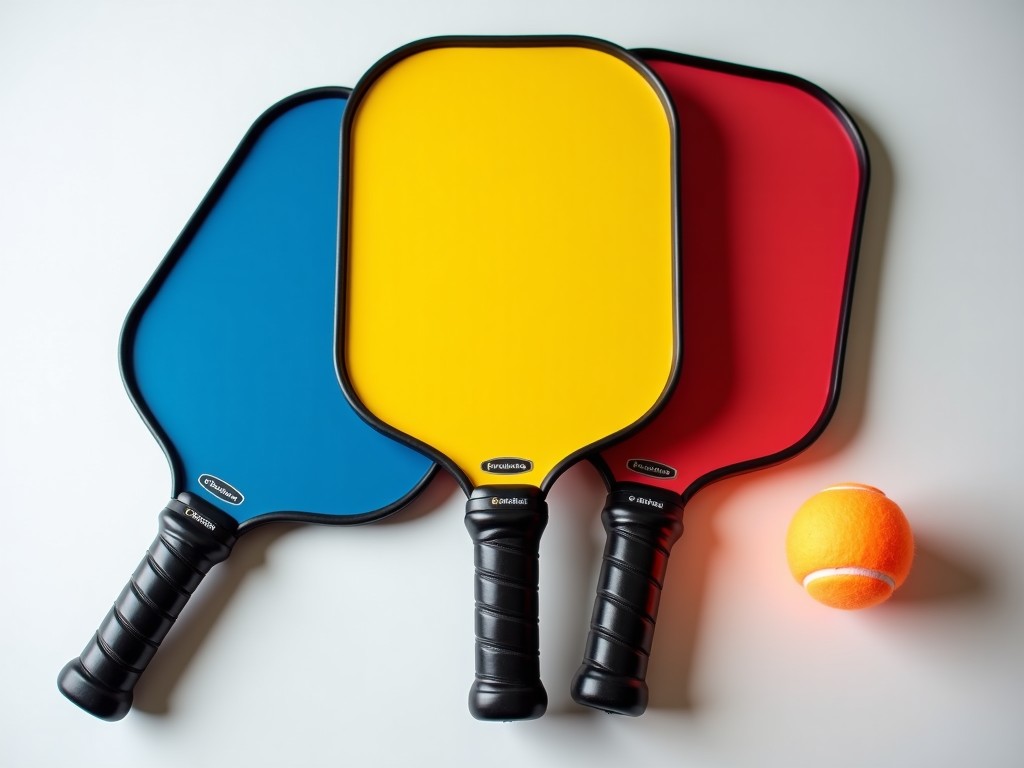
OEM Entry Level Composite Pickleball Paddles
Entry level composite paddles are constructed from a molded polymer core bonded to a fiberglass‑reinforced face sheet. This combination delivers adequate stiffness for recreational play while keeping material costs low enough for large‑volume OEM runs.
Core Construction
The core typically uses a polypropylene honeycomb or solid polymer sheet with a density ranging from 0.4 to 0.6 g/cm³. This density range provides a balance between impact resistance and weight control, resulting in paddle masses between 210 g and 240 g for a standard 40 cm × 20 cm blade.
Face Sheet and Edge Protection
A two‑layer fiberglass mat, impregnated with a polyester resin, forms the striking surface. The layup orientation is quasi‑isotropic to give uniform flex across the face. An edge guard made from extruded TPU (shore A 85) is over‑molded to protect the perimeter from chipping during repeated ball impact.
Manufacturing Process
Production begins with compression molding of the core at 150 °C and 20 MPa for 90 seconds. After cooling, the fiberglass face is placed on the core and subjected to a second press cycle to cure the resin. CNC routing then trims the paddle to final dimensions, followed by edge‑guard over‑molding and surface sanding to a roughness of Ra ≈ 3 µm.
Performance Characteristics
Typical flexural modulus measured across the face lies between 2.5 GPa and 3.2 GPa, providing a responsive feel without excessive vibration. The coefficient of restitution (COR) for a standard pickleball impact ranges from 0.78 to 0.82, indicating efficient energy transfer. Damping loss factor, measured via modal analysis, stays below 0.04, reducing arm fatigue during extended play.
Customization Options
- Blade length: 38 cm to 42 cm (adjustable in 2 mm increments)
- Width: 18 cm to 22 cm (adjustable in 2 mm increments)
- Grip circumference: 100 mm to 115 mm (customizable with over‑wrap)
- Surface texture: smooth, light sand‑finish, or patterned for spin enhancement
- Color: standard white, black, or custom Pantone‑matched via surface coating
- Branding: laser‑etched logo, silk‑screened graphics, or embossed lettering
Typical Specifications
| Parameter | Typical Range | Notes |
|---|---|---|
| Weight (unstrung) | 210 g – 240 g | Depends on core thickness and face layup |
| Length | 380 mm – 420 mm | Customizable per OEM request |
| Width | 180 mm – 220 mm | Customizable per OEM request |
| Core Thickness | 12 mm – 18 mm | Affects weight and stiffness |
| Face Material | Fiberglass‑polyester (2‑ply) | Quasi‑isotropic layup |
| Edge Guard | TPU, shore A 85 | Over‑molded, 3 mm width |
Application Rationale for OEMs
Recreational pickleball players prioritize durability and consistent feel over elite performance. Entry level composite paddles meet these needs by offering a stable hitting surface that resists denting under repeated low‑speed impacts, while the lightweight core reduces manufacturing material cost. This makes the paddle suitable for mass‑market retail channels where price sensitivity is high.
Quality Control Philosophy
Each batch undergoes dimensional inspection (±0.5 mm tolerance on length and width), weight verification (±2 g), and flexural modulus testing via three‑point bend. Surface roughness is checked with a profilometer to ensure Ra ≤ 3 µm. Edge‑guard adhesion is measured with a peel test targeting a minimum of 1.5 N/mm. Only paddles passing all checkpoints proceed to packaging.
Frequently Asked Questions
- Can dimensions be customized? Yes, blade length, width, and grip size can be adjusted within the ranges shown in the specification table.
- What information is required before quotation? Required details include target annual volume, desired paddle dimensions, grip preference, color or branding needs, and any required certifications (e.g., USAPA compliance).
- What core materials are available? Standard offering is polypropylene honeycomb; alternative solid polymer cores are available upon request for specific weight targets.
- How is quality inspected? See the Quality Control section; inspection includes dimensional, weight, mechanical, and adhesion checks.
- What packaging methods are available? Paddles are packed in single‑wall corrugated cartons with internal foam inserts; custom pallet configurations can be arranged for bulk shipments.
- What is the typical production lead time? Lead time averages 4‑6 weeks after final artwork approval, depending on order size and tooling availability.




