Oem Carbon Fiber Pickleball Paddles Manufacturer
We produce carbon fiber paddle blanks and finished paddles for brands that require consistent mechanical properties across large production runs. The focus is on delivering repeatable fiber volume
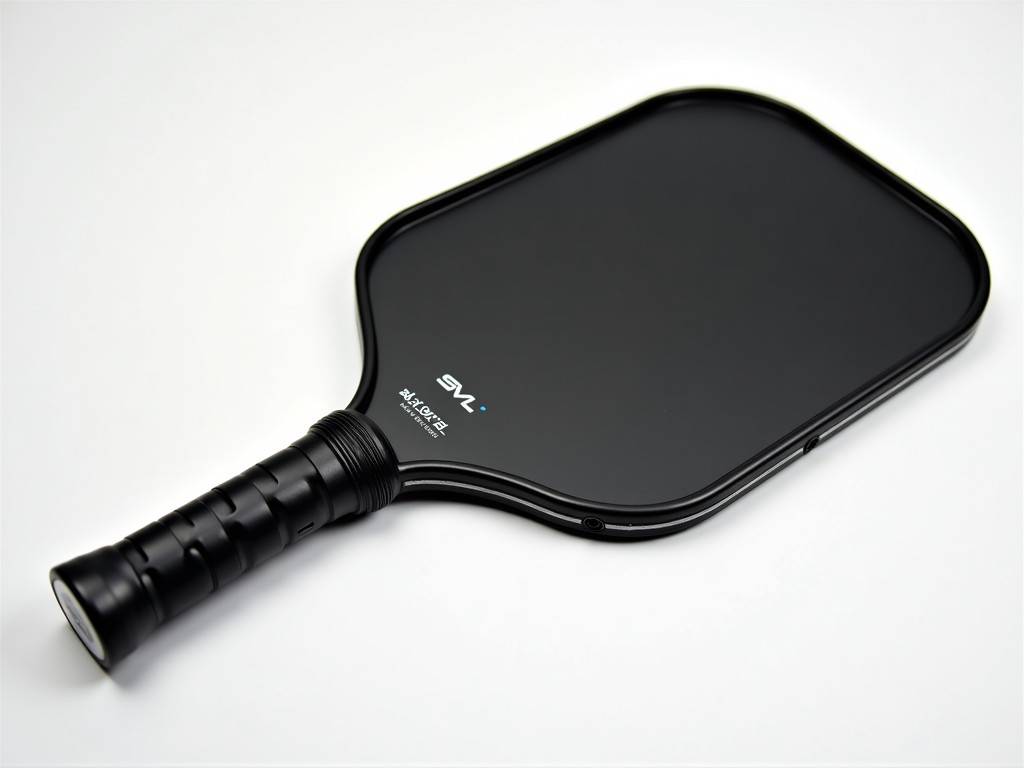
OEM Carbon Fiber Pickleball Paddles Manufacturer
We produce carbon fiber paddle blanks and finished paddles for brands that require consistent mechanical properties across large production runs. The focus is on delivering repeatable fiber volume fraction, resin cure quality, and edge tolerances that affect on‑court performance.
Material Composition and Layup Strategy
Typical paddle faces use a unidirectional carbon fiber core sandwiched between woven carbon fiber skins. The unidirectional layer provides longitudinal stiffness, while the biaxial or twill weave contributes to torsional stability and impact resistance.
- Core: 60 % unidirectional T700 carbon fiber, epoxy resin system, target fiber volume fraction 55 % ± 2 %
- Skin: 3K plain weave or 2×2 twill, areal weight 180 g/m², resin content adjusted for 45 % ± 3 % fiber volume
- Edge guard: pultruded carbon fiber strip, 2 mm thickness, bonded with structural adhesive
Key Performance Parameters
Measurable characteristics that directly influence play are swing weight, balance point, flexural stiffness, and surface roughness. These are controlled through layup symmetry, cure cycle, and post‑machining tolerances.
| Parameter | Typical Range | Test Method |
|---|---|---|
| Swing weight (kg·cm²) | 115 – 130 | ASTM F1895 paddle swing test |
| Balance point from butt (mm) | 190 – 210 | Caliper measurement on finished paddle |
| Flexural stiffness (N·mm²) | 1.8 – 2.4 × 10⁶ | Three‑point bend, span 200 mm |
| Surface roughness (Ra, µm) | 0.8 – 1.2 | Profilometer, cutoff 0.8 mm |
Customization Options
OEM customers can adjust layup geometry, core thickness, and edge protection to meet specific weight classes or play style preferences. Adjustments are quantified before tooling to maintain repeatability.
- Core thickness: 6 mm – 10 mm in 0.5 mm increments
- Skin weave: plain, twill, or satin, areal weight 150 – 220 g/m²
- Edge guard width: 3 mm – 6 mm
- Finish: matte UV‑cured coating or glossy polyurethane, thickness 15 µm – 30 µm
Manufacturing and Quality Control
Each paddle undergoes automated layup placement, vacuum bag curing at 120 °C ± 2 °C for 90 minutes, and post‑cure machining to ±0.1 mm tolerance on face dimensions. Inline inspection includes areal weight verification, resin content via burn‑off test, and ultrasonic C‑scan for delamination detection.
Statistical process control monitors key variables: fiber tension, vacuum level, and cure temperature, with control limits set at ±3 σ. Final random sampling measures swing weight and balance to confirm batch conformity.
Applications in Paddle Sports Equipment
Pickleball paddles benefit from high stiffness‑to‑weight ratios that enable quick wrist action while maintaining sufficient surface area for ball control. Carbon fiber construction reduces vibration transmission compared with wood or composite cores, lowering player fatigue during extended play.
Manufacturers seeking to differentiate product lines can leverage tunable flex profiles—stiffer faces for power‑oriented models, more flexible skins for control‑focused designs—without changing overall paddle geometry.
Ordering and Technical Support
Prospective OEM partners provide target weight, balance, and performance goals; we return a preliminary layup proposal with predicted mechanical values and tooling cost estimate. Sample production typically follows within 3‑4 weeks after design approval.
Technical data sheets, including laminate schedule, cure cycle, and inspection criteria, are available upon request.
Request Technical Specification Sheet



