Oem All Black Pickleball Paddle Manufacturer
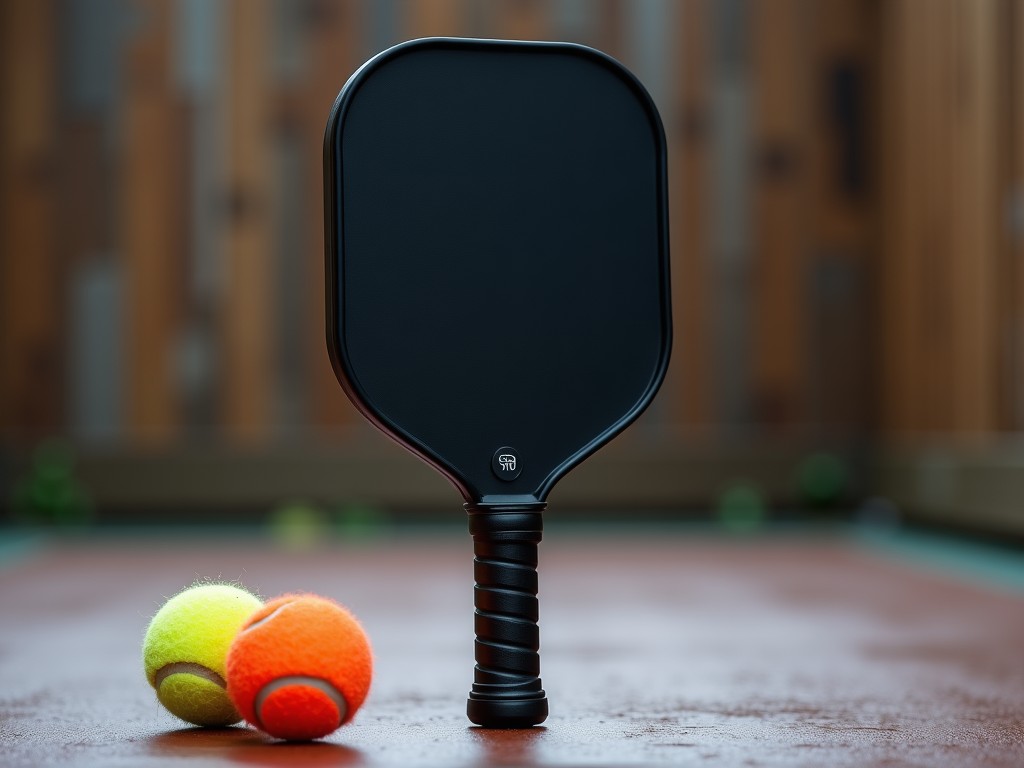
The all‑black pickleball paddle is engineered for OEM partners who require a uniform appearance that minimizes visual distractions on court while meeting strict performance tolerances. By integrating
OEM All Black Pickleball Paddle Manufacturer
The all‑black pickleball paddle is engineered for OEM partners who require a uniform appearance that minimizes visual distractions on court while meeting strict performance tolerances.
By integrating UV‑stable black pigments directly into the resin system and selecting a low‑density honeycomb core, the paddle achieves consistent coloration without sacrificing weight or stiffness.
Material Composition and Construction
The paddle face consists of a woven carbon‑fiber laminate impregnated with epoxy resin containing a dispersion of micron‑sized black pigment.
A polypropylene honeycomb core, typically 12 mm thick, provides the primary stiffness‑to‑weight ratio.
Layers are vacuum‑bagged and cured at 120 °C for 45 minutes to achieve a void‑free bond between face and core.
Dimensional Specifications
Standard dimensions follow USAPA guidelines, but OEM projects frequently request adjustments to length, width, or grip circumference to match brand‑specific ergonomics.
Typical values and adjustable ranges are shown below.
| Parameter | Typical Value | Customizable Range |
|---|---|---|
| Overall Length | 394 mm | 380 mm – 410 mm |
| Width | 197 mm | 190 mm – 205 mm |
| Thickness (face + core) | 12.5 mm | 11.0 mm – 14.0 mm |
| Weight | 215 g | 200 g – 235 g |
| Grip Circumference | 102 mm | 95 mm – 110 mm |
| Face‑Material Thickness | 0.8 mm | 0.6 mm – 1.0 mm |
| Core Cell Size | 6 mm hexagonal | 4 mm – 8 mm |
Surface Finish and Color Stability
The black pigment is dispersed at a concentration of 2 wt % within the epoxy matrix, ensuring uniform hue through the laminate thickness.
A hindered‑amine light stabilizer (HALS) package is added to retard UV‑induced fading, delivering ΔE < 2 after 500 hours of QUV exposure.
Surface gloss is controlled to 30 ± 5 GU, providing a low‑reflectance finish that reduces glare under indoor lighting.
Manufacturing Process
Carbon‑fiber prepreg is cut to shape, layered with the black‑pigmented resin film, and positioned over the honeycomb core.
The stack is placed in a vacuum bag, evacuated to 0.08 MPa, and heated in a press at 120 °C for 45 minutes.
After curing, the paddle undergoes demolding, edge trimming, and grip overwrap application before final inspection.
Customization Options
- Core thickness: 8 mm – 16 mm in 2 mm increments
- Face material: carbon‑fiber, glass‑fiber, or hybrid weaves
- Grip shape: standard, ergonomic, or tapered
- Edge guard: PVC, rubber, or none
- Branding: laser‑etched, sublimated, or in‑mold logos
Applications and Performance Characteristics
An all‑black appearance eliminates visual contrast between paddle and ball, helping players maintain focus during fast‑paced rallies.
The uniform color also simplifies branding for OEMs, allowing logos to be applied with minimal color‑matching effort.
From a performance standpoint, the carbon‑fiber face delivers a high modulus of elasticity (~70 GPa) while the honeycomb core yields a specific stiffness exceeding 25 kN·m/kg, suitable for competitive play.
Quality Assurance and Testing
Each lot is checked for weight tolerance of ±2 g and thickness uniformity of ±0.1 mm across the blade.
Adhesion between face and core is measured via peel testing, with a minimum acceptable value of 1.5 N/mm.
Impact resistance is evaluated using a standard ball‑drop test; paddles must retain < 5 % loss in flexural rigidity after 100 impacts at 30 m/s.
Frequently Asked Questions
Can dimensions be customized? Yes, length, width, thickness, and grip circumference can be adjusted within the ranges shown in the specification table.
What information is required before quotation? Desired paddle weight, target stiffness, core thickness, face material preference, and any branding details.
How is quality inspected? Through dimensional checks, weight verification, adhesion peel tests, and impact resistance testing as described above.




