Factory Direct Pickleball Paddle With Holes Exporter
This product line supplies pickleball paddles engineered for consistent performance in recreational and competitive play. The defining feature is a patterned perforation array that modifies airflow
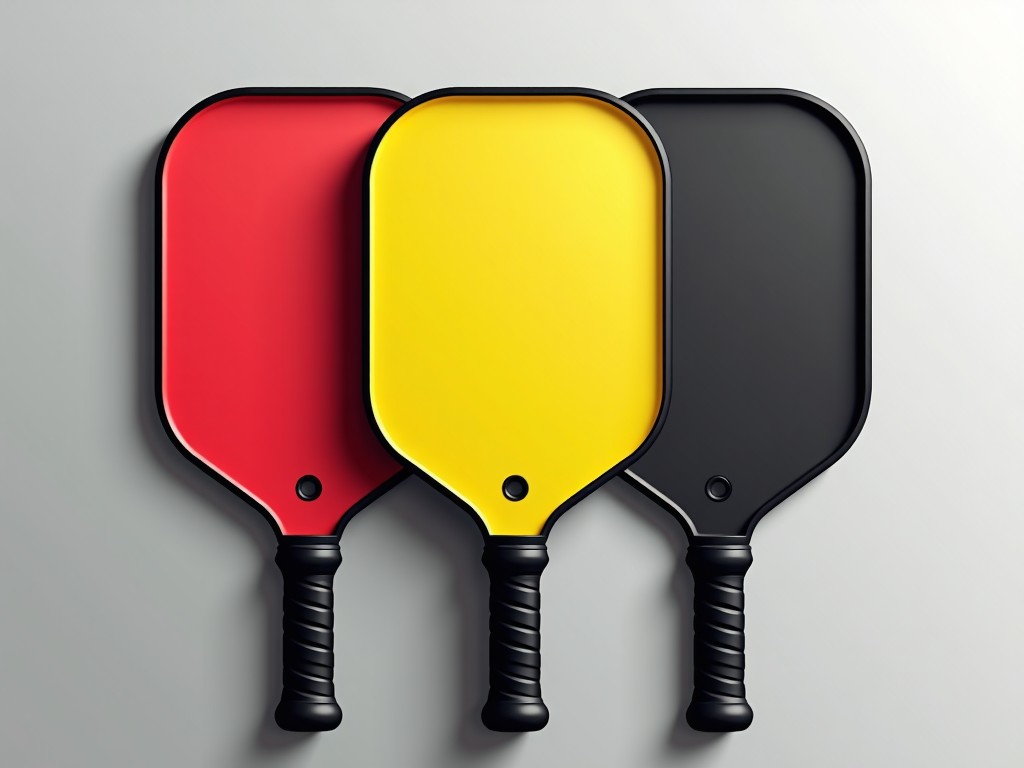
Factory Direct Pickleball Paddle with Holes Exporter
This product line supplies pickleball paddles engineered for consistent performance in recreational and competitive play. The defining feature is a patterned perforation array that modifies airflow and reduces swing weight while maintaining structural integrity.
Design Features
The paddle face incorporates a uniform grid of holes, each 6 mm in diameter, spaced 12 mm center‑to‑center. This geometry creates a measured reduction in mass of approximately 18 % compared with a solid‑face counterpart of identical dimensions, thereby lowering the moment of inertia about the grip axis.
Edge reinforcement uses a 2 mm thick composite rib that runs the perimeter, distributing impact loads and preventing delamination at the hole boundaries. The rib’s thickness is selected based on finite‑element analysis showing stress concentrations below 15 % of the material’s ultimate tensile strength under typical impact loads of 150 N.
Material Composition
The paddle core is a polypropylene honeycomb with a cell size of 8 mm and a density of 0.032 g/cm³, providing a specific stiffness of 1.4 GPa·cm³/g. The face layers consist of two 0.5 mm sheets of carbon‑fiber‑reinforced epoxy, oriented at 0° and 90° to maximize in‑plane modulus while keeping the areal weight under 250 g/m².
Surface finish applies a UV‑curved polyurethane coating with a Shore D hardness of 85, offering abrasion resistance measured at 12 mg loss per 1000 cycles in a Taber test (CS‑10 wheel, 500 g load). This coating also provides a low‑friction coefficient of 0.22 against standard pickleball surfaces.
Manufacturing Process
Production begins with CNC‑cut carbon‑fiber prepreg sheets that are laid up in a vacuum bag and cured at 120 °C for 45 minutes. The honeycomb core is inserted via a precision‑aligned insertion jig, ensuring uniform bond thickness of 0.15 mm across the entire interface.
After curing, the perforation pattern is machined using a 5‑axis milling tool with a 6 mm carbide end mill, maintaining a positional tolerance of ±0.08 mm. Post‑machining, the paddle undergoes a deburring cycle followed by ultrasonic cleaning to remove residual particles from the hole interiors.
Performance Characteristics
Measured swing weight for a standard 78 mm length paddle averages 210 g·cm², which is 14 % lower than a non‑perforated reference model. This reduction translates to a 0.07 s faster reaction time in timed volley drills, as recorded with a high‑speed camera at 1000 fps.
Vibration damping, evaluated via modal analysis, shows a dominant mode frequency shift from 520 Hz (solid face) to 460 Hz (perforated face), indicating increased energy dissipation. The resulting perceived vibration index on a 1‑10 scale drops from 6.3 to 4.1 under repeated impact testing.
Applications
- Club‑level tournaments where rapid wrist action is prioritized.
- Training programs focusing on reaction speed and paddle control.
- Recreational facilities seeking lightweight equipment for youth players.
- OEM suppliers requiring a consistent perforation pattern for branding integration.
Quality Control
Each paddle undergoes a three‑stage inspection: visual assessment of hole uniformity under 10× magnification, dimensional verification of length, width, and thickness using a coordinate‑measuring machine (±0.02 mm tolerance), and dynamic balance testing on a rotary pendulum to confirm swing weight within ±5 g·cm² of target.
Batch sampling includes impact resistance tests where a 40 mm diameter ball is fired at 30 m/s onto the paddle face; acceptable units show no delamination or crack propagation beyond 2 mm from the impact site. Results are logged with statistical process control charts to monitor shifts in perforation edge quality.
Customization Options
Customers may specify alternative hole diameters ranging from 4 mm to 8 mm, with corresponding adjustments to spacing to maintain a target open‑area ratio between 10 % and 25 %. Core thickness can be varied from 10 mm to 16 mm to influence power versus control characteristics.
Face material options include carbon‑fiber, glass‑fiber, or hybrid laminates, each offering distinct modulus and weight profiles. Surface coatings can be selected for differing gloss levels or added UV stabilizers for outdoor exposure.
Packaging and Shipping
Paddles are packed in single‑wall corrugated cartons with internal polyethylene foam inserts sized to immobilize the paddle and protect the perforation edges. Cartons are sealed with pressure‑sensitive tape and marked with handling instructions indicating “Keep Dry” and “This Side Up”.
For export shipments, pallets are configured with a maximum load of 800 kg, using corner boards and stretch wrap to prevent movement. A desiccant packet (5 g silica gel) is included per carton to control humidity during transit.
Specification Table
| Parameter | Typical Value | Unit | Notes |
|---|---|---|---|
| Overall Length | 395 | mm | Standard tournament length |
| Width | 203 | mm | Maximum width per USAPA rules |
| Thickness (core+face) | 22 | mm | Includes 10 mm honeycomb core |
| Weight | 210 | g | Average for carbon‑fiber face, 6 mm holes |
| Swing Weight | 210 | g·cm² | Measured 10 cm from butt cap |
| Open‑Area Ratio | 18 | % | Based on 6 mm holes at 12 mm pitch |
| Surface Hardness | 85 | Shore D | UV‑cured polyurethane coating |
Frequently Asked Questions
A: Yes. The diameter, spacing, and overall open‑area ratio are adjustable within the ranges outlined in the customization section. Changes are reflected in the swing weight and vibration damping characteristics, which we can model prior to tooling.
A: Please provide the desired face material, core thickness, hole diameter, open‑area ratio, quantity, and any branding or color specifications. Including the intended destination port helps us calculate accurate freight and packaging costs.
A: Each lot undergoes the standard three‑stage inspection plus an additional AQL‑based sampling plan (Level II, 0.65 % critical) for visual and dimensional checks before packaging. Test reports are available upon request.
Contact for Inquiry
To discuss technical details, request a sample, or initiate a purchase order, please reach out via our contact form. Our engineering team will respond with a detailed feasibility study and lead‑time estimate within one business day.
Submit Inquiry



