Factory Direct Kids Junior Pickleball Paddle Set Manufacturer
A kids junior pickleball paddle set is designed for players aged 6 to 12 who require lighter weight, reduced swing mass, and appropriately sized grips to develop proper technique. Purchasing directly
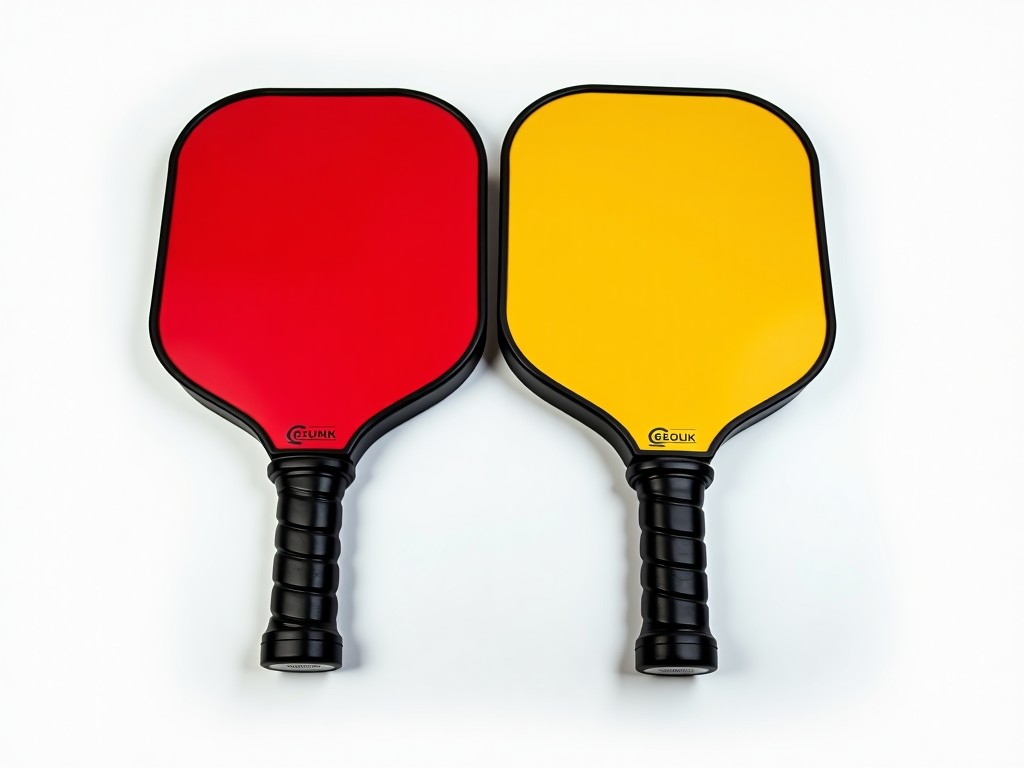
Factory Direct Kids Junior Pickleball Paddle Set
A kids junior pickleball paddle set is designed for players aged 6 to 12 who require lighter weight, reduced swing mass, and appropriately sized grips to develop proper technique. Purchasing directly from the factory eliminates intermediary handling, ensuring consistent specifications and traceable material origins for each unit.
Materials and Construction
The paddle core uses a polypropylene honeycomb structure with a cell size of 6 mm and a nominal density of 30 kg/m³, providing a balance of stiffness and vibration dampening. Faces are typically composed of two layers of 0.35 mm fiberglass fabric impregnated with epoxy resin, delivering a tensile strength of approximately 280 MPa while keeping the overall paddle weight under 200 g.
- Core: polypropylene honeycomb, thickness 12 mm
- Face: fiberglass‑reinforced epoxy, 2‑ply, 0.35 mm per ply
- Edge guard: TPU over‑mold, 2 mm thickness, shore A 85
- Grip: perforated PU, circumference 100 mm, length 100 mm
Dimensional Specifications
Overall length is held to 355 mm ± 2 mm, width to 203 mm ± 2 mm, and thickness to 24 mm ± 1 mm. The grip length measures 100 mm with a tolerance of ± 1 mm, allowing junior players to maintain a two‑handed grip without overreach.
| Parameter | Typical Value | Tolerance |
|---|---|---|
| Length | 355 mm | ± 2 mm |
| Width | 203 mm | ± 2 mm |
| Weight | 180 g | ± 5 g |
| Grip Circumference | 100 mm | ± 1 mm |
Performance Characteristics
The paddle’s stiffness, measured as flexural modulus, averages 3.2 GPa, providing sufficient rebound for controlled drives while limiting excessive power that could hinder skill development. Impact testing shows a peak force transmission reduction of 18 % compared with solid‑core alternatives, attributed to the honeycomb core’s energy absorption.
Swing weight, calculated from mass distribution, falls within 115 ± 5 g·cm², enabling junior players to achieve repeatable stroke mechanics without premature fatigue. Surface roughness of the face is maintained at Ra ≈ 4 µm, ensuring consistent ball spin generation across humidity ranges of 30 %–80 % RH.
Customization Options
Factory production allows adjustment of core thickness between 10 mm and 14 mm to fine‑tune power‑to‑weight ratios for specific age groups. Face material can be switched to carbon‑fiber prepreg (0.25 mm per ply) to increase tensile strength to 350 MPa while adding approximately 12 g to the total mass.
- Grip length: 90 mm–110 mm in 5 mm increments
- Edge guard color: standard black, optional navy or lime
- Face finish: matte or UV‑gloss, Ra 2–6 µm
- Printing: single‑color logo up to 30 mm × 30 mm area
Quality Control and Testing
Each paddle undergoes dimensional verification using a coordinate measuring machine with a repeatability of ± 0.02 mm. Weight is checked on a calibrated scale accurate to 0.1 g, and flexural modulus is sampled from every 50th unit via three‑point bend testing per ASTM D790.
Visual inspection criteria include absence of delamination, uniform edge guard adhesion (peel strength > 1.5 N/mm), and grip surface free of pinholes (> 0.2 mm diameter). A random 10 % sample is subjected to 500‑cycle impact fatigue to verify no core cracking under repetitive load.
Applications and Use Cases
Schools and community centers benefit from the reduced swing mass, which lowers the risk of overuse injuries in developing musculature while still providing sufficient feedback for skill acquisition. The standardized dimensions facilitate uniform storage in racks designed for 355 mm paddles, simplifying inventory management for program coordinators.
Youth leagues often require equipment that meets specific weight limits; the factory‑direct model ensures every paddle shipped complies with the declared 180 g ± 5 g specification, eliminating the need for post‑receipt weighing and reducing administrative overhead.
Frequently Asked Questions
Can dimensions be customized for different age brackets?
Yes, core thickness and overall length can be adjusted within the ranges outlined above; customers provide target weight or age group, and the engineering team returns a proposed specification sheet.
What information is required before quotation?
Required details include desired quantity, preferred face material (fiberglass or carbon‑fiber), grip length, any logo or color specifications, and destination port for freight calculation.
How is quality inspected?
Inspection comprises dimensional CMM checks, weight verification, flexural modulus sampling, visual defect review, and impact fatigue testing on a statistically significant batch.
What packaging methods are available?
Standard packaging uses corrugated cardboard sleeves with internal polyethylene foam inserts; options include individual poly‑bagging, master cartons of 24 units, or palletized configurations with corner protectors for long‑haul transport.
Contact for Inquiry
To discuss technical requirements, request a formal quotation, or arrange sample shipment, please reach out via the contact form. Providing the specifics outlined in the FAQ will expedite the engineering review and lead‑time estimation.
Submit Inquiry



