Factory Direct Custom Personalized Pickleball Paddles Supplier
Industrial buyers seeking consistent performance from pickleball equipment often require paddles that meet exact dimensional and material specifications. Supplying directly from the factory enables
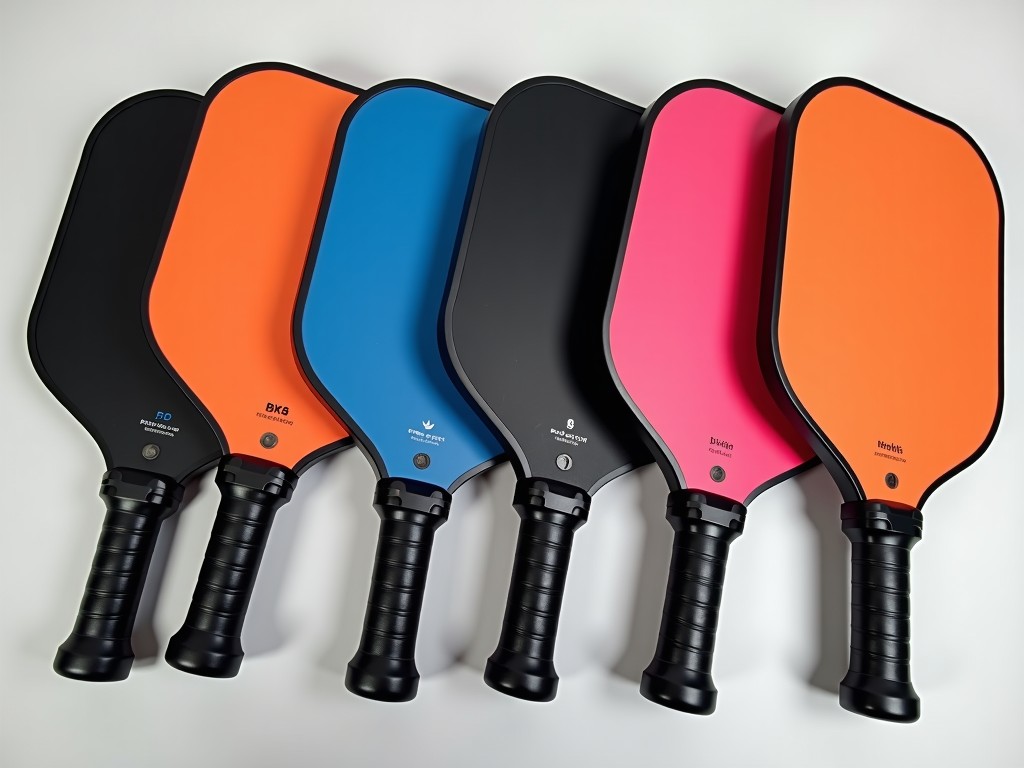
Factory Direct Custom Personalized Pickleball Paddles Supplier
Industrial buyers seeking consistent performance from pickleball equipment often require paddles that meet exact dimensional and material specifications. Supplying directly from the factory enables tight control over raw material selection, molding tolerances, and surface finish, reducing variability between batches. This approach supports OEMs, sports facility operators, and distributors who need reliable components for large‑scale programs or branded lines.
Material Selection and Engineering Characteristics
The paddle core is typically a polypropylene honeycomb with cell size ranging from 6 to 8 mm, providing a compressive modulus of approximately 150 MPa and a density between 0.025 and 0.035 g/cm³. Face layers are commonly woven carbon fiber or fiberglass reinforced with epoxy resin, delivering tensile strengths of 3500 MPa for carbon and 2000 MPa for glass, while keeping the overall paddle weight within the 210‑235 gram range sanctioned by most league rules.
Grip circumference is offered in standard sizes of 4.0, 4.25, and 4.5 inches, measured with a caliper at the midpoint of the handle. Edge guards are extruded from thermoplastic polyurethane with a Shore A hardness of 85, providing impact resistance of up to 5 J without delamination. These measurable parameters allow engineers to predict swing weight, vibration damping, and durability under repeated impact cycles.
Customization Options
- Face graphic printing using UV‑cured inks with adhesion rating of 4B per ASTM D3359, allowing full‑color logos, player names, or team colors.
- Core thickness variation from 10 mm to 16 mm in 2 mm increments to adjust power versus control characteristics.
- Handle length options of 5.0, 5.25, and 5.5 inches, affecting reach and leverage.
- Weight balancing services that add or remove up to 5 grams of material near the throat or tip to achieve a target swing weight.
- Surface texture finishes ranging from smooth (Ra < 0.8 µm) to medium‑grit (Ra ≈ 2.5 µm) for spin enhancement.
Manufacturing Process Overview
Pre‑preg carbon fiber sheets are cut to the paddle outline using CNC lasers with a positional tolerance of ±0.1 mm. The core is molded in a heated press at 180 °C for 90 seconds, achieving a uniform density across the honeycomb structure. After curing, the face and core are bonded under vacuum pressure of 0.8 bar to eliminate voids, followed by a post‑cure at 150 °C for 30 minutes to maximize inter‑laminar shear strength.
Edge guards are co‑extruded onto the paddle perimeter using a twin‑screw extruder, then trimmed to a radial tolerance of ±0.2 mm. Grips are over‑molded with thermoplastic elastomer durometer 70 Shore A, ensuring a slip‑resistant surface with a coefficient of friction of 0.45 against dry skin. Final inspection includes laser scanning of paddle thickness and weight measurement on a calibrated scale with readability of 0.1 gram.
Typical Specifications
| Parameter | Typical Value | Adjustable Range |
|---|---|---|
| Weight | 220 g | 210‑235 g |
| Length | 400 mm | 380‑420 mm |
| Width | 200 mm | 190‑210 mm |
| Grip Circumference | 4.25 in | 4.0‑4.5 in |
| Core Thickness | 12 mm | 10‑16 mm |
| Face Material | Carbon Fiber | Carbon, Fiberglass, Hybrid |
| Edge Guard Hardness | 85 Shore A | 80‑90 Shore A |
Quality Control and Inspection
Each production lot undergoes random sampling at a rate of 5 % for dimensional verification using coordinate measuring machines, with acceptance criteria of ±0.5 mm on length and width and ±0.2 mm on thickness. Residual volatile organic compounds in the epoxy matrix are measured via gas chromatography, maintaining levels below 50 ppm to meet indoor air quality standards. Impact testing is performed with a pendulum hammer delivering 2 J of energy; paddles must exhibit no cracks or delamination after 1000 cycles.
Surface roughness is assessed with a profilometer, ensuring the finished face stays within the specified Ra range for the selected texture. Adhesion of printed graphics is cross‑hatched and taped per ASTM D3359, requiring a rating of 4B or higher. All inspection results are recorded in a traceable batch record, accessible to customers upon request for audit purposes.
Applications in Sports and Recreational Facilities
Facility operators choose standardized paddle specifications to simplify inventory management and ensure consistent player experience across courts. By specifying a narrow weight tolerance and uniform grip size, clubs can reduce the learning curve for new members and maintain fairness in league play. The ability to embed logos or sponsorship graphics directly onto the face supports branding initiatives without adding separate overlays that could peel over time.
Educational institutions benefit from paddles engineered for durability, as the carbon‑glass hybrid faces resist chipping during frequent use by novice players. The adjustable core thickness allows instructors to select a softer feel for beginners while retaining sufficient power for advanced drills. These performance‑based options help purchasing agents justify the investment through extended service life and lower replacement frequency.
Frequently Asked Questions
- Can dimensions be customized? Yes, length, width, grip circumference, and core thickness can be adjusted within the ranges shown in the specifications table; custom tooling may be required for extremes.
- What information is required before quotation? Desired face material, core thickness, weight target, grip size, graphic artwork files, and order quantity.
- What materials are available for the face? Woven carbon fiber, woven fiberglass, and hybrid carbon‑glass weaves, each with distinct tensile modulus and weight characteristics.
- How is quality inspected? Dimensional checks via CMM, weight measurement on calibrated scales, impact resistance testing, and adhesion testing of printed graphics.
- What packaging methods are available? Individual polyethylene bags, corrugated cardboard cartons with corner protectors, and palletized bulk packaging for ocean freight.
- How are export shipments protected? Cartons are lined with moisture‑barrier film and secured with PET straps; pallets are stretch‑wrapped and corner‑boarded to withstand handling.
- What is the typical production lead time? Four to six weeks for standard configurations; eight to ten weeks when new molds or special graphics are involved.
- How are samples arranged? Sample paddles are produced using the same tooling as production runs and shipped via express courier upon receipt of approved artwork and material selection.
To discuss your specific requirements, request a detailed quotation, or obtain sample paddles for evaluation, please contact our sales team.
Request a Quote



