Custom Short Handle Pickleball Paddle Manufacturer
A short handle pickleball paddle reduces the grip length typically found on standard models, shifting the balance point toward the head. This alteration influences swing speed, maneuverability at the
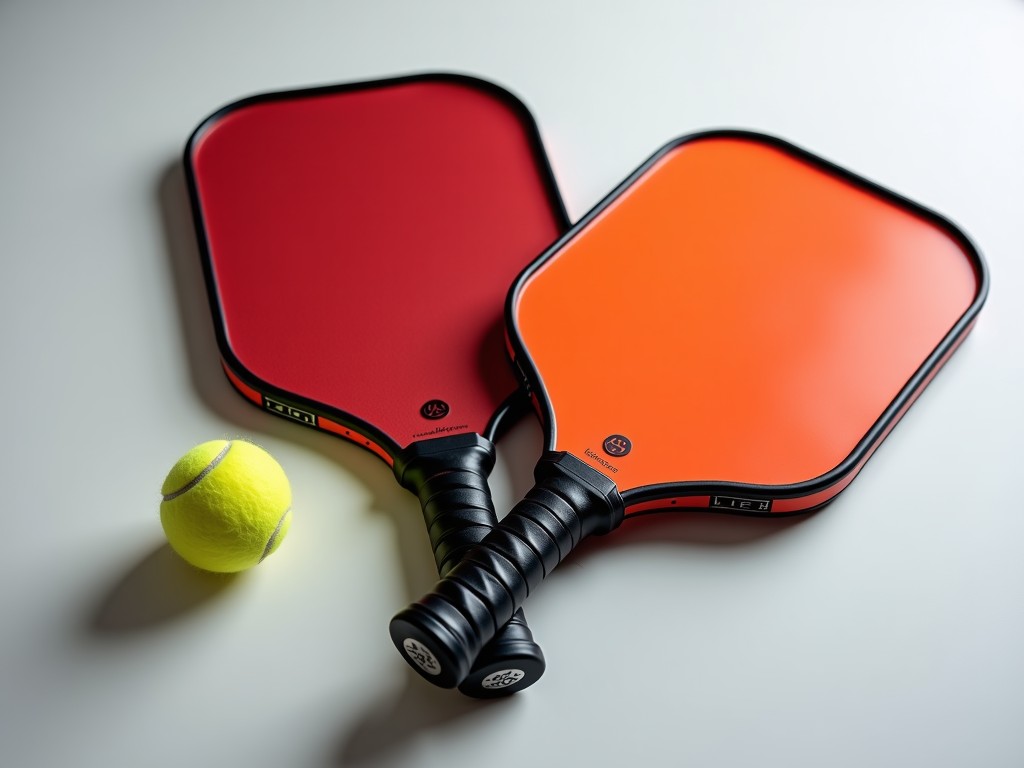
Custom Short Handle Pickleball Paddle Manufacturer
A short handle pickleball paddle reduces the grip length typically found on standard models, shifting the balance point toward the head. This alteration influences swing speed, maneuverability at the net, and the amount of wrist action required for precise placement. Engineers consider the trade‑off between increased head‑heavy feel for volley dominance and potential loss of reach on groundstrokes when defining the optimal handle length for a given player profile.
Design Considerations for Short Handle Paddles
Handle length is measured from the butt cap to the top of the grip taper; common short handle dimensions range from 4.0 to 4.5 inches, compared with the 5.0‑5.5 inch range of conventional paddles. Shortening the handle shifts the center of pressure forward, which can increase effective swing weight by 2‑5% depending on paddle mass distribution. To maintain structural integrity, manufacturers often reinforce the throat area with additional layers of carbon fiber or aramid fabric to counteract the higher bending moments generated during rapid wrist flicks.
Material Options and Performance Implications
- Core materials: polypropylene honeycomb (density 0.02‑0.03 g/cm³) offers a soft feel and large sweet spot; Nomex aramid honeycomb (density 0.03‑0.04 g/cm³) provides higher stiffness and a more responsive pop.
- Face materials: woven carbon fiber yields a high modulus (≈230 GPa) for low deflection and consistent ball speed; fiberglass composite delivers a lower modulus (≈70 GPa) with increased spin potential due to surface texture.
- Edge guards: TPU or rubber strips add 0.2‑0.4 mm thickness, protecting the paddle face from chipping while minimally affecting overall weight.
- Grip options: perforated synthetic leather (thickness 1.8‑2.2 mm) or cushioned PU (thickness 2.5‑3.0 mm) allow fine‑tuning of handle circumference without altering the shortened length.
Customization Process
The process begins with a technical brief that captures player‑specific data: desired handle length, target weight range (usually 7.0‑8.5 oz), preferred balance point (head‑heavy, even, or head‑light), and surface texture requirements. Engineers then generate a layup schedule that specifies ply orientation, resin type, and cure cycle to achieve the targeted mechanical properties. A CNC‑milled core is prepared, followed by vacuum bag layup of the face and edge guard, and a post‑cure inspection verifies dimensional tolerances before final shaping and grip installation.
Quality Control and Testing
Each paddle undergoes a three‑stage verification: weight measurement (±0.1 oz tolerance), balance point assessment (±0.2 inch from spec), and face flatness check using a laser interferometer (deviation <0.001 inch). Impact resistance is evaluated by dropping a standardized steel ball from a height of 1.2 meters onto the paddle face; acceptable performance shows no delamination or surface cracking after ten repetitions. These tests ensure that custom short handle paddles meet the durability expectations of competitive play while maintaining the precise feel requested by the customer.
Applications in Play
Players with smaller hand sizes often benefit from a reduced handle circumference combined with a shorter length, allowing a more natural grip without over‑gripping. Aggressive net players gain quicker reaction times because the head‑heavy bias translates the paddle tip faster toward the ball during volleys. Conversely, baseline players who rely on reach may opt for a slightly longer handle within the short‑handle spectrum to retain some defensive coverage while still enjoying improved maneuverability. The ability to fine‑tune these parameters makes the short handle paddle a versatile tool across skill levels and playing styles.
Typical Customization Ranges
| Parameter | Adjustable Range | Notes |
|---|---|---|
| Handle Length | 4.0 – 4.5 in | Measured from butt cap to grip taper start |
| Total Weight | 7.0 – 8.5 oz | Includes grip and edge guard |
| Balance Point | 12.0 – 14.0 in from butt cap | Head‑heavy (>13.0 in) or even (≈12.5 in) |
| Face Material | Carbon Fiber, Fiberglass, Hybrid | Affects stiffness and spin |
| Core Type | Polypropylene, Nomex, Aluminum | Determines feel and power |
To begin a custom short handle paddle project, provide your performance targets, preferred materials, and any ergonomic constraints. Our engineering team will review the specifications, propose a layup and dimensional plan, and deliver a prototype for evaluation. Once approved, production proceeds with the documented quality controls outlined above.
Request a Quote



