Custom On Court Off Court Pickleball Nets Manufacturer
Pickleball nets must maintain consistent tension and mesh integrity whether installed on a permanent court or used for portable off‑court play. Custom manufacturing allows the net geometry, edge
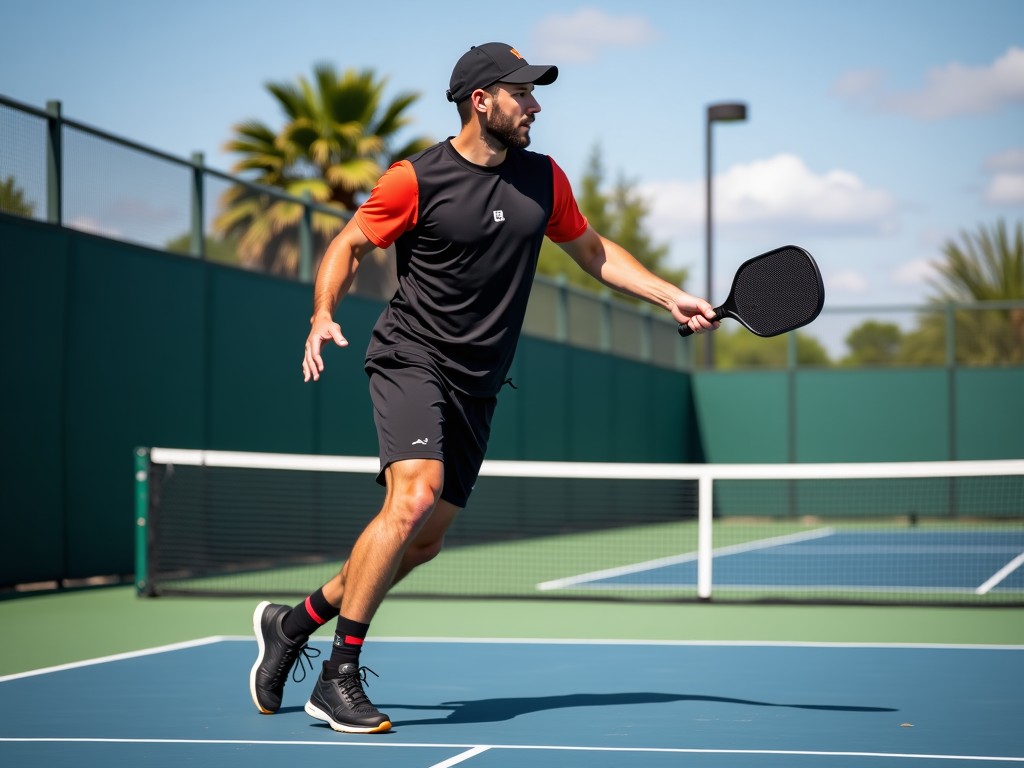
Custom On-Court and Off-Court Pickleball Nets Manufacturer
Pickleball nets must maintain consistent tension and mesh integrity whether installed on a permanent court or used for portable off‑court play. Custom manufacturing allows the net geometry, edge reinforcement, and attachment hardware to be matched precisely to the substrate and usage frequency.
Material Selection for Durability and Playability
The primary fabric is usually high‑density polyethylene (HDPE) or nylon monofilament, chosen for its resistance to UV degradation and abrasion. HDPE offers a low moisture absorption rate (<0.01 %) and retains tensile strength after 500 hours of accelerated weathering, while nylon provides a softer feel and higher elongation at break (≈30 %).
Edge tapes are typically polyester‑coated vinyl with a width of 38 mm, providing a tear‑strength of at least 250 N/cm. For coastal environments, a marine‑grade PVC coating can be added to resist salt‑spray corrosion.
- HDPE monofilament – UV‑stabilized, tensile strength 55 MPa
- Nylon monofilament – higher elasticity, tensile strength 48 MPa
- Polyester‑vinyl edge tape – abrasion resistance >15 000 cycles
- Optional PVC overcoat – salt‑spray resistance per ASTM B117
Design Variables and Customization Logic
Net height is regulated at 91.4 cm at the sidelines and 86.4 cm at the center; custom manufacturing permits exact tape placement to achieve these tolerances (±2 mm). Mesh opening size influences ball rebound; a 45 mm square opening is standard, but 38 mm or 52 mm can be supplied upon request to affect play speed.
Attachment systems vary by installation type. Permanent courts often use stainless‑steel grommets with a 6 mm diameter, spaced 150 mm along the top and bottom tapes. Portable systems incorporate quick‑release cam buckles or bungee loops, allowing tension adjustment without tools.
Length customization accommodates non‑standard court widths (e.g., 6.10 m for doubles, 5.18 m for singles) and extra overrun for tensioning hardware. Overrun lengths of 50 mm to 150 mm per side are typical, ensuring the net can be tightened without sag.
Manufacturing Process Overview
Filament rolls are first cut to the specified width using a CNC slit‑ter with a tolerance of ±0.1 mm. The resulting ribbons are then woven on a rapier loom to produce the mesh panel, maintaining a consistent pick count of 14 ends per cm.
After weaving, the panel undergoes a heat‑setting cycle at 180 °C for 90 seconds to stabilize dimensional stability. Edge tapes are sewn using a double‑needle lockstitch with a stitch density of 8 stitches/cm, providing a seam strength exceeding 300 N.
Finally, hardware such as grommets, tension rods, or buckles is attached, and the finished net is subjected to a preliminary tension test at 150 N to verify uniform load distribution.
Quality Control Philosophy
Each batch is sampled for tensile strength using a ASTM D5035 compliant tester; the acceptance criterion is a minimum of 45 MPa for HDPE and 40 MPa for nylon. UV resistance is evaluated by exposing samples to 1000 hours of QUV‑A radiation and measuring retained tensile strength (>80 % of initial).
Dimensional verification is performed with a laser scanning system that checks net height, width, and mesh opening across ten points; deviations beyond ±3 mm trigger a rework. Visual inspection focuses on stitching integrity, tape adhesion, and absence of foreign material.
Documentation includes a material certificate of conformity, a test report for each lot, and a traceability label linking the net to the production order.
Typical Applications and Functional Benefits
Indoor facilities benefit from nets with low outgassing and fire‑retardant treatments, meeting NFPA 701 standards. Outdoor installations prioritize UV stabilization and corrosion‑resistant hardware, extending service life beyond five years under continuous sun exposure.
Sports clubs and schools often request nets with quick‑release mechanisms to allow multi‑use courts (e.g., converting a pickleball court to badminton). Residential buyers favor portable systems that weigh under 12 kg and can be stored in a standard car trunk.
By aligning net specifications with the intended load cycle—whether high‑frequency tournament play or occasional recreational use—manufacturers reduce the risk of premature sagging, mesh rupture, or hardware failure.
Specification Table
| Parameter | Typical Range | Customizable Options |
|---|---|---|
| Net Height (sideline) | 91.4 cm ±2 mm | Adjustable to 88‑95 cm |
| Net Height (center) | 86.4 cm ±2 mm | Adjustable to 82‑90 cm |
| Mesh Opening | 45 mm square | 38 mm, 52 mm, or custom |
| Fabric Type | HDPE or nylon monofilament | Blend ratios, alternative UV stabilizers |
| Edge Tape Width | 38 mm | 25‑50 mm, reinforced or standard |
| Length (overall) | 6.10 m (doubles) / 5.18 m (singles) | ±0.20 m, with overrun 50‑150 mm |
Frequently Asked Questions
A: Yes. Length, height, and mesh opening can be adjusted according to the exact court dimensions provided by the client, with tolerances held to ±2 mm for height and ±5 mm for length.
A: We need the intended installation type (permanent or portable), court dimensions, preferred fabric (HDPE or nylon), any special coating requirements (UV, fire‑retardant, marine), and the desired attachment hardware.
A: Each lot undergoes tensile testing, UV exposure evaluation, dimensional laser scanning, and visual seam inspection. Results are documented in a test report accompanying the shipment.
A: Nets are rolled on a rigid core, wrapped in polyethylene film, and placed in corrugated cartons with corner protection. For export, cartons are palletized and strapped according to ISPM 15 standards.
A: Lead time ranges from 10 to 18 business days depending on order complexity and current capacity; exact timing is confirmed at quotation.
Ready to Discuss Your Custom Net Requirements?
Provide your project specifications and we will return a detailed quotation, including material options, lead time, and packaging details.
Contact Us



