Custom Design Carbon Fiber Pickleball Paddle Company
This page describes the engineering considerations behind a pickleball paddle constructed primarily from carbon fiber reinforced polymer, with options for tailored geometry, weight distribution, and
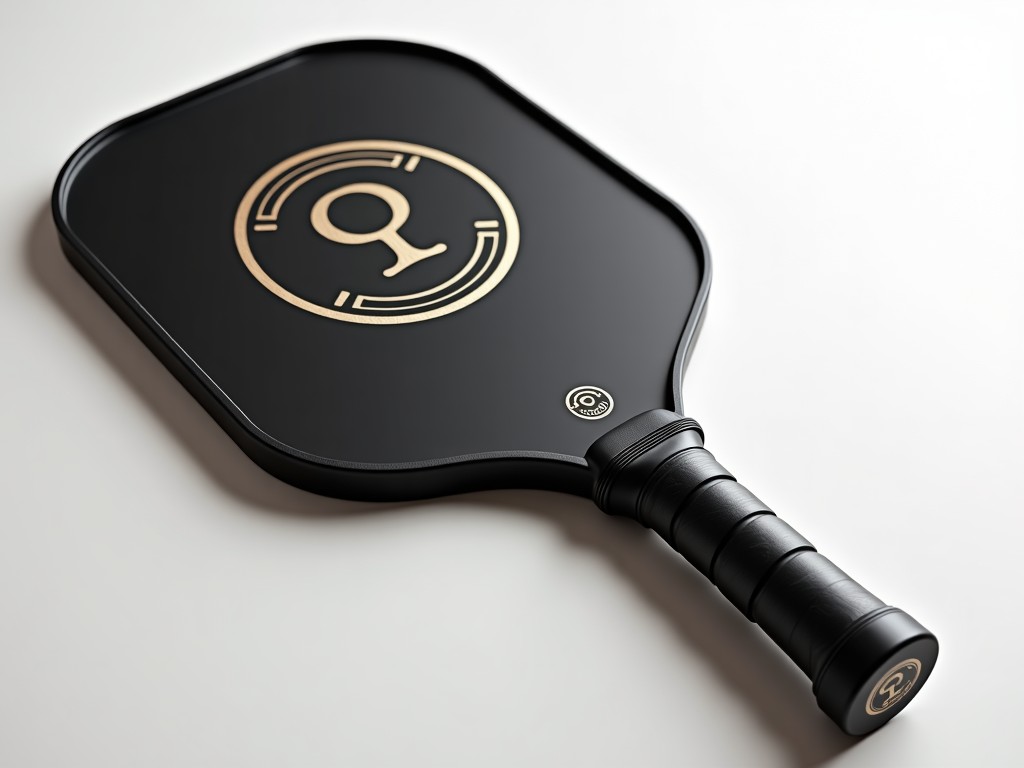
Custom Design Carbon Fiber Pickleball Paddle
This page describes the engineering considerations behind a pickleball paddle constructed primarily from carbon fiber reinforced polymer, with options for tailored geometry, weight distribution, and surface finish. The information is intended for procurement managers, engineers, and OEM buyers who need to evaluate technical suitability before specifying a custom solution.
Material and Construction
The paddle face utilizes a unidirectional carbon fiber layup that provides a tensile modulus typically ranging from 70 to 80 GPa, contributing to high stiffness in the striking plane. A core material, often a polypropylene honeycomb or polymer foam, is bonded between the carbon fiber skins to manage weight and influence vibration damping characteristics.
Layup orientation can be adjusted to modulate flexural response; for example, a 0°/90° layup yields a stiffer feel, while incorporating ±45° plies increases torsional compliance. The overall thickness generally falls between 12 mm and 16 mm, depending on the selected core and skin thicknesses.
Customization Options
Customization begins with geometry, where paddle length, width, and edge profile can be altered to meet player preferences or regulatory limits. Weight distribution is tuned by varying the amount of material in the head versus the handle, allowing swing weight adjustments typically within a 190 g to 220 g total mass range.
- Shape options: classic widebody, elongated, or asymmetrical profiles.
- Grip circumference: selectable from 3.5 in to 4.5 in in 0.25 in increments.
- Surface texture: smooth, sand‑sprayed, or patterned for spin control.
- Graphics: full‑color sublimation, laser etching, or custom decals.
- Core material: polypropylene honeycomb, polymer foam, or alternative composite cores.
Performance Characteristics
Stiffness and weight together influence the paddle’s sweet spot location and the perceived power during impact. Vibration damping is primarily a function of the core material and the layup sequence, affecting comfort and feedback.
| Parameter | Typical Range | Notes |
|---|---|---|
| Total weight | 190 g – 220 g | Dependent on core thickness and skin layers. |
| Face stiffness (flexural modulus) | 70 GPa – 80 GPa | Measured via three‑point bend test on a coupon. |
| Swing weight (balance point) | 185 mm – 210 mm from butt cap | Adjustable by head‑heavy or handle‑heavy layup. |
| Vibration damping coefficient | 0.02 – 0.04 (unitless) | Lower values indicate quicker decay of resonant frequency. |
Manufacturing Process
Production starts with CNC‑cut molds that define the paddle’s outer contour and internal cavities. Carbon fiber prepreg sheets are laid up by hand or automated placement equipment, followed by precise positioning of the core material.
The layup is then vacuum bagged and cured in an autoclave or heated press at temperatures typically between 120 °C and 140 °C for 60 to 90 minutes, depending on resin system. After curing, the part is demolded, excess material is trimmed, and edges are routed to final dimensions.
Surface finishing steps include sanding to achieve the specified texture, application of a protective clear coat, and, if requested, graphics sublimation. Each paddle undergoes a final weight check and balance measurement before packaging.
Quality Control Philosophy
Quality assurance focuses on dimensional conformity, mass consistency, and mechanical performance rather than subjective appearance alone. Critical features such as face thickness, grip length, and overall length are verified against the customer’s specification using calibrated calipers and coordinate measuring machines.
Weight is measured to the nearest gram, and swing weight is calculated from the mass distribution data. Flexural stiffness is sampled on a statistical basis using a three‑point bend fixture; results must fall within the agreed tolerance band, typically ±5 % of the target value.
- Dimensional inspection: length, width, thickness, grip circumference.
- Mass and balance verification.
- Flexural stiffness sampling.
- Surface defect check (visual and tactile).
- Graphics adhesion and durability test (if applicable).
Applications and Use Cases
The paddle’s high stiffness‑to‑weight ratio makes it suitable for competitive play where rapid swing speeds and precise ball placement are valued. Players who prefer a firm feel benefit from the minimal energy loss in the face, while those seeking reduced arm fatigue can select a layup with increased damping.
Training environments often require paddles with consistent performance across many units; the repeatable autoclave curing process ensures low variation in stiffness and weight. Additionally, the ability to embed custom logos or team colors supports branding for clubs, academies, and promotional events without compromising structural integrity.
Frequently Asked Questions
Can dimensions be customized?
Yes, length, width, thickness, and grip circumference can be adjusted within standard manufacturing limits. Extreme deviations may require a new mold, which can affect lead time and tooling cost.
What information is required before quotation?
Desired weight range, preferred balance point (head‑heavy, even, or handle‑heavy), core material choice, surface texture, and any graphics or branding specifications. Providing a target swing weight helps narrow the layup options.
What materials are available for the core?
Common options include polypropylene honeycomb (various cell sizes), polymer foam (different densities), and, upon request, alternative composite cores such as Nomex or aramid honeycomb. Each influences weight, stiffness, and damping differently.
How is quality inspected?
Inspection includes dimensional checks, mass measurement, balance calculation, and sampling of flexural stiffness. Surface finish and graphics adhesion are also verified. All measurements are documented and available upon request.
What packaging methods are available?
Standard packaging consists of individual polyethylene bags placed in corrugated cartons with corner protection. For bulk orders, palletizing with stretch wrap is available. Custom foam inserts or branded sleeves can be arranged.
What is the typical production lead time?
Lead time depends on order complexity and current capacity, generally ranging from 3 to 6 weeks for standard customizations. Projects requiring new molds or special material sourcing may extend this window.
Request a Custom Quote
To begin a custom design discussion, please provide your performance targets, preferred aesthetics, and expected order volume. Our engineering team will review the requirements and respond with a feasibility assessment, preliminary cost estimate, and proposed timeline.
Submit Inquiry



