Custom Carbon Fiber Pickleball Paddle Pro Company
The paddle is constructed from aerospace‑grade carbon fiber prepreg cured in an autoclave, delivering a high stiffness‑to‑weight ratio suited for competitive play. Each unit is built to a target
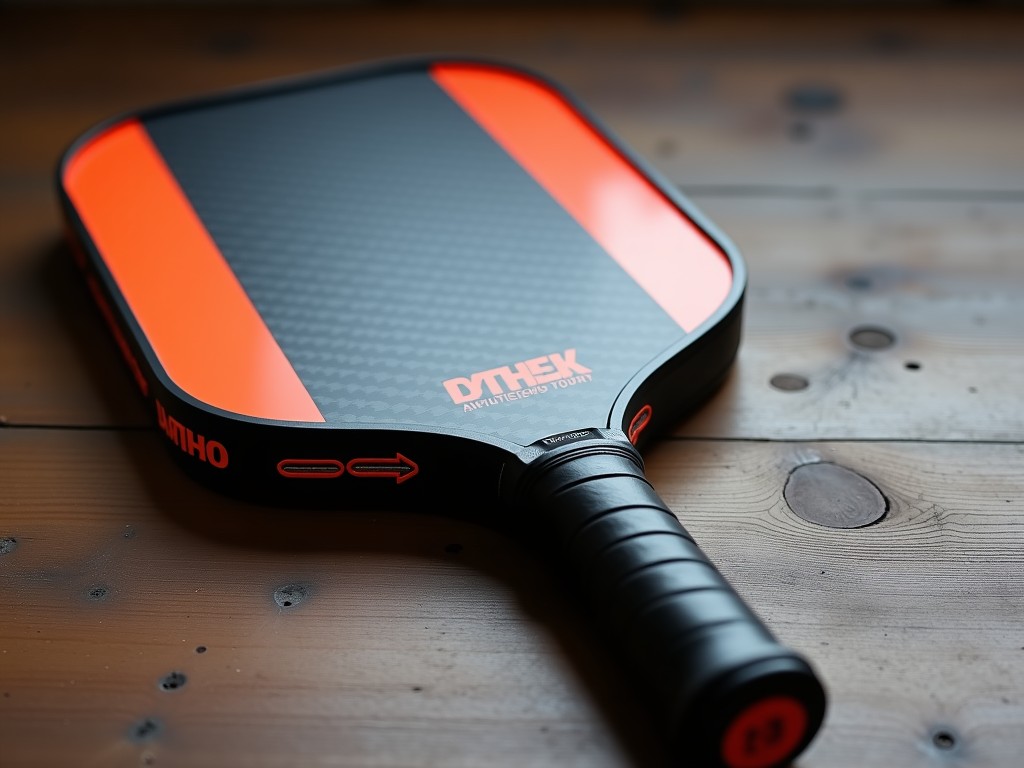
Custom Carbon Fiber Pickleball Paddle – Professional Grade
The paddle is constructed from aerospace‑grade carbon fiber prepreg cured in an autoclave, delivering a high stiffness‑to‑weight ratio suited for competitive play. Each unit is built to a target weight range of 7.5–8.5 oz with a balance point adjustable between 10 mm and 14 mm from the handle end.
Material Composition and Layup
Carbon fiber layers use T700 standard modulus and M40J high‑modulus fabrics, oriented at 0°, ±45°, and 90° to optimize torsional rigidity and impact resistance. The epoxy resin system is a low‑viscous, high‑ Tg formulation that achieves a glass transition temperature above 150 °C after cure.
Typical areal weight of the prepreg stack is 120 g/m², resulting in a laminate thickness of approximately 1.2 mm after curing. The layup schedule is adjusted per customer specifications to tune flexural modulus and damping characteristics.
Mechanical Properties
Measured flexural modulus ranges from 45 GPa to 55 GPa depending on fiber orientation, while the interlaminar shear strength exceeds 80 MPa. The paddle’s natural frequency falls between 250 Hz and 300 Hz, providing a crisp feel with reduced vibration transmission to the hand.
Weight tolerance is held to ±0.2 oz, balance point tolerance to ±0.5 mm, and swing weight variation is kept within ±2 % across production lots.
Customization Options
- Fiber orientation pattern (0°/±45°/90° ratios) adjusted for power or control preference
- Target weight selection in 0.1 oz increments within the 7.5–8.5 oz window
- Balance point customization from handle‑heavy to head‑heavy configurations
- Grip diameter options: 3.875 in, 4.125 in, 4.375 in with optional over‑wrap thickness
- Edge guard materials: TPU, rubber, or carbon‑fiber reinforced composite
- Surface finish: matte, satin, or gloss with optional UV‑stable graphics
Manufacturing Process
Prepreg sheets are cut to shape using CNC laser, then laid up in a vacuum bag with precise fiber orientation. The bagged layup undergoes autoclave cure at 120 °C and 85 psi for 90 minutes, ensuring low void content (<1 %). After demolding, the paddle is trimmed to final dimensions, drilled for grip insertion, and the grip is bonded using a structural adhesive.
Final machining includes edge radius contouring and surface sanding to a roughness average (Ra) of 0.8 µm for consistent grip feel.
Quality Assurance and Testing
Each paddle undergoes weight measurement on a calibrated scale, balance point verification on a precision pivot, and modal analysis via impact hammer to confirm natural frequency. Ultrasonic C‑scan inspections detect internal delaminations or voids larger than 0.5 mm.
Surface texture is measured with a profilometer to ensure uniformity across the hitting area. Final visual inspection checks for cosmetic defects, resin richness, and edge integrity before packaging.
Applications in Professional Play
The high modulus carbon fiber laminate delivers rapid energy transfer, translating player swing speed into ball velocity with minimal loss. The tailored damping reduces fatigue during extended matches, while the consistent weight distribution supports repeatable shot placement.
Professional coaches appreciate the ability to fine‑tune balance and weight to match individual player biomechanics, thereby reducing the risk of wrist strain and improving control on dinks and volleys.
Comparison Table: Standard Offering vs Custom Option
| Parameter | Standard Offering | Custom Option |
|---|---|---|
| Weight (oz) | 8.0 ±0.3 | 7.5–8.5 ±0.2 (customer‑specified) |
| Balance Point (mm from handle) | 12 ±1 | 10–14 ±0.5 (adjustable) |
| Flexural Modulus (GPa) | 48 (fixed layup) | 45–55 (orientation‑tuned) |
| Surface Finish | Matte only | Matte, satin, gloss, UV‑graphic |
Frequently Asked Questions
Can dimensions be customized? Yes, overall length, width, and throat shape can be adjusted within ITF‑approved limits to suit player preference.
What information is required before quotation? Desired weight, balance point, grip size, fiber orientation preference, and any cosmetic requirements such as color or logo placement.
What materials are available for the edge guard? Standard options include thermoplastic polyurethane, nitrile rubber, and carbon‑fiber reinforced composite; alternative materials can be quoted upon request.
How is quality inspected? Each paddle undergoes weight, balance, modal, ultrasonic C‑scan, and surface roughness checks as outlined in the quality assurance section.
What packaging methods are available for export? Paddles are packed in individual foam‑lined cartons with corner protection; palletizing and heat‑shrink wrapping are offered for bulk shipments.
What is the typical production lead time? Lead time ranges from 3 to 4 weeks after final design approval, depending on order complexity and current capacity.
How are samples arranged? Prototype samples are produced using the same layup and cure process; sample fees are credited toward the first production order.
Get a Quote
To discuss your specific performance targets and receive a detailed quotation, please contact our engineering team via the inquiry form.
Request a Quote



