Custom Black Diamond Carbon Pickleball Paddles Company
Black diamond carbon refers to a high-modulus graphite fiber that has undergone a surface treatment to create a diamond-like carbon coating. This coating increases surface hardness, reduces wear, and
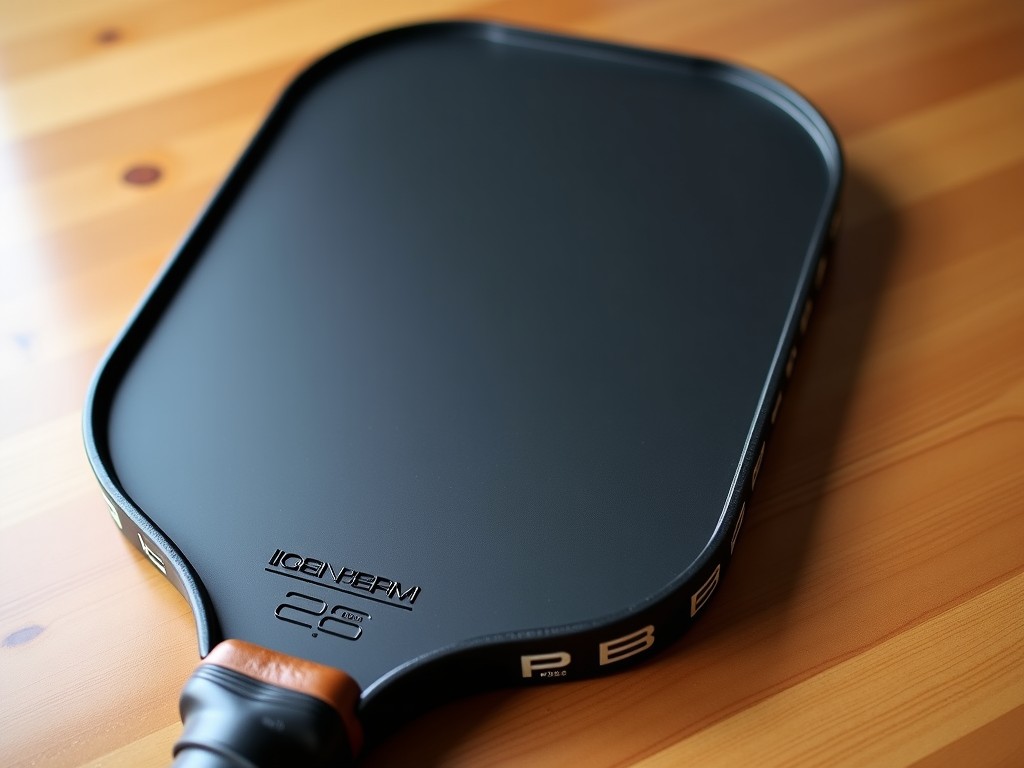
Custom Black Diamond Carbon Pickleball Paddles
Black diamond carbon refers to a high-modulus graphite fiber that has undergone a surface treatment to create a diamond-like carbon coating. This coating increases surface hardness, reduces wear, and improves thermal stability compared to standard carbon fiber.
In a pickleball paddle, the coated fibers are embedded in an epoxy resin matrix using a precision layup process. The resulting laminate exhibits a high stiffness-to-weight ratio, which directly influences the speed of ball rebound and the amount of vibration transmitted to the hand.
Material Composition and Structure
The paddle core typically consists of a honeycomb polymer or foam layer, while the face is built from multiple plies of black diamond carbon fabric. Typical layup sequences include 0°, ±45°, and 90° orientations to balance in‑plane strength and torsional rigidity.
Resin content is controlled to achieve a fiber volume fraction of approximately 55‑60 %, which optimizes mechanical performance without adding excess weight. Edge protection is often added using a thin polyurethane strip bonded to the perimeter.
Mechanical Properties
| Property | Typical Value | Note |
|---|---|---|
| Tensile Modulus (0°) | 230 GPa | Dependent on fiber alignment |
| Tensile Strength (0°) | 4.2 GPa | Measured per ASTM D3039 |
| Density | 1.55 g/cm³ | Includes resin and coating |
| Face Thickness | 0.9 mm | Can be varied ±0.1 mm |
| Paddle Weight (unstrung) | 210‑235 g | Dependent on shape and core |
Customization Options
- Paddle outline: standard, elongated, or widebody
- Grip circumference: 4.0″, 4.25″, or 4.5″ (custom sizes on request)
- Weight distribution: head‑light, even, or head‑heavy via core selection
- Surface texture: smooth, sand‑sprayed, or patterned for spin control
- Edge guard material: polyurethane, rubber, or none
- Color accents: limited to coating‑compatible pigments
Application in Pickleball
A high modulus face reduces dwell time during impact, translating to faster ball exit speeds for power‑oriented play. Simultaneously, the internal damping of the diamond‑like coating lowers high‑frequency vibration, which can decrease player fatigue during extended sessions.
Weight distribution influences swing inertia; a head‑light configuration improves maneuverability for net play, while a head‑heavy bias raises momentum for baseline drives. These relationships allow engineers to tune the paddle to specific playing styles without changing the underlying material system.
Quality Assurance and Testing
Each batch undergoes ultrasonic C‑scan inspection to detect delamination or resin‑rich zones larger than 0.5 mm. Flexural stiffness is measured on a three‑point bend fixture with a span of 150 mm, accepting a tolerance of ±5 % from the target value.
Weight is verified using a calibrated scale with readability of 0.1 g, and surface roughness is checked with a profilometer to ensure the coating remains within 2‑4 µm Ra. Final visual inspection looks for coating uniformity and edge‑guard adhesion under 10× magnification.
Frequently Asked Questions
- Can dimensions be customized? Yes, face length, width, and thickness can be adjusted within structural limits; contact us with your required specifications.
- What information is needed for a quotation? Provide desired paddle shape, grip size, target weight range, any surface texture preference, and order quantity.
- Which materials are available for the core? Common options include polypropylene honeycomb, Nomex honeycomb, and foam; each affects weight and power characteristics.
- How is quality inspected? As described: ultrasonic C‑scan, flex testing, weight measurement, roughness profiling, and visual checks.
- What packaging methods are available? Paddles are placed in individual polyethylene sleeves, then packed in corrugated cartons with corner protectors; palletizing is available for bulk orders.
- What is the typical production lead time? For standard configurations, lead time is 3‑4 weeks after approval of drawings; custom shapes may add 1‑2 weeks.
Request a Quote
To begin a custom paddle project, share your performance targets and quantity needs. Our engineering team will review the requirements and provide a detailed feasibility assessment.
Contact Us for Quotation



