Specifying Wholesale padel rackets for sale for Industrial Service
Heat treatment sits between forming and finishing. In the production of carbon fiber-reinforced rackets, the structural integrity depends on the bond between the carbon fiber layers and the EVA foam core. Improper curing cycles lead to internal delamination that only becomes visible under high-impact stress. We utilize vacuum-assisted resin transfer to ensure the resin saturates every fiber without leaving air pockets that act as stress points during cyclic loading.
Technical Trade-off: Core Density
Higher-density EVA (600+) increases power return but raises vibration transfer to the wrist joint. Lower-density cores (500+) absorb more shock but suffer faster structural deformation under high-velocity impacts.
The Failure Pattern Buyers Keep Paying For
Cycles often cause micro-fractures at the interface of the frame and the face. If the resin-to-fiber ratio is inconsistent, the racket loses its elasticity over three months. Procurement teams often overlook the structural bond of the frame, which leads to catastrophic failure during competitive play.
| Operating Condition | Potential Failure Mode | Recommended Specification |
|---|---|---|
| High-velocity impact (>80km/h) | Core delamination at frame edge | 32K Carbon weave with reinforced perimeter |
| Repeated humidity exposure | Surface softening and grip peeling | Hydrophobic polymer coating application |
| Thermal expansion (storage) | Internal resin fatigue | UV-stabilized epoxy resin |
Grade Selection Logic for Harsh Service
Tolerances are set by the forming step. Selecting between 12K and 32K carbon weaves involves balancing stiffness against impact resistance. 32K offers higher modulus but requires more precise handling to prevent fiber breakage during layup. For high-volume distribution, 12K weave provides a more forgiving margin for manufacturing variations in material thickness.
- 12K Carbon: Maximum flexibility and durability for entry-level play.
- 32K Carbon: Maximum rigidity for power-oriented energy transfer.
- Hybrid Weave: Optimized balance of weight and torsional stability.
Where This Design Beats Standard Stock Parts
First-article tooling determines the precision of the sweet-spot geometry. Mass-market variants often use inconsistent molds that result in uneven balance points across a batch. Our process utilizes CNC-machined aluminum molds to ensure every unit remains within a +/- 2g tolerance of the specified weight. This consistency reduces return rates from distributors who demand predictable product performance metrics.
Parameter Envelope and Customisation Limits
Weight distribution varies from 320g to 375g. Adjusting the balance point requires altering the core density gradient. We can modify the surface texture to reduce aerodynamic drag without compromising the structural ribs of the carbon fiber frame.
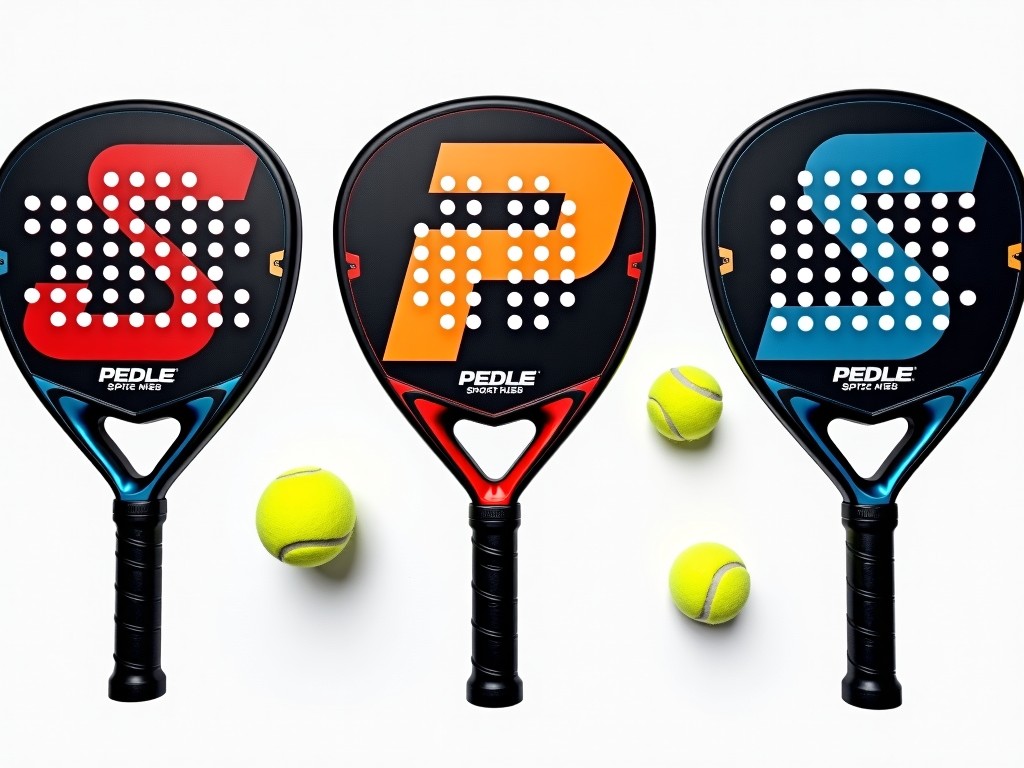
| Parameter | Range |
|---|---|
| Balance Point | 265cm - 35cm |
| Face Thickness | 22mm - 24mm |
| Core Density | 450 - 650 kg |
Surface Treatment Options
The surface finish affects the friction coefficient during the ball-impact phase.
| Matte | Low spin control |
| Sandpaper | High spin rotation |
| Glossy | Aerodynamic focus |
Process Controls and Batch Traceability
Resin injection pressure is monitored via digital sensors to ensure zero-void laminates. Each batch is assigned a unique QR code linked to the curing temperature curve and pressure logs of the autoclave cycle. This traceability allows for rapid isolation if a specific raw material lot shows failure in the field.
Capacity, Tooling and Scheduling
Tooling for CNC-grade steel molds allows for 5,000 cycles before thermal deformation occurs. We maintain a production capacity of 5,000 units per month. Standard lead times for wholesale orders are 45 days following technical specification finalization.
Packing, Marking and Freight Configuration
Individual moisture-barrier packaging prevents humidity absorption during sea freight. We utilize double-walled corrugated cardboard boxes to prevent mechanical crushing during transit. Labeling includes SKU, weight class, and country of origin for customs integration.
Installation Torque and Maintenance Intervals
Surface maintenance involves periodic grip replacement to prevent handle degradation. While the frame requires no torque, the handle interface is subject to shear stress. We recommend inspecting the structural bond every 50 hours of high-intensity use to ensure ergonomic alignment and safety.
Need technical CAD drawings or material testing data?
Request a sample batch



