Wholesale Padel Racket Manufacturer
Padel rackets are engineered as composite systems where frame stiffness, mass distribution, and surface friction directly influence ball control and player fatigue. Understanding these parameters
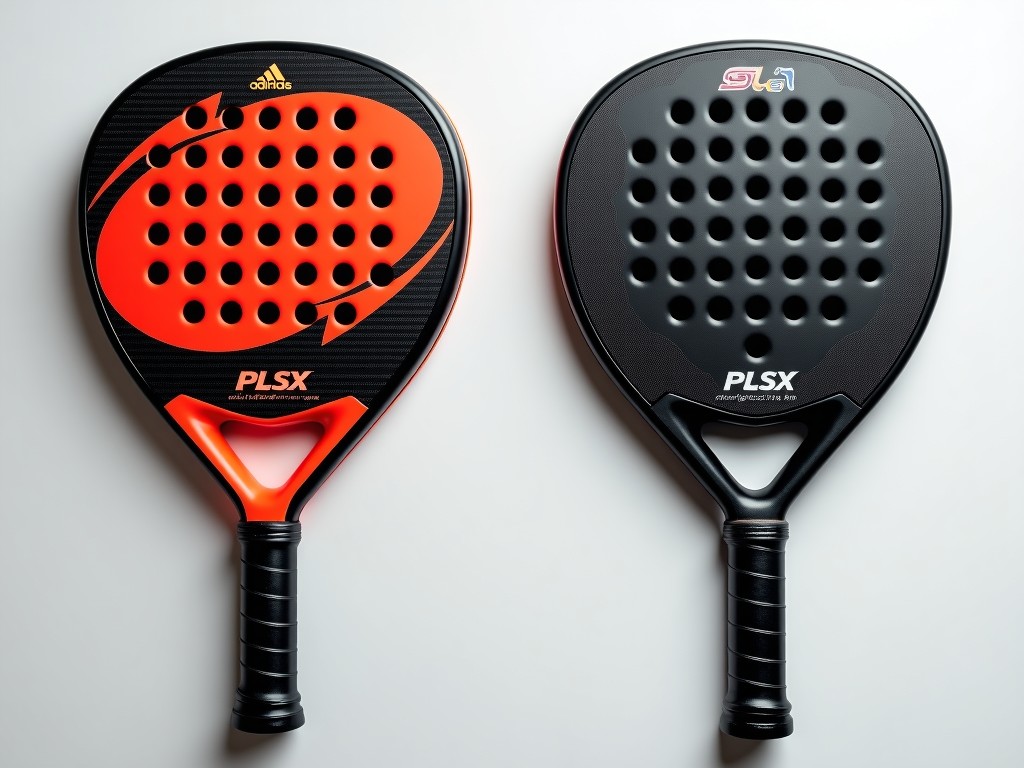
Wholesale Padel Racket Manufacturer – Technical Overview
Padel rackets are engineered as composite systems where frame stiffness, mass distribution, and surface friction directly influence ball control and player fatigue. Understanding these parameters allows distributors to match rackets to specific playing styles and court conditions.
The following sections detail the measurable characteristics that define our wholesale padel racket offering, from dimensional tolerances to material selection logic.
Product Design Parameters
Standard adult padel rackets conform to a maximum length of 455 mm, a width of 260 mm, and a profile thickness ranging from 38 mm to 42 mm. These limits are set by the International Padel Federation to ensure uniform playability across sanctioned tournaments.
Weight is typically distributed between 340 g and 380 g, with a balance point measured from the handle end falling between 260 mm and 290 mm. A head‑heavy balance (>280 mm) favors power generation, while a head‑light balance (<270 mm) enhances maneuverability for net play.
Swing weight, expressed in kg·cm², usually ranges from 260 to 300 kg·cm² for models aimed at intermediate players, providing a compromise between acceleration and stability during volleys.
Material Composition and Construction
The frame is fabricated using a unidirectional carbon fiber layup (approximately 60 % by weight) combined with woven fiberglass (≈30 %) to adjust torsional rigidity. The remaining 10 % consists of a thermoplastic polyurethane resin that improves impact resistance without adding significant mass.
The core utilizes expanded polyethylene (EPE) foam with a density of 30 kg/m³ to 45 kg/m³, selected to achieve a specific rebound coefficient (0.55–0.65) that influences ball exit speed. Surface roughness is controlled via a sand‑textured finish (Ra ≈ 12 µm) to enhance spin generation while maintaining durability.
Layer orientation follows a quasi‑isotropic schedule (±45°, 0°, 90°) to distribute stress evenly during high‑impact shots, reducing the likelihood of delamination at the frame‑core interface.
Typical Specifications
| Parameter | Typical Value | Unit | Notes |
|---|---|---|---|
| Overall Length | 455 | mm | Maximum allowed by IPF |
| Width | 260 | mm | Constant across models |
| Profile Thickness | 38–42 | mm | Varies with power‑control balance |
| Weight | 340–380 | g | Customizable in 5 g increments |
| Balance Point (from handle) | 260–290 | mm | Head‑heavy >280 mm |
| Swing Weight | 260–300 | kg·cm² | Intermediate range |
| Core Density | 30–45 | kg/m³ | Affects rebound coefficient |
| Surface Roughness (Ra) | ≈12 | µm | Sand‑textured finish |
Manufacturing Process
Production begins with computer‑numerical‑controlled (CNC) cutting of carbon fiber prepreg sheets to exact ply shapes. These plies are stacked in a mold according to the prescribed orientation schedule, then vacuum‑bagged to remove entrapped air before curing at 180 °C for 90 minutes under 1.2 bar pressure.
After demolding, the frame undergoes CNC milling to achieve the final outer contour and throat geometry. The EPE core is inserted via compression molding, ensuring uniform density distribution and a precise bond line thickness of 0.2 mm.
Final surface treatment includes abrasive blasting to achieve the target roughness, followed by a UV‑stable clear coat (≈20 µm thickness) that protects against abrasion and UV degradation while preserving the tactile feel.
Customization Options
- Weight adjustment via internal tungsten inserts (±10 g increments)
- Balance tuning through adjustable weight ports in the handle
- Grip size selection (standard 4.25 in, optional 4.0 in or 4.5 in)
- Surface pattern alternatives: dimpled, hexagonal, or smooth
- Color matching using Pantone‑referenced polyurethane pigments
- Optional integration of vibration‑dampening viscoelastic layers (0.5 mm thickness)
Each option is quantified to allow precise prediction of resulting mass distribution and stiffness changes, facilitating informed decisions for bulk orders.
Quality Control and Testing
Every production lot undergoes dimensional verification using laser scanning (±0.1 mm tolerance) and mass measurement (±1 g). Balance point is assessed with a precision pendulum fixture to ensure deviation remains within ±2 mm of target.
Impact resistance is evaluated via a drop‑weight test (5 kg mass from 1 m height) repeated 50 times; acceptable frames show no cracks larger than 0.5 mm. Fatigue life is approximated by a rotational swing test simulating 5,000 strokes at 30 m/s, with stiffness loss limited to 5 %.
Surface finish consistency is checked using a profilometer; Ra values must remain between 10 µm and 14 µm. All test results are recorded in a traceable batch record linked to each shipment’s purchase order number.
Applications in Wholesale Distribution
Clubs and retail distributors require rackets that maintain consistent performance across large inventories, minimizing warranty claims and ensuring player satisfaction. Our tight tolerances on weight (±5 g) and balance (±3 mm) reduce the variability that often leads to mismatched demo sets.
The modular customization system allows a single SKU platform to serve multiple market segments—from entry‑level recreational players (lighter, head‑light) to competitive tournament models (heavier, head‑heavy)—without maintaining separate tooling lines, thereby lowering inventory carrying costs.
Additionally, the UV‑stable clear coat extends shelf life under varied climate conditions, a critical factor for distributors operating in regions with high solar exposure or humidity fluctuations.
Frequently Asked Questions
A: Yes, internal tungsten weights and handle ports allow post‑molding fine‑tuning in 5 g weight steps and 2 mm balance increments.
A: Desired quantity, target weight range, preferred balance point, grip size, surface finish, and any branding or color specifications.
A: Frame: carbon fiber/fiberglass hybrid with TPU resin; Core: expanded polyethylene foam with densities from 30 to 45 kg/m³. Alternative cores (EVA, PP honeycomb) are available upon request.
A: Each lot undergoes dimensional scanning, weight verification, balance measurement, impact testing, and surface roughness profiling as detailed in the Quality Control section.
A: Standard packing: 5‑piece inner cartons with corrugated dividers, master cartons of 50 pieces. Optional: individual foam sleeves, palletizing with corner protectors, and humidity‑controlled liners.
A: 4–6 weeks for orders up to 10,000 units, subject to raw material availability and final finish scheduling.
Request a Quote
To receive a detailed, no‑obligation quotation, please provide your technical requirements via the contact form. Our engineering team will respond with a structured proposal that includes lead time, pricing tiers, and sample availability.
Submit Quote Request



