Wholesale Newest Carbon Padel Racket Supplier
Carbon fiber reinforced polymer frames dominate modern padel rackets due to their high specific stiffness and low density. This section outlines the engineering attributes that determine performance,
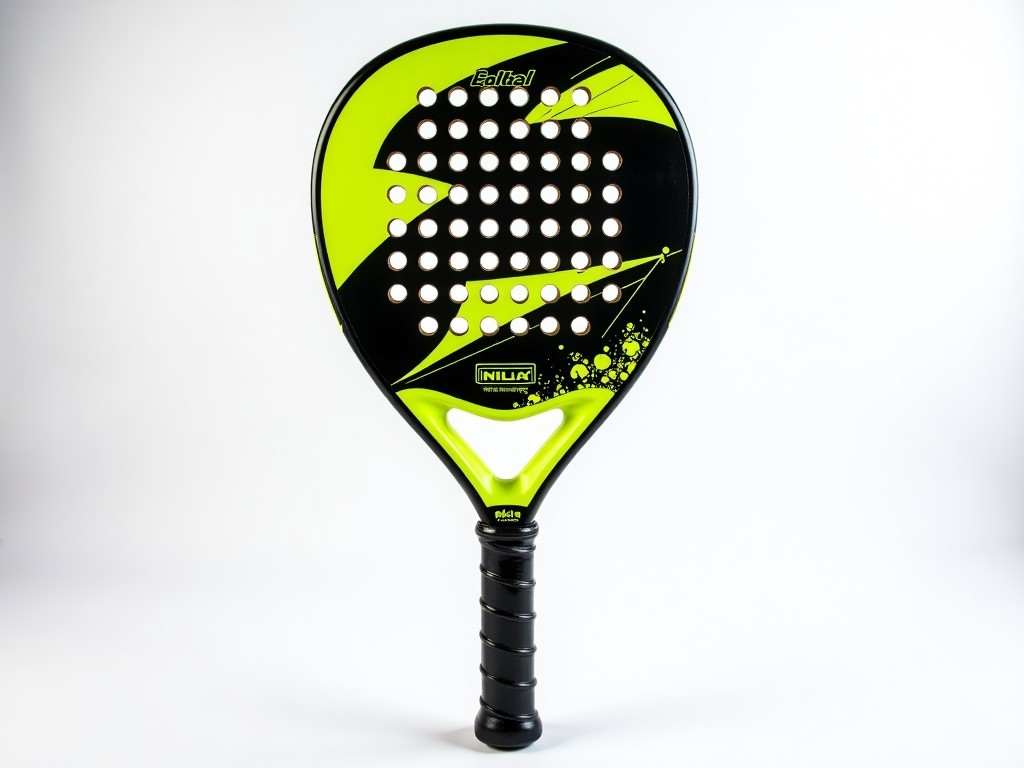
Wholesale Newest Carbon Padel Racket Supplier
Carbon fiber reinforced polymer frames dominate modern padel rackets due to their high specific stiffness and low density. This section outlines the engineering attributes that determine performance, durability, and suitability for bulk procurement.
Key Technical Characteristics
The racket’s bending stiffness is primarily governed by the modulus of the carbon fiber tow and the layup angle distribution. Typical unidirectional modulus values range from 230 to 250 GPa, while quasi‑isotropic layups yield effective modulus around 70 GPa in the plane of the frame.
Mass distribution influences swing weight and maneuverability. A balanced racket (balance point near 265 mm from the butt) offers neutral feel, whereas a head‑heavy configuration (>280 mm) increases power potential at the cost of slower reaction time.
Surface roughness of the hitting plane affects ball spin generation. A matte finish with a roughness average (Ra) of 2–4 µm provides consistent friction without excessive wear on the ball’s felt.
Typical Performance Parameters
| Parameter | Typical Value | Unit | Notes |
|---|---|---|---|
| Frame Weight (unstrung) | 340–360 | g | Includes handle, excludes overgrip |
| Balance Point | 260–285 | mm from butt | Adjustable via weight inserts |
| Swing Weight | 260–285 | kg·cm² | Measured at 100 mm axis |
| Stiffness (RA) | 62–68 | RA units | Higher values indicate less flex |
Manufacturing Process
Production begins with pre‑impregnated carbon fiber tapes (epoxy resin system, Tg ≈ 130 °C) cut to precise widths. These tapes are laid on a CNC‑milled mold according to a programmed stacking sequence that defines torsional and bending characteristics.
After layup, the mold undergoes vacuum bagging and autoclave curing at 120 °C and 2 bar for 90 minutes. Post‑cure, frames are demolded, excess flashing removed via CNC milling, and the handle shaft is over‑molded with a polyurethane grip core.
Final surface treatment includes a UV‑stable matte coating (polyurethane acrylate) applied by spray gun and cured at 80 °C for 30 minutes, ensuring consistent abrasion resistance and colorfastness.
Customization Options
- Frame geometry: adjustable head size (95–105 in²) and throat width
- Weight distribution: removable tungsten or steel inserts in the handle or head
- Grip size: standard (L2), oversize (L3), or custom contour
- Surface finish: matte, gloss, or textured spin‑enhancing patterns
- Branding: laser‑etched logos, sublimated graphics, or embossed lettering
Applications in Professional and Recreational Play
Padel demands rapid directional changes and high‑impact ball strikes. Carbon fiber’s high specific stiffness enables a thin yet sturdy frame that transfers player energy efficiently to the ball, increasing shot velocity without excessive frame vibration.
The material’s damping capacity reduces shock transmission to the wrist and elbow, lowering injury risk during prolonged sessions. Additionally, carbon’s corrosion resistance ensures consistent performance in humid or coastal environments where metal‑based rackets may degrade.
Quality Assurance and Testing
Each production lot undergoes systematic verification to confirm conformance with design specifications. Tests are performed on random samples selected from the beginning, middle, and end of a batch to capture any process drift.
| Inspection Item | Method | Acceptance Criterion |
|---|---|---|
| Frame Weight | Precision scale (±0.1 g) | ±5 g of target |
| Balance Point | Caliper measurement from butt | ±3 mm of target |
| Impact Strength | Drop‑weight tester (2 J energy) | No visible cracks, delamination |
| Surface Roughness | Laser profilometer (Ra) | 2–4 µm |
Packaging and Logistics
Finished rackets are placed in individual polyethylene sleeves with corner protectors, then packed into double‑wall corrugated cartons (30 kg max per carton). Cartons are stacked on EUR‑pallets, secured with stretch film, and labeled with handling instructions (keep dry, avoid direct sunlight).
For overseas shipments, cartons are loaded into 20‑ft containers with a maximum of 22 pallets, ensuring adequate ventilation to prevent moisture buildup. Tracking data is shared with the consignee via EDI or email upon vessel departure.
Frequently Asked Questions
- Can the frame weight and balance be adjusted per order? Contact us to discuss insert options and weight‑tuning services.
- What information is required for a quotation? Please provide desired quantity, target weight range, grip size, and any branding specifications.
- Which carbon fiber grades are available? Standard supply includes IM7‑based prepreg; higher modulus fibers (e.g., T1000) are available upon request.
- How is quality inspected before shipment? Refer to the inspection checklist table above; all critical dimensions and mechanical properties are verified.
To receive a detailed quote or request sample units, please reach out using the link below.
Request a Quote



