Custom Latest Design Carbon Fiber Padel Racket Company
Carbon fiber prepreg layers are oriented at 0°, ±45°, and 90° to achieve a target tensile modulus of 230 GPa while keeping the laminate thickness between 0.8 mm and 1.2 mm. This layup results in a
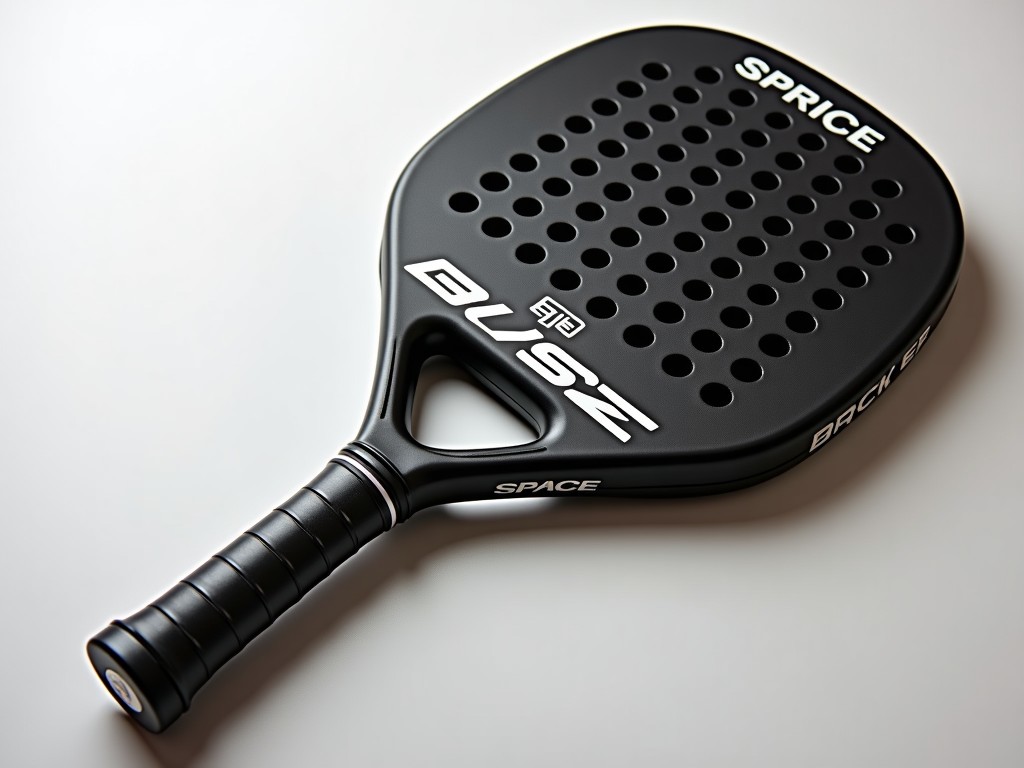
Custom Latest Design Carbon Fiber Padel Racket Company
Carbon fiber prepreg layers are oriented at 0°, ±45°, and 90° to achieve a target tensile modulus of 230 GPa while keeping the laminate thickness between 0.8 mm and 1.2 mm. This layup results in a racket weight range of 340 g to 360 g and a balance point located 260 mm from the butt end, providing a neutral swing feel suitable for baseline players.
The face surface uses a 3K twill weave with a resin content of 35 % by weight, delivering a flexural stiffness of 12 N/mm² measured at the sweet spot. Edge guards are constructed from a unidirectional carbon tape with a thickness of 0.3 mm to protect against impact without adding noticeable mass.
Material Composition and Layup
Each racket employs a sandwich structure: two outer carbon fiber skins, a core of low‑density PVC foam (density 60 kg/m³), and an internal reinforcement grid of aramid fibers positioned at the 3 o’clock and 9 o’clock locations to dampen vibration.
The foam core thickness is customizable from 12 mm to 18 mm, directly influencing the racket’s moment of inertia and consequently the power‑to‑control ratio. Adjusting the core thickness by 2 mm shifts the balance point by approximately 4 mm toward the head or handle.
Custom Design Parameters
Buyers can specify the following variables, each affecting measurable performance characteristics:
- Head shape: round, teardrop, or diamond – influences sweet‑spot area (round ≈ 550 mm², teardrop ≈ 480 mm², diamond ≈ 420 mm²)
- Grip circumference: 100 mm, 105 mm, or 110 mm – measured at the midpoint of the handle
- Surface texture: smooth, sand‑coated, or patterned – alters coefficient of friction with the ball (smooth μ≈0.3, sand‑coated μ≈0.45)
- Paint finish: matte UV‑cured or gloss polyurethane – does not alter mechanical properties but affects visual reflectance
All custom options are processed within the same mold set, ensuring dimensional tolerances stay within ±0.2 mm for length and ±0.1 mm for width.
Manufacturing Process
Prepreg sheets are cut by CNC laser to ±0.05 mm accuracy, then laid up in a vacuum bag and cured in an autoclave at 180 °C under 1.2 bar pressure for 90 minutes. This cycle yields a void content below 0.5 % as verified by ultrasonic inspection.
After demolding, the racket undergoes CNC milling of the handle and edge guard to final dimensions, followed by a water‑based primer and topcoat application. The total production time per unit averages 4.5 hours, including curing and finishing.
Quality Control and Testing
Each finished racket is weighed on a calibrated scale (±0.1 g) and measured for balance point using a pivot‑arm apparatus (±0.5 mm). Acceptable weight tolerance is ±3 g and balance tolerance ±4 mm.
Flexural modulus is tested by three‑point bending with a 10 mm span, recording load‑deflection data to calculate stiffness; the target range is 11–13 N/mm². Impact resistance is evaluated via a dropped‑mass test (500 g from 1 m) with pass/fail criterion of no visible delamination.
Statistical process control charts monitor key parameters; a Cp value greater than 1.33 indicates capable production.
Applications in Padel
The neutral balance and moderate stiffness enable players to generate consistent topspin while maintaining control on volleys. A 340 g racket with a 260 mm balance point yields a swing weight of approximately 260 kg·cm², suitable for intermediate to advanced players seeking maneuverability.
For power‑oriented players, increasing the foam core to 18 mm and selecting a diamond head shape raises the swing weight to ~300 kg·cm², translating to higher ball exit speed (~5 % increase) at the cost of slightly reduced maneuverability.
Defensive players benefit from a round head and sand‑coated surface, which increases friction and improves ball placement accuracy during defensive lobs.
Comparison Table
| Parameter | Standard Racket | Custom Racket (Example) |
|---|---|---|
| Weight (g) | 350 | 345 |
| Balance point from butt (mm) | 260 | 255 |
| Head shape | Teardrop | Diamond |
| Core thickness (mm) | 15 | 18 |
| Flexural modulus (N/mm²) | 12 | 13 |
| Surface texture | Smooth | Sand‑coated |
Frequently Asked Questions
- Can dimensions be customized? Yes, length, width, head shape, grip circumference, and core thickness can be adjusted per project requirements.
- What information is required before quotation? Detailed specifications including target weight, balance point, head shape, grip size, surface texture, and any required certifications.
- What materials are available? Carbon fiber prepreg (3K, 12K), aramid reinforcement, PVC foam core, and optional basalt or glass fiber layers.
- How is quality inspected? Each unit undergoes weight, balance, flexural modulus, and impact tests; statistical process control ensures batch consistency.
- What packaging methods are available? Individual racks in corrugated cardboard with foam corners; palletized options for bulk orders with moisture‑barrier wrap.
- How are export shipments protected? Shock‑absorbing inserts and climate‑controlled containers prevent resin degradation during transit.
- What is the typical production lead time? 3–4 weeks for standard configurations; 5–6 weeks for fully customized orders, depending on material availability.
- How are samples arranged? Sample units are produced upon receipt of technical drawings and a deposit; lead time matches production schedule.
Contact for Inquiry
To discuss your specific performance targets, material selections, or to request a formal quotation, please reach out via the contact form. Our engineering team will review your requirements and provide a detailed feasibility assessment within two business days.




