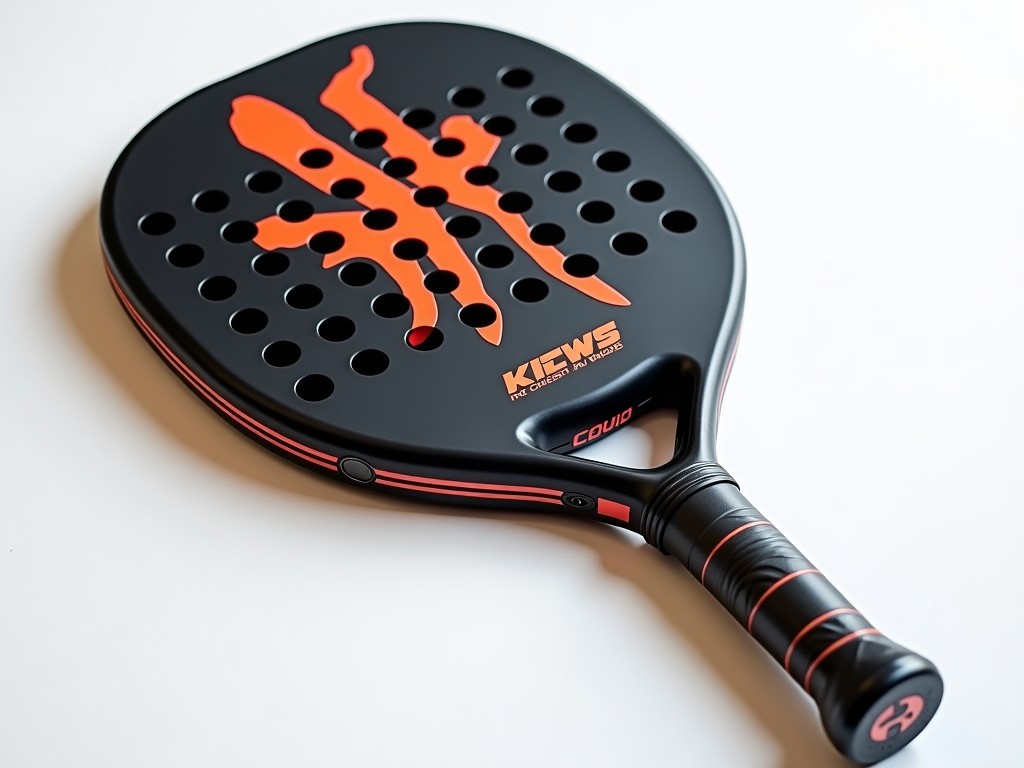
Custom high-quality carbon fiber padel racket pro Company - Engineering Selection and Manufacturing Guide
Two suppliers quoting the same drawing often overlook the variance in resin-to-fiber ratios during the vacuum infusion process. A high-resin content leads to brittle delamination under high-velocity impact cycles typical of professional-grade padel. Structural integrity in OEM-grade equipment depends on the uniform distribution of carbon filaments within the epoxy matrix to ensure consistent energy return across the entire face surface area.
Scope of Supply and Physical Form
The structural architecture of the racket utilizes a multi-axial carbon fiber layup designed to manage torsional rigidity during off-impact off-center strikes. We specify a core of variable-density EVA foam, integrated with a high-tensile carbon frame that prevents geometric deformation under extreme compressive loads.
Tolerance Specification
Face thickness is maintained within a tolerance of +/- 0.3mm across the hitting zone. This precision ensures that the aerodynamic profile remains consistent across the production batch, preventing unpredictable drag.
- 12k carbon fiber weave provides a balance between surface hardness and internal structural tensile strength.
- Reinforced perimeter guards utilize high-impact resistant elastomers to dissipate kinetic energy during wall-strike collisions.
- Matte surface treatments increase the friction coefficient for ball-racket interface, even in high-humidity environmental conditions.
Operating Conditions That Break Cheap Alternatives
Unit price settles the question only after the first batch fails due to thermal expansion mismatches. Lower-cost manufacturers utilize standard-grade resins that soften when exposed to the high solar temperatures found in outdoor court environments. Our process employs toughened epoxies that maintain their modulus across a wider thermal range.
| Operating Condition | Potential Failure Mode | Recommended Specification |
|---|---|---|
| Cyclic impact > 500N | Internal core collapse and delamination | Pre-preg carbon fiber with 60% fiber volume |
| Ambient temp > 45°C | Matrix softening and power loss | High-Tg thermal stable resin system |
| High humidity exposure | Adhesive failure at frame interface | Hydrophobic barrier coating application |
Measured Behaviour Under Load and Heat
Purchase price and service life diverge when the structural modulus shifts over extended play hours. Standard carbon builds often exhibit "memory effects" where the racket fails to return to its shape after repeated high-stress impacts. We mitigate this through a specific autoclave curing cycle that ensures the carbon fibers are fully impregnated and free of internal air pockets.
Analysis of the mating interface between the foam core and the carbon frame reveals critical points of stress concentration. By utilizing a gradient bond layer, we reduce the risk of shear-induced fatigue cracks, which provides the player with better control during defensive maneuvers.
Sizing Steps Before You Request a Quote
Engineers must define the weight distribution parameters based on the target player's swing speed. A balance point located closer to the handle increases maneuverability but reduces the peak kinetic energy transfer during overhead smashes.
- Determine the target weight tolerance (typically +/- 3g for pro-level).
- Specify the required core hardness (Shore scale from 20 to 70) based on vibration damping preference.
- Identify the surface texture pattern required for specific ball-grip friction requirements.
Assumptions Buyers Should Stop Making
Stop assuming a thicker weave equals higher durability. In reality, a thicker layup can increase internal residual stresses, making the racket more prone to catastrophic failure under impact rather than gradual wear. Focus instead on the fiber orientation and the quality of the resin matrix, which dictate the long-term fatigue life of the component.
Ready to review the technical specifications for your production line?
specification-review



