Custom Carbon Padel Rackets For Beginners Supplier
Padel rackets combine a solid hitting surface with a perforated core to generate power and control. For novice players, racket mass, balance, and stiffness directly influence swing speed, shot
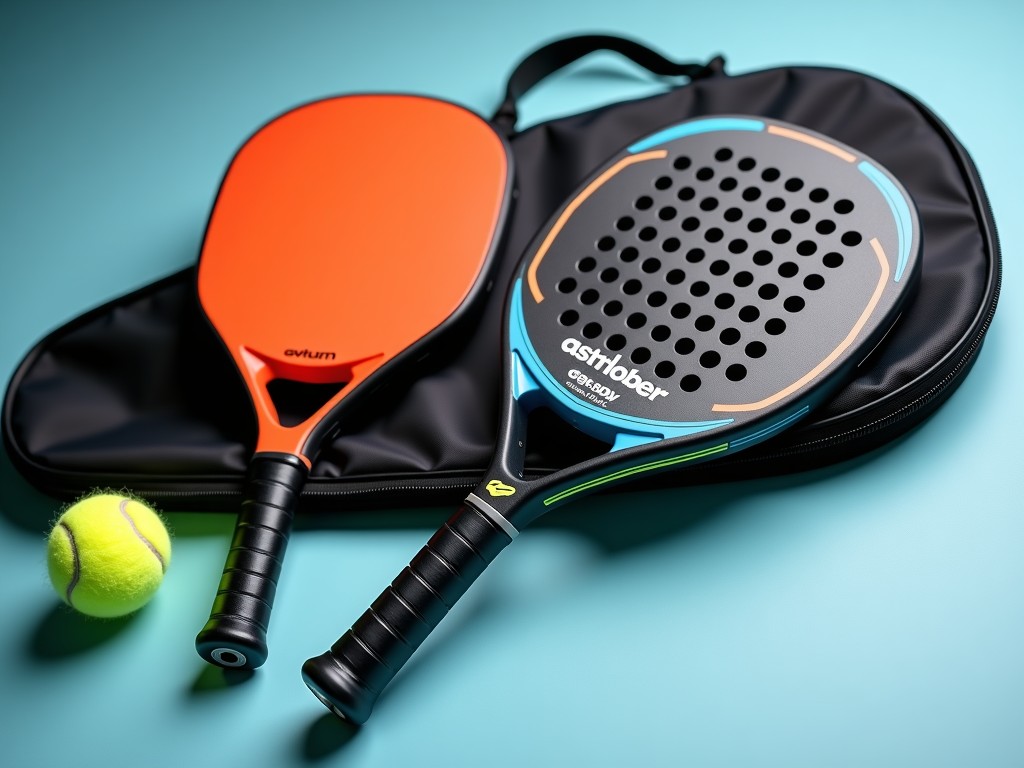
Custom Carbon Padel Rackets for Beginners – Supplier
Padel rackets combine a solid hitting surface with a perforated core to generate power and control. For novice players, racket mass, balance, and stiffness directly influence swing speed, shot consistency, and arm fatigue. Carbon‑fiber construction allows precise tailoring of these parameters while keeping weight low enough for comfortable handling during extended play.
Material and Construction
The racket frame uses a unidirectional carbon‑fiber prepreg layered in a quasi‑isotropic layup. Typical ply count ranges from 8 to 12 layers, with resin content adjusted to achieve a flexural modulus between 70 GPa and 85 GPa. The core consists of ethylene‑vinyl acetate (EVA) foam with a density of 180 kg/m³ to 220 kg/m³, providing a balance of shock absorption and rebound.
Edge protection is applied via a thin polyurethane coating (≈0.2 mm) to reduce wear from court surfaces. The grip area incorporates a heat‑shrinkable silicone overlay, allowing diameter adjustment from 38 mm to 44 mm without altering the frame geometry.
Key Performance Parameters
| Parameter | Typical Range (Customizable) |
|---|---|
| Weight (unstrung) | 340 g – 380 g |
| Balance Point (from handle) | 260 mm – 285 mm |
| Swing Weight | 210 – 240 kg·cm² |
| Flexural Modulus (frame) | 70 GPa – 85 GPa |
| Grip Diameter | 38 mm – 44 mm |
| Overall Length | 455 mm – 470 mm |
Customization Options
- Layup pattern: quasi‑isotropic, torsional‑biased, or power‑focused arrangements
- Weight distribution: head‑light, even, or head‑heavy via internal weighting tapes
- Grip size: selectable within 38 mm–44 mm range or custom molded
- Surface finish: matte, gloss, or textured for enhanced spin
- Color pigment integration: available in standard RAL tones or custom pantone matches
- Logo placement: laser‑etched, sublimated, or embossed on shaft or throat
Application Rationale for Beginner Players
A lower overall weight reduces the inertial load during forehand and backswing, facilitating faster racket head speed with less muscular effort. A head‑light balance shifts the center of mass toward the handle, improving maneuverability for quick volleys at the net. The specified flexural modulus range delivers sufficient stiffness for energy transfer while retaining enough flex to enlarge the sweet spot, thereby increasing forgiveness on off‑center impacts.
Vibration damping from the EVA core combined with the polyurethane edge coat minimizes shock transmission to the wrist and elbow, lowering the risk of overuse injuries common among newcomers still refining technique.
Quality Control and Testing
Each racket undergoes dimensional verification using a coordinate measuring machine (CMM) with tolerances of ±0.5 mm for length, width, and thickness. Weight is measured on a calibrated scale (±1 g). Balance point is determined via a precision pivot method. Flexural modulus is derived from three‑point bend testing according to ISO 178. Impact resilience is assessed with a standardized ball‑drop apparatus, recording rebound height to ensure consistency within ±3 % across batches.
Visual inspection checks for resin uniformity, fiber waviness, and surface defects under 10× magnification. Any deviation beyond defined limits triggers rework or rejection.
Frequently Asked Questions
Can dimensions be customized?
Yes. Length, grip diameter, and weight distribution can be adjusted per project requirements. Custom molds are available for non‑standard grip shapes.
What information is required before quotation?
Desired weight range, balance preference, grip size, layup objective (power, control, or all‑round), color finish, logo artwork, and order volume.
How is quality inspected?
Dimensional CMM checks, weight and balance verification, flexural modulus testing, impact resilience measurement, and visual inspection per the protocol outlined above.
What packaging methods are available?
Individual rackets are placed in low‑density polyethylene bags with foam end caps, then packed in corrugated cartons (5‑layer) with corner protectors. Palletization and stretch‑wrap options are provided for bulk shipments.




