Specifying China professional padel racket supplier for Industrial Service
Field returns usually trace back to one interface where the bond between the carbon fiber layup and the foam core fails under high-velocity impact. Inconsistent resin-infusion ratios or minor density variations in the EVA foam lead to premature delamination during high-intensity play. Qualifying a secondary supplier requires verifying their control over the curing cycle and the structural consistency of the composite matrix.
structural integrity of the assembly depends on how kinetic energy is redirected from the surface through the perimeter frame. A stiffer frame increases power transfer but elevates the stress on the adhesive interface, which can cause internal fractures over time. Engineers must balance the modulus of the carbon fiber with the core's elasticity to ensure the racket maintains its geometry after thousands of cyclic loading cycles.
How the Load Path Shapes the Design
Mechanical Trade-off: Core Density vs. Frame Stiffness
Higher density EVA cores increase rebound but also increase vibration frequencies. If the frame does not dampen these frequencies, the resulting stress accelerates material fatigue at the handle-interface junction. Using a hybrid carbon-fiberglass weave mitigates this risk without adding significant mass.
The distribution of mass relative to the balance point dictates the swing weight and maneuverability. A head-heavy configuration increases the torque on the throat of the racket during off-center hits. Procurement should demand standard deviation metrics for weight across a production batch to ensure uniform performance across all ordered units.
Dimensional and Material Specification Range
| Component | Material Grade | Tolerance/Range |
|---|---|---|
| Main Frame | 32K Carbon Fiber | +/- 2.5g weight |
| Core Material | EVA Foam / FO | 200-600 kg/m³ density |
| Surface Layer | Hybrid Weave | 0.3mm thickness |
Assumptions Buyers Should Stop Making
A line that stops twice a month rarely blames the part but rather the lack of weight distribution control. Buyers often assume that uniform weight implies uniform performance, but a variance of +/- 5 grams in the balance point can significantly alter the swing weight dynamics. Focus on the standard deviation of the production batch rather than just the average weight.
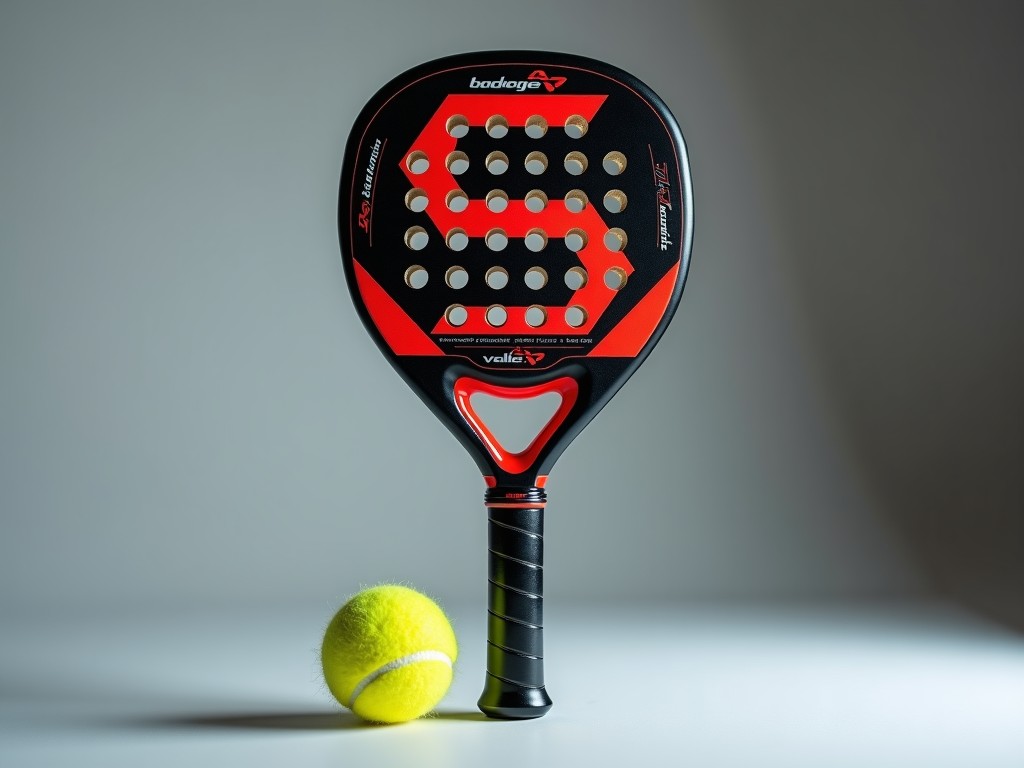
Another common error is the belief that all carbon weaves are equivalent. Higher thread-count weaves offer flexibility but may be prone to brittle cracking under thermal shock. Verify the supplier's resin-to-fiber ratio to ensure the matrix resists impact effectively.
Customisation Boundaries and Tooling Implications
Custom frame geometry requires specific steel molds to maintain thermal stability during the curing process. Changes to the balance hole profile or aerodynamic channels affect the airflow and the structural stiffness of the carbon layup.
Tooling Constraints
- Mold-based modifications require a 4-6 week lead time for CNC machining.
- Weave orientation is fixed once the layup begins to prevent warping.
- Core thickness variations are limited by the injection pressure of the frame.
Where These Parts Are Installed and Why
These components are utilized in professional-grade competitive environments where equipment failure results in immediate forfeit. High-humidity environments accelerate adhesive degradation if low-grade resins are used. The structural assembly must withstand high-frequency vibrations without losing its internal damping properties.
Tournament Specs
Focus on maximum energy return and weight reduction for elite competitive play.
Training Gear
Prioritizes abrasion resistance and impact damping for high-frequency use.
Fitting Practice and Wear Inspection
Premature wear shows up first at the mounting face where the grip meets the handle assembly. Inspect the surface for micro-cracking which indicates fatigue in the composite layers. Regular testing of the core density rebound-loss ratio can identify internal voids before visible structural failure occurs.
Ordering, Tooling and Lead-Time Questions
- What is the lead time for custom carbon weaves? Typically 45-60 days depending on material availability and mold validation.
- What is the MOQ for specific foam density variations? Minimum 500 units to ensure chemical consistency across the production batch.
- How are CAD files handled for aerodynamic channel modifications? We require .STEP or .IGES files to verify clearance during the injection molding process.
Ready to integrate structural specifications into your production line?
Discuss project requirements with our engineering team



