Oem Professional Beach Tennis Rackets Company
Beach tennis imposes unique mechanical demands: high‑impact shots on loose sand, frequent exposure to UV‑rich environments, and rapid temperature swings. An OEM racket must therefore balance
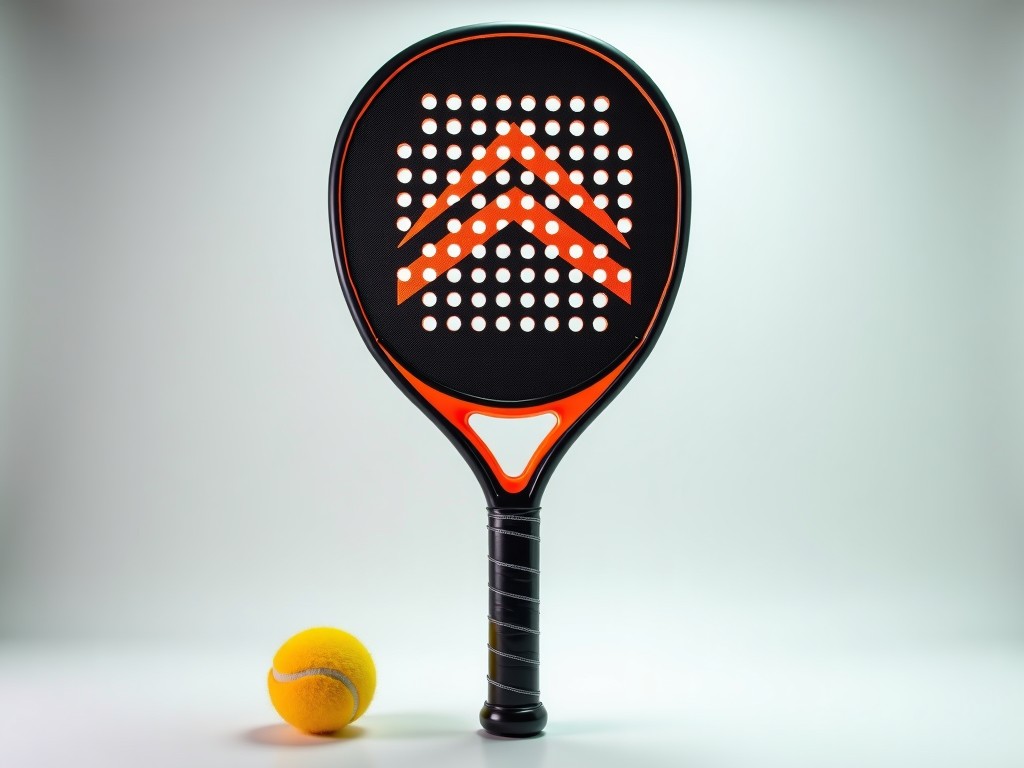
OEM Professional Beach Tennis Rackets
Beach tennis imposes unique mechanical demands: high‑impact shots on loose sand, frequent exposure to UV‑rich environments, and rapid temperature swings. An OEM racket must therefore balance stiffness for power with enough flex to absorb shock, while using materials that resist abrasion and salt‑corrosion. The following sections detail the engineering considerations that guide our design and production process.
Frame Geometry and Material Characteristics
The racket head is typically shaped as an oversized oval with a longitudinal axis length ranging from 680 mm to 720 mm and a width between 260 mm and 280 mm. This profile enlarges the sweet spot, reducing off‑center torque when striking sand‑laden balls. Wall thickness is tapered from 6 mm at the throat to 3 mm at the tip, achieving a weight distribution that favors a head‑light balance (balance point 240‑260 mm from the butt) for quicker maneuverability.
| Parameter | Typical Range | Unit |
|---|---|---|
| Head Length | 680‑720 | mm |
| Head Width | 260‑280 | mm |
| Weight (unstrung) | 285‑315 | g |
| Balance Point | 240‑260 | mm from butt |
| Stiffness (RA) | 62‑68 | points |
String Pattern and Tension Guidelines
A 16 × 19 string pattern provides a balance between spin potential and durability. The main strings run longitudinally, while the cross strings are spaced at 19 mm intervals to maintain adequate string bed stiffness without excessive vibration. Recommended tension lies between 22 kg and 26 kg, adjusted according to player preference for power versus control; lower tensions increase the trampoline effect beneficial for sandy surfaces, while higher tensions enhance precision for aggressive net play.
Grip and Handle Construction
The handle utilizes a dual‑layer system: an inner core of pultruded carbon‑fiber tubing (outer diameter 20 mm, wall thickness 1.2 mm) for torsional rigidity, over‑wrapped with a heat‑shrinkable silicone‑rubber sleeve (thickness 1.5 mm) that provides a tacky surface resistant to moisture and sand ingress. The grip length is standardized at 210 mm, with an optional extension of 10 mm available for players requiring additional leverage. Circumference options range from 100 mm to 106 mm to accommodate different hand sizes.
Manufacturing Process Overview
Production begins with CNC‑cut prepreg carbon‑fiber sheets laid into a heated mold that defines the racket’s aerodynamic profile. The layup follows a quasi‑isotropic stacking sequence ([0/±45/90]s) to achieve uniform stiffness in all directions. After vacuum bagging, the assembly undergoes autoclave curing at 180 °C under 6 bar pressure for 90 minutes, ensuring optimal resin polymerization and minimal void content. Post‑cure, the frame is machined to final tolerances (±0.1 mm), drilled for string holes, and fitted with the silicone grip via compression molding. Each unit receives a UV‑stable clear coat (polyurethane, 25 µm thickness) to mitigate surface degradation from prolonged sun exposure.
Customization Options
- Material substitution: replace carbon‑fiber with glass‑fiber for cost‑sensitive markets or incorporate Kevlar layers for enhanced impact tolerance.
- Dimensional adjustments: head length ±10 mm, width ±5 mm, weight ±15 g via layup modulation.
- Balance tuning: shift balance point toward head‑heavy or head‑light by altering throat‑to‑tip thickness distribution.
- Branding: laser‑etched logos, custom color pigments in the clear coat, or interchangeable butt caps.
- String bed: alternative patterns (18 × 20, 14 × 18) and grommet configurations upon request.
Application Rationale for Beach Tennis
Beach tennis courts feature loose, abrasive sand that accelerates wear on conventional rackets. Our frames employ a closed‑pore carbon‑fiber matrix that resists particle infiltration, while the silicone grip’s hydrophobic surface prevents sand adhesion, maintaining consistent handling. The UV‑stable coating retards photo‑oxidation, preserving mechanical properties over extended outdoor exposure. Together, these attributes reduce the frequency of racket replacement, lowering total cost of ownership for clubs and distributors.
Quality Control Philosophy
Inspection occurs at three critical stages: pre‑cure layup verification (fiber alignment and resin content via FTIR), post‑cure dimensional inspection (coordinate‑measuring machine checks of head geometry and thickness), and final performance testing (static load deflection to 200 N, impact resonance frequency analysis, and grip slip resistance under wet conditions). Each racket is assigned a unique traceability code linking raw material lot numbers to final test records, facilitating root‑cause analysis should any field issue arise.
Packaging and Shipping
Rackets are placed in individual LDPE bags (50 µm thickness) to guard against moisture, then nested in double‑wall corrugated cartons with internal polyethylene foam corners (density 30 kg/m³) that absorb shock during handling. Cartons are sealed with water‑activated tape and marked with handling instructions (“Keep Dry, Avoid Direct Sunlight”). For bulk orders, pallets are stretch‑wrapped and fitted with corner protectors, meeting ISPM‑15 standards for international shipment.
FAQ
- Can dimensions be customized? Yes, head length, width, weight, and balance point can be adjusted within the ranges outlined in the specifications section.
- What information is required before quotation? Desired material system, target weight, balance preference, grip size, string pattern, and any branding or color requirements.
- What materials are available? Standard carbon‑fiber/epoxy prepreg, optional glass‑fiber, Kevlar hybrid, and various resin systems (epoxy, vinylester) upon request.
- How is quality inspected? Refer to the Quality Control section: layup verification, CMM dimensional checks, and mechanical testing.
- What packaging methods are available? Individual LDPE bag + foam‑corner carton is standard; custom palletization or crating can be arranged.
- How are export shipments protected? Water‑activated tape sealing, stretch‑wrapped pallets, corner protectors, and compliance with ISPM‑15.
- What is the typical production lead time? Four to six weeks after final design approval, depending on order complexity and material availability.
- How are samples arranged? Sample units can be produced upon receipt of a signed NDA and specification sheet; lead time is typically two weeks.




