Custom Beach Tennis Balls Top Company
Beach tennis requires balls that withstand sand, salt, and variable humidity while delivering consistent bounce and feel. Designing a ball for this environment involves balancing internal pressure,
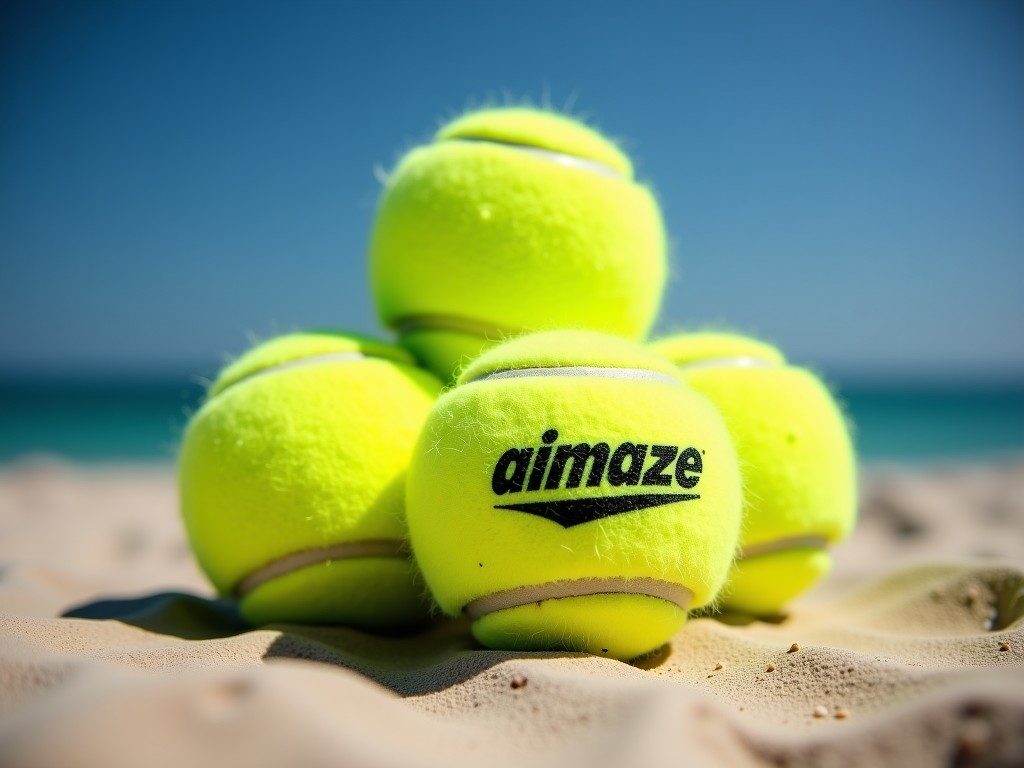
Custom Beach Tennis Balls
Beach tennis requires balls that withstand sand, salt, and variable humidity while delivering consistent bounce and feel. Designing a ball for this environment involves balancing internal pressure, outer felt durability, and size tolerances to meet both recreational play and competitive standards.
Technical Specifications
| Parameter | Typical Range | Notes |
|---|---|---|
| Diameter | 68‑70 mm | Larger than standard tennis ball to reduce speed in sand |
| Weight | 55‑60 g | Balances buoyancy and ground contact |
| Internal Pressure | 0.4‑0.6 bar | Lower pressure yields softer feel and reduced bounce |
| Felt Thickness | 2.0‑2.5 mm | Abrasion‑resistant blend for sand exposure |
| Core Material | Natural rubber or synthetic copolymer | Chosen for elasticity and UV stability |
Materials and Construction
The core is molded from a rubber compound formulated for low permanent set after repeated compression. A dual‑layer felt covering is applied: an inner polyester‑nylon blend for adhesion, topped with a woven polypropylene‑acrylic outer layer that resists sand penetration and UV degradation. Seams are sealed with a flexible adhesive that maintains flexibility across temperature ranges from 5 °C to 45 °C.
Custom pressure is achieved by adjusting the gas mixture inside the core during molding; typical fill includes nitrogen with a small proportion of air to modulate bounce characteristics. The final product undergoes a 24‑hour conditioning period at controlled humidity to stabilize pressure before testing.
Performance Characteristics
When dropped from a height of 2 m onto a compacted sand surface, the ball rebounds to a height of 0.6‑0.8 m, providing a playable pace without excessive skid. The coefficient of restitution measured on a rigid plate averages 0.55, reflecting the softer impact desired for beach tennis. Aerodynamic drag is higher due to the larger diameter, which reduces wind‑drift in open‑court settings.
Durability testing shows negligible felt wear after 500 hours of simulated play on abrasive sand, and pressure loss remains under 0.05 bar over the same period when stored at 25 °C.
Customization Options
- Logo printing: single‑color or full‑color silicone ink, pad‑printed or heat‑transferred
- Core pressure: adjustable from 0.3 bar to 0.8 bar in 0.05 bar increments
- Felt color: standard yellow, orange, white, or custom Pantone match
- Surface texture: smooth felt, extra‑grip sand‑resistant finish, or anti‑static coating
- Packaging: bulk bags of 24, 48, or 96 balls; retail tubes of 3; custom branded cartons
Applications in Beach Tennis
Facilities located in coastal regions benefit from balls that retain performance despite exposure to saline air and frequent sand contact. Tournament organizers select balls with standardized pressure to ensure fair play across courts, while recreational operators prefer higher durability to reduce replacement frequency. Coaching programs often request lower‑pressure variants for beginner drills, allowing slower ball speed and easier control.
Beyond sport, these balls find use in beach‑based fitness classes and rehabilitation exercises where a soft, predictable bounce reduces joint stress.
Quality Assurance
Each production lot undergoes dimensional verification using laser micrometers (±0.02 mm), pressure testing with calibrated gauges (±0.01 bar), and bounce assessment on a standardized sand‑simulation rig. Visual inspection checks for felt uniformity, seam integrity, and printing adhesion. Statistical process control tracks key variables, and a sample from every batch is subjected to accelerated aging (UV exposure 400 h, salt spray 200 h) to validate long‑term stability.
Packaging and Logistics
Balls are packed in low‑density polyethylene liners that resist moisture ingress, then placed in corrugated cartons with edge protection. Cartons are palletized with stretch film and corner boards for stable transport. For overseas shipments, desiccant packets are included to mitigate humidity fluctuations during transit. Standard lead time is 3‑4 weeks after final approval of artwork and pressure specifications, with express options available upon request.
Frequently Asked Questions
Can dimensions be customized? Yes, diameter can be adjusted within the 66‑72 mm range to suit specific court conditions or player preferences.
What information is required before quotation? Desired pressure, felt color, logo artwork (vector format), quantity, and any special packaging needs.
What materials are available for the core? Natural rubber, synthetic polybutadiene, or thermoplastic elastomer blends, each offering different rebound and aging profiles.
How is quality inspected? Incoming material checks, in‑process dimensional and pressure controls, final visual and performance testing, and batch‑wise aging validation.
What packaging methods are available? Bulk poly‑bagged cartons, retail tubes, custom printed boxes, and eco‑friendly recyclable options.
How are export shipments protected? Moisture‑barrier liners, desiccant, and sturdy palletization with corner reinforcement.
What is the typical production lead time? 3‑4 weeks for standard orders; 1‑2 weeks for stocked items with existing tooling.
How are samples arranged? Sample units (typically 3‑6 balls) are produced after artwork approval and shipped via express courier; costs are credited against the first production order.
Contact for Inquiry
To discuss your specific beach tennis ball requirements, share your performance targets, customization details, and quantity needs. Our engineering team will review the specifications, provide a feasibility assessment, and propose a tailored solution.




