Bulk Beach Tennis Balls Manufacturer
Beach tennis balls must endure abrasive sand, fluctuating humidity, and repeated high‑impact strikes while maintaining consistent bounce and visibility. Our manufacturing approach focuses on material
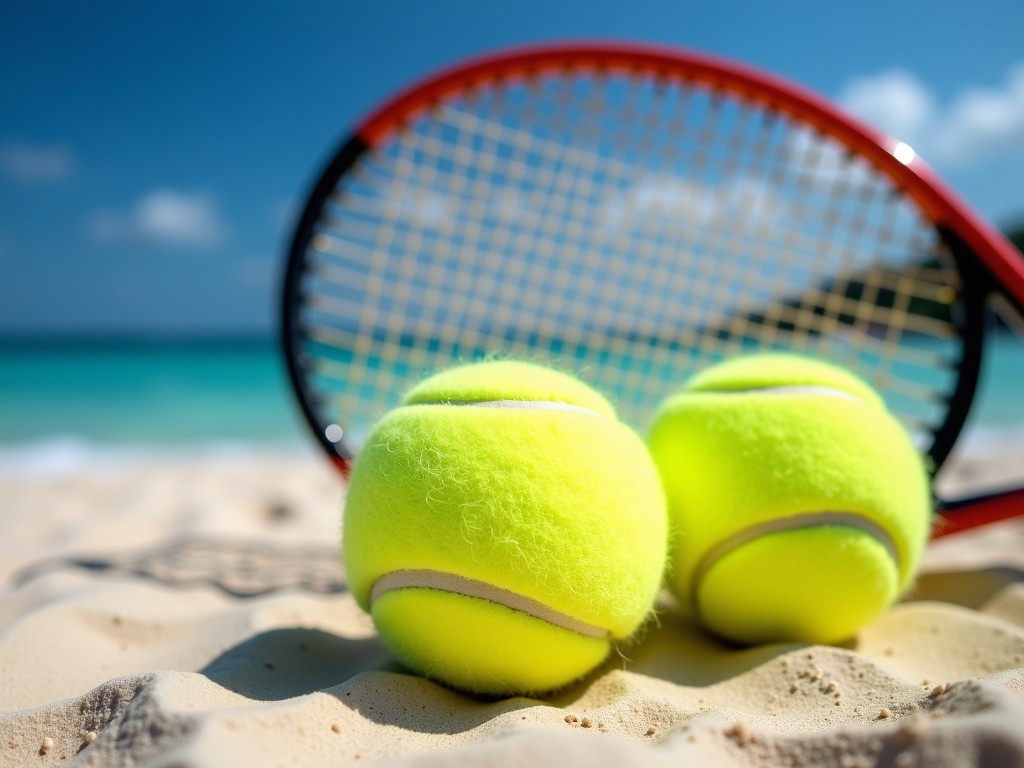
Bulk Beach Tennis Balls Manufacturer
Beach tennis balls must endure abrasive sand, fluctuating humidity, and repeated high‑impact strikes while maintaining consistent bounce and visibility. Our manufacturing approach focuses on material selection, dimensional tolerances, and surface finish that directly influence playability and service life in coastal environments.
Core Material Composition
The ball core is formulated from a blended natural rubber compound with a specific gravity of 0.94 ± 0.02, providing a balance between rebound elasticity and damping. A secondary layer of styrene‑butadiene rubber (SBR) adds abrasion resistance, reducing surface wear when the ball contacts sand particles sized 0.1–0.5 mm.
The outer felt is a nylon‑polyester blend (65% nylon, 35% polyester) with a yarn count of 150 D/2, delivering a uniform nap height of 1.8 mm ± 0.2 mm. This construction minimizes water absorption to less than 0.5 % weight gain after 30 minutes of immersion, preserving weight stability during play.
Dimensional and Weight Specifications
Official beach tennis balls conform to a diameter range of 6.35 cm ± 0.05 cm and a mass of 56.0 g ± 1.0 g. These tolerances ensure compatibility with standard net heights (1.0 m) and racket string tensions typical for the sport (22–26 lb).
Compression hardness, measured on a Shore A scale, falls between 45 and 55, providing a firm yet responsive feel. Hardness is verified per ball lot using a durometer with a 1‑second dwell time, and results are recorded in the batch traceability log.
Performance Characteristics
Rebound resilience is evaluated by dropping the ball from a height of 2.0 m onto a rigid concrete surface; the first bounce height must be between 1.30 m and 1.45 m. This range reflects the energy return needed for rapid volleys while preventing excessive loft that could affect gameplay on sandy courts.
Abrasion loss after 500 cycles on a standardized sand‑abrasion tester is limited to 0.8 mm of felt depth reduction, ensuring the ball retains visibility and grip throughout extended matches. UV stabilizers are added to the felt formulation to limit color fading to less than 5 % ΔE after 200 hours of simulated sunlight exposure.
Customization Options
Clients may specify alternative core rubber blends to adjust compression hardness by ±5 Shore A points, tailoring the ball for faster or slower play conditions. Surface felt can be dyed to any Pantone shade within the CMYK gamut, with colorfastness verified per ISO 105‑B02.
Logo printing is available via water‑based inkjet transfer, offering a maximum print area of 30 mm × 20 mm on the felt surface with adhesion strength exceeding 1.5 MPa after 24 hours cure. Packaging can be customized to bulk cartons of 50, 100, or 200 units, with internal dividers made from recycled corrugated board.
Quality Assurance Protocol
Each production lot undergoes in‑line dimensional verification using laser micrometers with a resolution of 0.01 mm, rejecting any ball outside the ±0.05 cm diameter window. Hardness testing is performed on a 10 % random sample, and batch acceptance requires a mean Shore A value within the target range and a standard deviation ≤ 1.5.
Visual inspection checks for felt uniformity, seam integrity, and surface defects under 500 lux illumination. Any ball exhibiting nap irregularities greater than 0.3 mm or visible contaminants is segregated. Final approval includes a functional bounce test on three randomly selected units per lot.
Typical Applications
Beach tennis balls are suited for recreational courts located on sandy shorelines where grain size typically ranges from 0.1 mm to 0.5 mm. The abrasion‑resistant felt and low water uptake maintain consistent performance despite frequent sand contact and occasional splashes.
Organizations that host multi‑day tournaments benefit from balls with minimal weight variation, reducing the need for frequent re‑pressurization or replacement. Training facilities also select our product for its durability under high‑volume use, extending replacement intervals and lowering operational cost.
Specification Table
| Parameter | Typical Value | Tolerance / Note |
|---|---|---|
| Diameter | 6.35 cm | ±0.05 cm | Mass | 56.0 g | ±1.0 g |
| Compression Hardness (Shore A) | 45‑55 | Mean ±1.5 |
| Rebound Height (2 m drop) | 1.30‑1.45 m | First bounce |
| Felt Nap Height | 1.8 mm | ±0.2 mm |
| Water Absorption (30 min) | <0.5 % wt | Max |
| UV Color Fading (ΔE) | <5 | 200 h xenon |
Packaging and Logistics
Bulk shipments are packed in double‑wall corrugated cartons with a burst strength of 275 kPa, each carton containing a static‑dissipative inner liner to prevent electrostatic attraction of sand particles. Cartons are palletized on 1000 mm × 1200 mm ISO‑standard pallets, secured with stretch film having a tensile strength of 30 MPa.
For export, each pallet receives a phytosanitary‑treated wooden base compliant with ISPM‑15, and the exterior is marked with handling symbols indicating “Keep Dry” and “This Side Up”. Lead time from order confirmation to ex‑works readiness averages 18‑22 working days, contingent on raw material lot availability.
Frequently Asked Questions
Can the ball diameter be adjusted for non‑standard court specifications?
Yes. Diameter can be customized within the range 6.20 cm – 6.50 cm by modifying the core rubber density and molding pressure. Such adjustments are quoted per project after reviewing required tolerance and impact on bounce characteristics.
What information is needed to receive a quotation?
Please provide desired quantity, any custom color or logo specifications, required packaging configuration, and destination port for freight estimation. If hardness or rebound targets differ from standard, include those values as well.
How is batch traceability maintained?
Each lot receives a unique alphanumeric identifier recorded on the production ticket, which links to raw material certificates, in‑process test logs, and final inspection results. This data is retained for a minimum of three years and accessible upon request.
For technical consultations, sample requests, or to discuss specific project requirements, please contact our engineering team.
Contact Us



